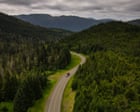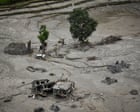
Water does not care about borders. When the monsoon breaks across the high plateaus of the Himalayas, it does not check passports. It falls equally on the stone houses of Tibet and the terraced hillsides of Nepal, turning ancient trade routes into roaring torrents of mud and stone.
By the time the statistics began to crawl out of the valleys last autumn, the numbers were already too heavy to hold. Over one thousand human beings vanished beneath the brown froth of swollen rivers. Families scattered. Villages wiped clean down to the bedrock.
And then came the quiet part. The bureaucratic machinery of grief.
In forensic tents pitched near mud-caked riverbanks, local police officers did something unthinkable just a generation ago. They held out plastic bags and cotton swabs, asking grieving mothers and trembling sons for a drop of saliva, a strand of hair, a bit of genetic code. Not to cure anything. Just to match a nameless bone to a vanished face.
Imagine standing on a riverbank where your home used to be. The water is gone now, receded to a sullen trickle, leaving behind a gray crust of silt that coats everything like ash. Your brother is missing. His boots were found three miles downstream, wedged in the roots of a toppled pine. But his body? The river kept it. Or traded it. Or ground it into the sediment of a reservoir fifty miles south.
This is the reality of modern disaster management in the shadow of the world's highest peaks. Climate change is often discussed in sterile conference rooms in Geneva or New York, measured in degrees Celsius and carbon ppm. But on the ground, it looks like a sergeant in a dust-stained uniform labeling a plastic vial with a permanent marker.
The scale of the devastation in Nepal and Tibet crossed a grim threshold when the combined death toll surpassed one thousand. Entire communities vanished overnight as cloudbursts triggered flash floods and massive landslides. Roads that took decades to carve into vertical cliffs simply slid away, taking buses, homes, and livestock with them. Rescue helicopters could not fly through the choking curtains of rain. Communications towers collapsed. For days, the disaster zones were entirely isolated islands of survival.
When the skies finally cleared, the true horror of the aftermath revealed itself.
Identification is an art of memory. Once upon a time, we knew our dead by a turquoise ring, a jagged scar on a left shin, the particular way a tooth crowded its neighbor. We buried our kin with familiar rites, singing the old songs into the wind so the soul would not lose its way home.
Science has replaced the songs.
DNA profiling is precise. Cold. Infallible. It does not care about your grief; it only cares about base pairs. Yet, in places like Sindhupalchok or the border counties of the Tibet Autonomous Region, DNA collection is also an act of profound desperation. It is the last thread left to pull. When a flash flood erases the physical markers of identity—when faces are unrecognizable and bodies are recovered far downstream across international boundaries—the double helix becomes the only surviving passport.
Consider the logistics of identification in high-altitude terrain. Cross-border cooperation during a humanitarian crisis is notoriously brittle. Rivers flow from Chinese-administered plateaus down into Nepalese valleys, carrying debris and human remains across geopolitical lines that mean nothing to gravity. Coordinating DNA databases between authorities who rarely share data under normal circumstances requires an extraordinary diplomatic and forensic effort. Every swab collected in a remote Nepalese health post must be cataloged, transported through broken infrastructure, and compared against genetic profiles submitted by families who might live days away on foot.
It is a race against decomposition and despair.
We talk about infrastructure resilience, early warning systems, and watershed management as if they are purely engineering challenges. Build higher dikes. Plant more vetiver grass. Install satellite sensors on glacial lakes. All of this is necessary. All of this is urgent.
Yet, we rarely budget for the sorrow.
The human cost of extreme weather events in the Hindu Kush Himalaya region is rising exponentially. Temperatures here are climbing faster than the global average, destabilizing permafrost and swelling glacial lakes until they burst their natural moraine dams. These are called glacial lake outburst floods, or GLOFs. They arrive with almost zero warning. A wall of water forty feet high, carrying boulders the size of delivery trucks, travels down narrow gorges at highway speeds.
You cannot outrun a GLOF. You can only hope you were not built in its path.
When the water recedes, the survivors are left with a strange ghost geography. Fields where millet grew are now boulder fields. Graveyards are washed out, ancestors tumbling into the same common current as their great-grandchildren. The DNA sampling stations set up by police departments are a recognition that traditional burial has been stolen by the flood.
An old farmer in a village north of Kathmandu sat outside a corrugated iron relief tent, staring at his calloused hands. He had given a sample of his cheek cells on a cotton bud. He understood the science as much as he understood the monsoon—which is to say, not at all, except that it hurts you when it strikes.
"They need to know who he was," the old man said, gesturing toward the brown water still hissing over the rocks. "The government needs a name for the ledger. But the river already took his name."
This is the invisible friction of our century. As the planet warms, the violence of weather increases, pushing emergency services into realms they were never designed to inhabit. Police officers are no longer just keepers of the peace; they are genetic archivists of catastrophe. Medical workers are no longer just healers; they are forensic scientists sorting through the wreckage of entire villages.
We are entering an era where our relationship with the earth is mediated entirely by crisis response. We build better algorithms to predict the rain, better databases to count the dead, better forensic kits to stitch families back together from fragments of bone and blood.
The water keeps rising. The mountains keep shedding their ancient ice. And somewhere in a damp tent by a Himalayan river, a flashlight flickers on, illuminating a row of numbered tubes waiting for the next grieving father to walk through the flap.