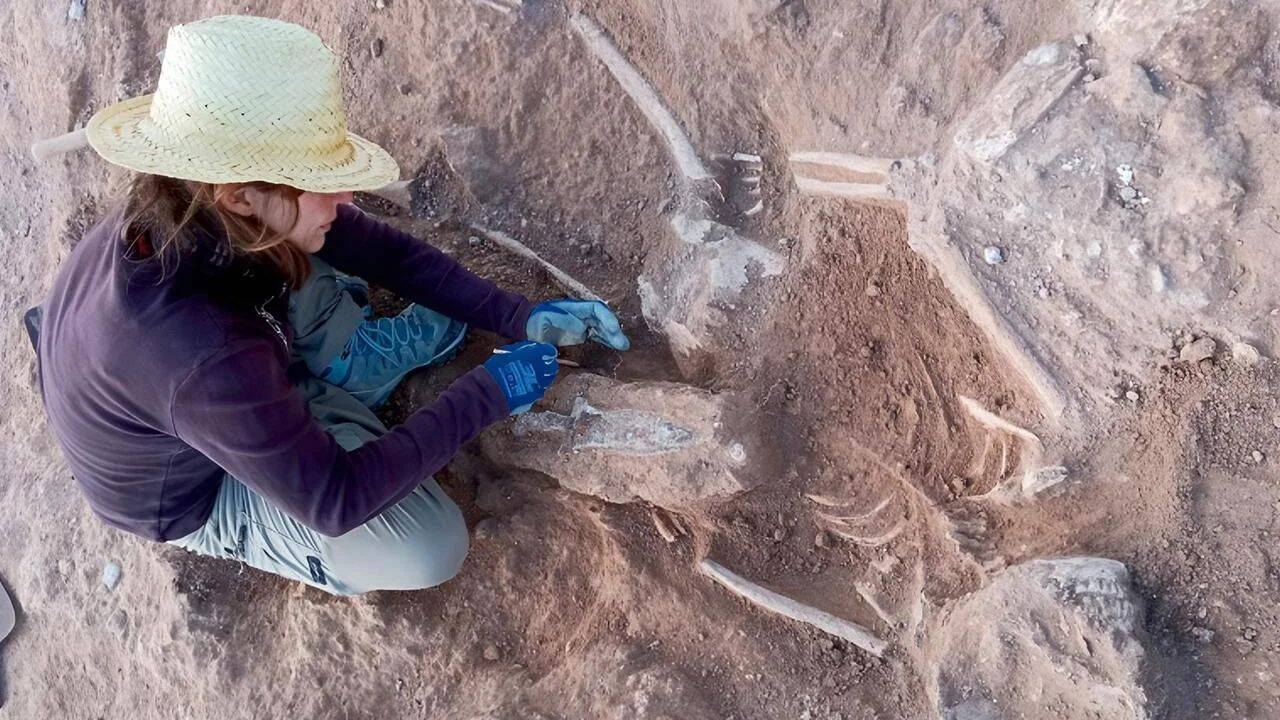
History isn't a neat stack of separate pages. It's messy. People build over old ruins, reuse ancient stones, and sometimes drop bodies exactly where someone else stood thousands of years earlier. That's exactly what happened in Spain, where archaeologists found the remains of a Roman soldier buried right inside a prehistoric fortress built 5,000 years ago.
This find highlights how the Roman empire operated on the ground. They didn't always build from scratch. They adapted. They took over what worked.
If you think the Romans only cared about building pristine marble cities, you're missing how they actually won wars. They were practical survivalists. Finding a Roman legionary inside a Copper Age fortification shows a brilliant, brutal strategy of recycling military architecture.
The Layered Reality of Spanish Archaeology
Iberia was a prized target for Rome. It had silver mines, fertile soil, and strategic ports. But conquering it took two brutal centuries of fighting local tribes.
When Roman troops marched across the peninsula, they encountered massive stone walls they didn't build. These structures belonged to peoples who lived millennia before Rome was even a village. Instead of tearing them down, Roman commanders saw an immediate military advantage.
The fortress in question dates back to around 3000 BCE, built during the Copper Age. By the time a Roman soldier ended up there during the late Republic or early Empire, the fort was already ancient history to him. To put that in perspective, that Roman soldier is closer to our time today than he was to the people who laid the first stones of that fortress.
Why bury a soldier there? Speed and symbolism.
During active campaigns, soldiers died far from home. You couldn't ship a body back to Italy during a guerrilla war in the rugged Spanish interior. You buried your dead where you held ground. Placing a fallen comrade inside the defensive walls of an conquered prehistoric stronghold sent a clear message to the local population. It signaled permanent ownership. It showed the old gods and the old fortresses belonged to Rome now.
What the Bones Reveal About Life on the Front Line
Archaeologists look at more than just the location of a skeleton. They look at the stress markers on the bone. The physical reality of a Roman legionary was grueling.
Analysis of bones found in these frontier settings usually paints a grim picture. These men weren't Hollywood actors. They were short, muscular, and riddled with joint damage. They carried heavy gear for miles daily.
- Dental health: Teeth show signs of grit from stone-ground grain and periods of malnutrition during long winter sieges.
- Skeletal trauma: Healed fractures show these men survived brutal hand-to-hand combat long before the wound that finally killed them.
- Dietary isotopes: Tests show whether the soldier grew up on Italian wine and grain or was a local auxiliary recruited from a conquered province.
Many soldiers serving in Iberia weren't even from Italy. Rome relied heavily on auxiliary units. These were non-citizens promised citizenship after twenty-five years of service, assuming they lived that long. A soldier buried in a 5,000-year-old fort might have been a local Iberian fighting for Rome against his own neighbors, or a Gaul marched across the Pyrenees to secure a new frontier.
The Strategy of Military Recycling
The Romans excelled at engineering, but their real genius lay in logistics and theft. Building a fort from scratch requires time, timber, and immense labor. If a hilltop already has a massive stone wall overlooking a strategic valley, you take it. You fix the broken parts, throw up some leather tents, and call it an outpost.
We see this pattern across the entire Mediterranean. Roman forces routinely occupied Iron Age hillforts, Carthaginian outposts, and Bronze Age strongholds. They reinforced the walls with their own mortar, dug new defensive ditches, and installed weapon platforms for catapults.
This choice wasn't about respecting the past. It was about raw efficiency. Hilltops don't change their strategic value just because a few thousand years pass. The same high ground that protected Copper Age farmers protected Roman legions keeping watch over vital trade routes.
How to Track This History Yourself
If you want to understand this layer-cake history, you can't just read about it in text books. You need to look at the ground. Spain is packed with sites where prehistoric, Roman, and medieval histories collide.
Start by visiting major regional museums in Andalusia, Extremadura, or Catalonia. Look for displays featuring mixed weaponry. When you see a display case containing both prehistoric flint arrowheads and Roman iron pilum heads found in the exact same layer of dirt, you're looking at the physical evidence of this strategic reuse.
Pay attention to excavation reports from sites like Valencina de la Concepción or Los Millares. Watch how researchers use modern ground-penetrating radar to map out hidden Roman trenches dug right into much older prehistoric enclosures. The data is out there, proving that history rarely happens in isolation.