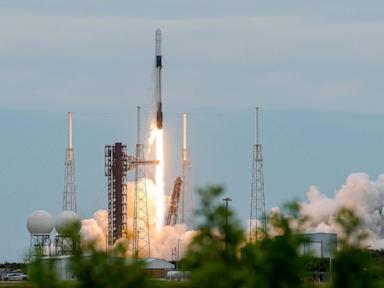
Another clean ignition, another arc over the Atlantic, and another crew delivered safely to the International Space Station. Observers watched the plume dissolve against the morning sky, treating the event with the weary familiarity of a commuter train departure. That normalization is precisely the danger. When flying human beings into low Earth orbit becomes routine, public attention drifts away from the fundamental structural vulnerability underpinning modern commercial spaceflight. The hardware works, but the institutional framework supporting it is running on borrowed time.
Behind the public relations wins of NASA and SpaceX lies a fragile, highly consolidated supply chain. Two decades ago, the space agency made a calculated gamble to outsource heavy orbital transport to private industry. That wager saved the federal budget billions and resurrected American launch capacity. Yet it also created a heavy bottleneck. Commercial crew rotations are executed with astonishing technical precision, yet they rely on a narrow set of proprietary systems and a limited pool of specialized aerospace talent. If a manufacturing anomaly grounds a Falcon 9 booster or an anomaly halts a capsule's life support validation, the entire human presence in orbit stalls. There is no backup provider ready to step into the gap tomorrow.
Commercial flight operations are designed for efficiency margins that look more like commercial aviation than traditional aerospace. Margins are tight, oversight is distributed across bureaucratic layers, and every launch window requires synchronization between federal range assets, autonomous drone ships, and complex ground support networks. The public sees a sleek capsule docking autonomously with the orbiting laboratory. They do not see the cascading schedule delays, the waiver reviews for aging components, or the creeping obsolescence of the space station itself, which is hurtling through its final operational decade.
The International Space Station remains a aging marvel of engineering, held together by decades of international compromise and continuous orbital maintenance. Every new crew arrival brings fresh hands for spacewalks and science experiments, but they also bring immediate logistical overhead. Consumables must be replenished, carbon dioxide scrubbers must be replaced, and thermal control loops must be monitored against micro-meteoroid impacts. The logistics train required to keep four astronauts breathing 250 miles above the Earth is staggering. When a launch occurs successfully, it is treated as a destination achieved. In reality, it is merely the opening of another multi-month operational containment cycle.
We have solved the physics of low Earth transport through sheer engineering discipline and massive capital injection. What remains unsolved is the long-term economic sustainability of human orbital infrastructure once the station eventually deorbits in the next decade. Commercial low Earth orbit destinations are still sliding to the right on corporate schedules, plagued by funding realities and regulatory friction. Private space stations promise a seamless handoff, but blueprints do not generate oxygen.
The successful flight to the orbital laboratory is a testament to modern engineering, but it should not be mistaken for permanent security. As long as our entire orbital footprint depends on a single dominant commercial provider and an aging federal asset, human spaceflight remains one major anomaly away from a sudden halt. The rockets fly reliably today because brilliant engineers catch every flaw before ignition. But reliance on perfection is not a strategy.