The operational reality of European border control is shifting from discretionary manual inspection to a rigid, automated data architecture. While headlines focus on the refusal of Portugal and Italy to "suspend" digital checks for British citizens, such phrasing misinterprets the technical and legal mandates of the Schengen Area’s looming Entry/Exit System (EES). The EES is not a policy choice subject to bilateral sentiment; it is a structural overhaul of the Schenghen Borders Code that replaces physical ink stamps with biometric registration.
British travelers now represent the largest cohort of "third-country nationals" (TCNs) entering the EU from a high-frequency, short-haul geographic proximity. The refusal by Lisbon and Rome to offer exemptions is a reflection of three non-negotiable systemic constraints: legal uniformity, hardware synchronization, and the integrity of the central EES database.
The Triad of Border Automation Constraints
The transition from manual to digital processing is governed by a fixed logic that prevents member states from unilaterally opting out without compromising the security of the entire zone.
1. The Legal Uniformity Mandate
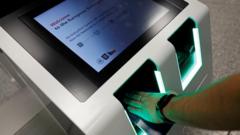
Under Regulation (EU) 2017/2226, the EES is a centralized system managed by eu-LISA. When a British traveler enters Italy or Portugal, they are not merely entering a single nation; they are entering a shared security perimeter. If one state fails to record biometrics—comprising four fingerprints and a facial image—the individual's "clock" for the 90/180-day rule remains uninitiated in the central system. This creates a security blind spot that other member states, particularly those with land borders like France or Germany, view as a breach of the collective agreement. Portugal and Italy cannot suspend these checks because they do not own the data protocols they are enforcing.
2. The Biometric Registration Bottleneck
The first interaction between a British traveler and the EES requires a "deep enrollment." This process takes significantly longer than the historical average of 45 seconds for a manual passport stamp. Estimates suggest the first-time biometric capture will extend processing times to two or three minutes per person.
- The Accumulation Effect: In high-volume hubs like Lisbon Portela or Rome Fiumicino, a two-minute delay per passenger in a 200-person flight creates a cumulative processing lag that exceeds the physical capacity of arrival halls.
- The Hardware Dependency: Unlike manual checks, which can be scaled by adding more staff with stamps, EES requires specific biometric kiosks. Portugal and Italy have invested heavily in this infrastructure; to "suspend" the checks would be to strand multi-million-euro investments while remaining in violation of EU law.
3. The Database Integrity Function
The EES is designed to automatically identify "overstayers"—individuals who exceed their 90-day visa-free allowance. Manual stamping is prone to human error, forgery, and "passport shopping" (entering through a lenient border to avoid scrutiny). By enforcing digital checks, Italy and Portugal are eliminating the "discretionary gap" that previously allowed for soft-border management. The system is binary: data is either captured and synced, or the entry is technically illegal under the new framework.
Quantifying the Friction Cost for British Travelers
The removal of the "digital suspension" possibility introduces a new cost function to UK-EU travel. This isn't a financial fee, but a temporal and psychological tax that will reshape travel patterns.
The Peak-Hour Throughput Collapse
The most significant impact will be felt during "Bank Holiday" surges or the summer peak. Airport infrastructure is built on "throughput efficiency"—the number of bodies moved per square meter per hour.
- Fixed Capacity: Arrival gates have a finite number of lanes.
- Variable Latency: Because British travelers no longer qualify for the "EU/EEA" lanes and must use the TCN/All Passports lanes, they are filtered into the slowest-moving queues.
- The Result: A projected 300% to 500% increase in wait times during peak periods at major Portuguese and Italian hubs.
The 90-Day Calculation Precision
Previously, many British second-home owners in the Algarve or Tuscany operated in a "grey zone," relying on the fact that border agents rarely calculated the exact sum of stay across multiple stamps. The EES removes human calculation from the loop. The system will flag an individual the moment they attempt to enter if their rolling 180-day window is exhausted. This precision creates a hard ceiling for "lifestyle migrants" who have not secured formal residency.
The Strategic Logic of Italy and Portugal
Why would two nations heavily reliant on British tourism refuse to mitigate these delays? The answer lies in the geopolitical hierarchy of the European Union.
The Risk of Schengen Suspension
If a member state is found to be consistently failing to perform EES checks, the European Commission has the authority to trigger Article 26 of the Schengen Borders Code. This allows other member states to reintroduce internal border controls against the offending nation. For Italy and Portugal, the economic cost of being "quarantined" from the rest of the Schengen Area—losing the fluid movement of goods and people to France, Spain, and Germany—is infinitely higher than the cost of British tourists waiting three hours in an airport queue.
Infrastructure as a Competitive Advantage
Both nations are gambling that by being "strict early," they will force a faster adaptation of traveler behavior. By refusing to waive checks, they are signaling to airlines and tour operators that schedules must be padded. In the long run, the integration of EES with the European Travel Information and Authorisation System (ETIAS) will allow for a "known traveler" status. Early rigor ensures their data systems are clean and compliant for the next phase of European border integration.
Structural Bottlenecks in the EES Rollout
Despite the firm stance of Lisbon and Rome, the system faces internal failure points that could force ad-hoc manual overrides during the initial launch phase.
- The Enrollment Lag: If the biometric kiosks suffer from high "False Rejection Rates" (FRR) due to lighting or hardware sensitivity, the physical queues will spill out of the terminals.
- The "Shadow" Workforce: There is a critical shortage of border police trained to troubleshoot the EES software. When a kiosk fails, the backup is not a manual stamp—it is a manual entry into a digital terminal, which is even slower.
- Data Interoperability: The EES must talk to the Visa Information System (VIS) and the Schengen Information System (SIS). Any latency in the central eu-LISA servers in Strasbourg will paralyze every border point in Italy and Portugal simultaneously.
Strategic Realignment for the High-Frequency Traveler
The refusal to suspend digital checks marks the end of the "special status" era for British travelers. Moving forward, the following maneuvers are required for those maintaining interests in Italy or Portugal:
- Transition to Long-Stay Visas: For those spending more than 60 days per year in-country, the "tourist" path is now a liability. Shifting to D7 (Portugal) or Elective Residency (Italy) visas moves the individual into a different database, bypassing the EES "clock."
- Airport Selection Calibration: Travelers must prioritize secondary airports with lower TCN-to-EU passenger ratios. Entering through a smaller regional hub in Italy may save hours compared to the bottlenecks of Malpensa or Fiumicino.
- Digital Pre-Enrollment Utilization: As mobile apps for EES data entry are released, immediate adoption is mandatory. The goal is to move as much of the "data capture" phase as possible away from the physical border.
The refusal of Italy and Portugal to compromise on digital border checks is not a diplomatic snub; it is a clinical adherence to a new technological sovereignty. The "frictionless" border is a relic. The new metric of travel success is "buffer management"—accounting for the unavoidable reality of biometric processing.