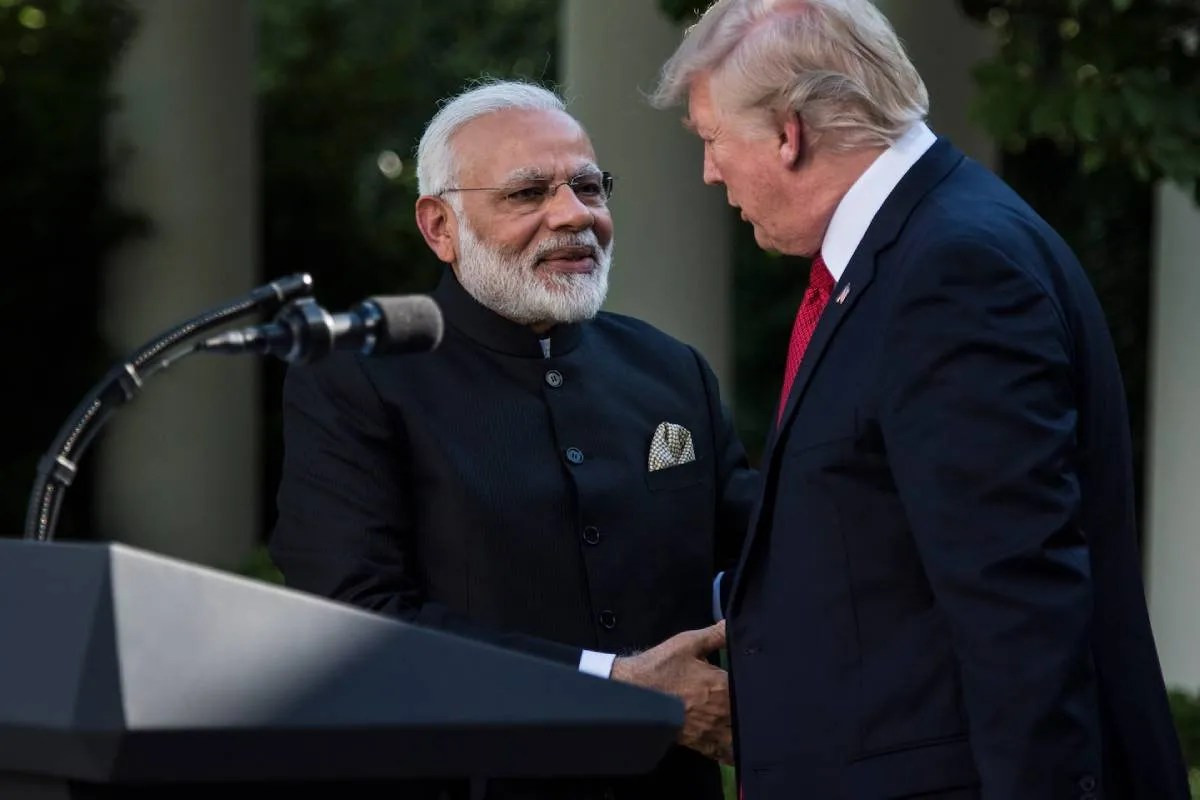
High-stakes diplomacy usually revolves around abstract economic policies or massive defense pacts. But at the G7 Summit in Evian, France, the focus shifted sharply to something tangible and human. Indian Prime Minister Narendra Modi sat right next to US President Donald Trump and put the lives of hundreds of thousands of merchant sailors directly on the negotiating table.
This wasn't just standard political grandstanding. It was a direct response to a crisis brewing in the global shipping lanes. When you look at the raw numbers, it's easy to see why India forced this issue into the spotlight.
The High Cost of Open Sea Lanes
Global maritime trade doesn't run on automation. It runs on people. Indian nationals make up roughly 10% of the entire global seafaring workforce. When geopolitical tensions boil over into active military conflict in critical bottlenecks like the Strait of Hormuz, these workers face the brunt of the danger.
The immediate catalyst for this tense diplomatic confrontation was a series of recent maritime incidents. Just days before the summit, three commercial vessels carrying Indian crew members came under fire in Gulf waters. The US military, enforcing a strict maritime blockade on Iranian ports, targeted ships suspected of violating sanctions. The fallout was tragic. Three Indian sailors lost their lives aboard the vessel MT Settebello, and multiple other ships faced strikes within the span of a single week.
This put New Delhi in a tough spot. The domestic political opposition slammed the government for a supposedly weak response to the deaths of its citizens abroad. Modi needed to deliver a firm message on an international stage, and he chose to do it looking Donald Trump right in the eye.
Confrontation on the G7 Sidelines
During the outreach sessions and subsequent bilateral meetings, Modi didn't mince words. He stated plainly that the safety of lakhs of Indian seafarers is a non-negotiable priority for New Delhi. He tied this human cost directly to the broader health of the international economy.
"Lakhs of Indian seafarers are on duty in different seas of the world in the sector of maritime trade. I believe that their security is equally important," Modi told Trump during their first face-to-face meeting in over 16 months.
The timing of this push was deliberate. The United States and Iran are on the verge of signing a highly anticipated peace agreement aimed at de-escalating the long-running West Asia conflict. India is leveraging its strategic position to demand that the fine print of this deal includes ironclad protections for commercial vessels and freedom of navigation. If the Strait of Hormuz closes or remains a shooting zone, global supply chains choke.
Trump responded with his characteristic mix of casual rhetoric and high-praise diplomacy. He acknowledged the danger of the merchant navy, calling it a "rough profession," and promised that Washington would work alongside India to address these security blind spots.
Reading Between the Lines of the Trump-Modi Dynamic
The public banter between the two leaders caught the attention of global media, but the underlying strategic shifts matter more than the soundbites. Trump praised Modi's political toughness, famously describing him as a leader who looks like an angel but acts as a "tough negotiator" behind closed doors.
Beyond the personal chemistry, the meeting served as a necessary reset button. The US-India relationship faced friction over the past year due to aggressive tariff disputes, complex trade negotiations, and India's pragmatic decisions regarding global oil purchases. By stepping up as a fierce defender of its workforce, India signaled that it expects to be treated as an equal partner, not a subordinate player in American foreign policy.
Trump went as far as to pledge absolute US support if India faced external aggression, stating that Washington would "be there to help" as long as Modi is at the helm. While that makes for a reassuring headline, the immediate, practical test of this alliance lies in how both nations handle commercial shipping security in the coming weeks.
Real Security Demands Action Over Rhetoric
Empty promises won't protect sailors navigating volatile waters. If you operate in the maritime sector or follow international trade, the diplomatic dance in France reveals that security protocols must change immediately.
- Enforce Explicit Transit Guarantees: Shipping companies must pressure international regulatory bodies to ensure that upcoming peace accords specify clear immunity parameters for neutral commercial vessels.
- Re-evaluate Risk Corridors: Fleet managers need to adjust route planning around the Strait of Hormuz and the Gulf of Oman based on real-time military coordinate updates rather than outdated monthly risk maps.
- Demand Bilateral De-escalation Protocol: India's Ministry of External Affairs must establish a direct communication hotline with the US Central Command to prevent tragic target misidentifications before military action is initiated against commercial fleets.
The tragedy in the Gulf of Oman proved that economic blockades carry a steep human price. Moving forward, the true metric of success for the India-US partnership won't be measured by glowing statements at European summits. It will be measured by whether a merchant ship can pass through international waters without its crew fearing a missile strike.