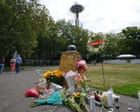
A crowded public park turns into a warzone in seconds. People scream, children drop to the grass, and three lives end in the crossfire. That was the grim reality at the Seattle Center during the waning hours of the Bite of Seattle festival.
When the smoke cleared, investigators rushed to piece together the chaos. They arrested a 15-year-old on the spot, slapping him with serious charges after an officer watched him fire an untraceable ghost gun into a terrified crowd. But court documents filed by the King County prosecutor's office dropped a massive twist into the narrative.
Preliminary ballistics testing showed the bullets killing two innocent bystanders didn't come from that teenager's gun.
The Ballistics Evidence and the Ghost Gun Problem
Ballistics don't lie. When crime lab technicians test recovered rounds against seized firearms, the matching process is precise. In this case, the findings complicate an already tragic scenario.
Police recovered three guns at the scene, yet shell casings scattered across the park indicate four separate weapons were actively firing during the gunbattle. Two of the weapons involved were never even recovered.
The 15-year-old suspect faces heavy accountability. Prosecutors charged him with first-degree assault with a firearm enhancement and unlawful possession of a handgun. Witnesses saw him unzip a torso bag, pull out a weapon with an extended magazine, and fire repeatedly. As officers escorted him past the body of a 19-year-old suspect named Junior Cee Niko Semo—who also died in the shootout—the teen muttered, "Love you bro".
Even so, the science points to a wider web of shooters.
Unraveling the Crossfire
Public safety officials face an uphill battle when multiple weapons flash in a dense crowd. The King County Medical Examiner's Office identified the dead bystanders as 44-year-old Carlos Israel Sanchez Villalba and 56-year-old Ashley Whitehead. Whitehead had moved to Washington from Alabama just a year prior, visiting the festival with her adult daughter when she was struck. At least four other bystanders suffered injuries, including a toddler.
Police chief Shon Barnes pointed to a stark local statistic regarding urban violence, noting that a tiny fraction of the population drives the vast majority of shootings. Investigators believe the violence stemmed from localized gang disputes, turning a family-friendly food celebration into a tactical nightmare.
Because two of the guns involved remain missing and multiple weapons contributed to the chaos, detectives cannot definitively name who fired the fatal rounds that killed Villalba and Whitehead.
The Legal Battleground Ahead
As the legal process grinds forward, prosecutors are pushing to move the 15-year-old's case to adult court. Doing so shifts the stakes dramatically.
In juvenile court, a conviction typically carries a sentencing range of two to two and a half years. In adult court, convictions for these charges bring eight to ten years in prison, plus extra time for firearm enhancements. Public defenders plan to contest the move, setting up a fierce courtroom battle over how the justice system handles young offenders caught up in gang-related firefights.
Meanwhile, investigators continue combing through surveillance footage and digital tips. The police department opened an online portal for public video submissions, trying to trace every missing shell casing and identify every individual who pulled a trigger.
Check local police updates if you have digital media from the event, and submit any clear footage directly to the Seattle Police Department's evidence portal to aid ongoing identification efforts.