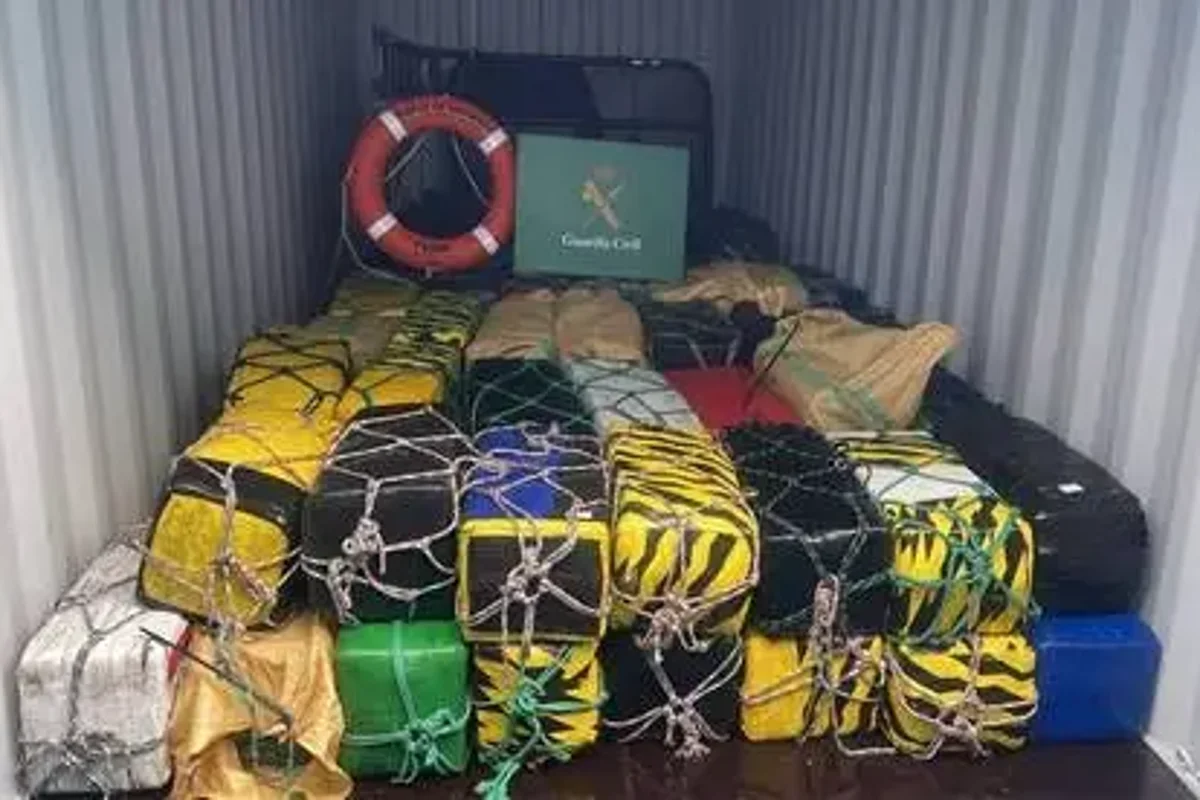
Another week, another maritime bust splashed across the front pages. Law enforcement proudly parades 2.6 tonnes of cocaine intercepted off the coast of Portugal, framing it as a crushing blow to international trafficking rings. Politicians hold press conferences. Agencies pat themselves on the back.
It is theatre. Pure, unadulterated theatre designed to justify next year's budget increases.
If you think a multi-tonne seizure on an ultra-fast rigid inflatable boat hurts the transnational supply chain, you do not understand the economics of modern organized crime. I have spent years analyzing illicit trade routes, watching enforcement agencies celebrate tactical victories while losing the strategic war entirely. Seizures do not cripple cartels; they are a calculated, baked-in cost of doing business.
The Economics of Built-In Loss
Let us look at how these syndicates actually operate. No major trafficking network ships 100% of its product on a single vessel hoping for the best. That is amateur hour. Logistics optimization in the underground economy mirrors legitimate global shipping, just with higher stakes and fewer compliance officers.
A consignment of 2.6 tonnes is rarely the entire eggs-in-one-basket operation the press makes it out to be. Shipments are diversified. Multiple vessels leave South American departure points simultaneously. If law enforcement interdicts one ultra-fast boat, the operators have already factored that loss ratio into the wholesale price structure.
The math is brutal. When a large seizure hits the headlines, street prices do not skyrocket because the supply has dried up. They stay stable because the wholesale cost of production in the Andean region is a fraction of a percent of its destination value. A lost cargo of several tonnes represents a write-off, comparable to a cargo ship losing containers in a storm. Annoying? Yes. Fatal to the enterprise? Not even close.
Furthermore, law enforcement often plays a passive role in how these routes function. Cartels routinely sacrifice older or less sophisticated boats as decoys. They feed intelligence agencies a target—a noisy, high-signature interception—while quieter, slower, or more innovative methods slip through unnoticed elsewhere along the Atlantic corridor.
Why Ultra-Fast Boats Are a Red Herring
The media loves the imagery of the 'ultra-fast' boat. Quad-engine ribs cutting through Atlantic swells at sixty knots evoke a Hollywood thriller. It gives journalists an easy narrative about technological arms races between police and smugglers.
It is a complete distraction.
The real movement of high-volume product does not rely solely on screaming speedboats dashing across the open ocean from South America to the Iberian Peninsula. That is a myth perpetuated by agencies needing dynamic visuals for evening broadcasts. The heavy lifting of global narcotics transit relies on commercial shipping containers, submersibles, and complex transshipment networks involving mother ships and local fishing fleets.
The ultra-fast boat is often the flashy decoy designed to exhaust maritime patrol assets in one sector while commercial maritime traffic carries the bulk inventory unmolested in another.
When enforcement focuses on intercepting high-speed vessels, they allocate finite resources toward tactical interception rather than financial intelligence, corruption tracking, and supply chain auditing. Chasing speedboats is the equivalent of swatting mosquitoes while ignoring the swamp.
The Flawed Logic of Prohibition Metrics
Why do governments keep doubling down on a strategy that clearly fails to reduce availability or purity? Because of how success is measured.
In the public sector, success requires quantifiable outputs. You cannot report a reduction in corruption or a stabilization of community health as easily as you can hoist 2,600 kilograms of white powder under floodlights for a photo op. Seizures provide the illusion of momentum. They generate press releases that justify increased staffing, upgraded hardware, and expanded jurisdiction.
Imagine a scenario where a corporate CEO measures their company's market share by how many damaged products customers return to the warehouse, while total revenue and market penetration remain entirely unmonitored. That is modern drug enforcement. They are measuring the debris field and calling it victory.
Street purity levels in major European hubs remain persistently high, and prices adjusted for inflation have steadily dropped over the past two decades. If interdiction actually worked, supply would contract, prices would spike, and availability would plummet. None of that happens. The market adapts instantly.
Dismantling the Supply Myth
To understand why traditional busts fail, we must look at how modern syndicates absorb friction. Friction is any event that delays or destroys product. In legal supply chains, friction ruins profit margins. In illicit supply chains, friction is anticipated, managed, and subsidized by the end consumer.
When law enforcement seizes a multi-tonne shipment off Portugal, three things happen instantly:
- Risk Premium Adjustment: Wholesale prices adjust marginally to cover the amortized loss across surviving shipments.
- Route Calibration: The syndicate evaluates which surveillance asset spotted the boat and shifts vectors.
- Marketing Capital: The cartel uses the massive media coverage of the bust as free validation of their product's potency and availability in target markets.
Yes, you read that correctly. For a certain demographic of consumer and distributor, a massive headline-grabbing seizure is proof positive that the pipeline is active, high-volume, and flowing. It is aggressive brand awareness funded entirely by the state.
The Uncomfortable Truth About Demand
The conversation surrounding maritime interdictions almost always ignores the fundamental driver of the entire apparatus: relentless, inelastic demand.
As long as European and global markets maintain an insatiable appetite for stimulants, cutting off one channel is like pinching a garden hose with ten holes in it. Water simply finds another exit point. Portugal and Spain will remain primary entry gates due to geographic proximity to North Africa and South America, shared linguistic ties, and extensive coastline.
No amount of fast patrol boats will alter the macroeconomic realities of supply and demand. Law enforcement agencies know this, yet they continue the cycle because the alternative—admitting that prohibition cannot outpace global economics—requires a complete restructuring of drug policy that politicians are too cowardly to debate.
Stop celebrating the seizure of 2.6 tonnes of cocaine as a watershed moment. It is a rounding error in a multi-billion-dollar global logistics machine. Until society stops funding the demand side and stops measuring success by the weight of what is pulled out of the water, these headlines will keep repeating, and the cartels will keep laughing all the way to the bank.