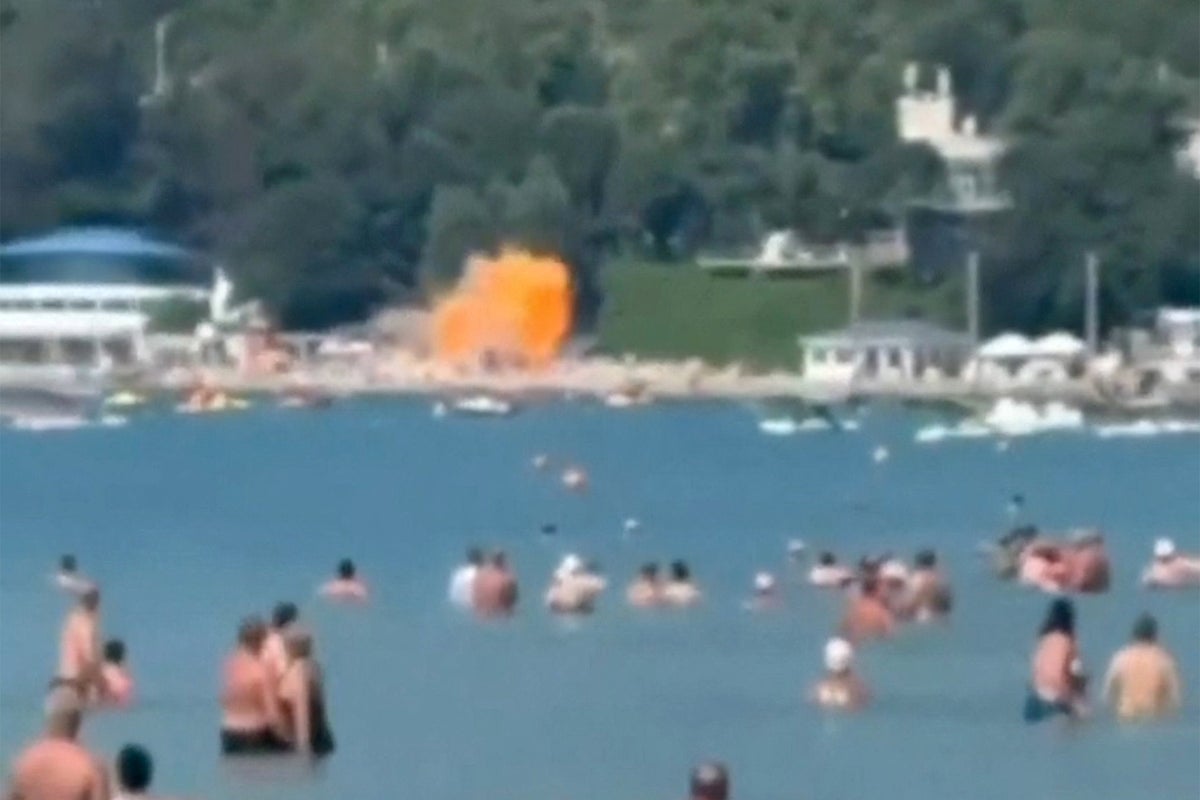
When a cluster of submunitions rained down on a crowded beach in Sevastopol, the shockwaves reached far beyond the shores of Crimea. Four people died, including two children, and over 150 others suffered injuries. Moscow immediately pointed an accusing finger at Washington. After all, the weapons involved were US-supplied ATACMS tactical missiles. Russian air defenses intercepted incoming projectiles overhead, causing the warhead of a fifth missile to detonate and scatter lethal shrapnel across packed sandy beaches and hotels in Uchkuyivka.
For Ukraine's Western allies, this tragic event marks a chilling psychological and strategic turning point. It forces a harsh conversation about the invisible boundaries of modern warfare. When advanced long-range Western weaponry intersects with civilian recreational spaces in annexed territories, the comfortable fiction of proxy distance evaporates instantly.
The Weaponry and the Target Dilemma
Let us look at the mechanics of the incident. Ukraine launched ATACMS missiles equipped with cluster munitions toward military infrastructure near Sevastopol. Crimea serves as a primary logistical backbone for Russia's southern military operations. Kyiv views the entire peninsula as occupied territory, meaning standard definitions of civilian sanctuary do not apply from their operational standpoint.
Yet, intercepting these high-speed missiles creates an unpredictable hazard zone. When a Patriot or equivalent air defense system—or in this case, Russian counter-fire—interdicts a ballistic trajectory, physics takes over. Debris and submunitions scatter across a wide radius.
Pentagon officials maintain that Ukraine makes its own targeting decisions. They argue that Kyiv did not target a beach full of sunbathers. But intent matters very little to the families of victims or to Kremlin strategists looking for a pretext to escalate. The core dilemma for NATO capitals is simple. Every time you hand over long-range, high-precision artillery, you inherit a fraction of the risk associated with its deployment.
The Diplomatic Fallout in Moscow and Washington
The diplomatic response was swift and predictable, yet escalatory. The Russian Ministry of Foreign Affairs summoned the US ambassador, issuing direct warnings that Washington's direct involvement would not go without consequences. Moscow's narrative frames the United States as an active participant because American satellite reconnaissance data and specialists feed into the targeting loop for these systems.
Washington finds itself in an uncomfortable diplomatic corner. Publicly, officials distance themselves from tactical execution. Privately, Western security planners worry about mission creep. The authorization allowing Ukraine to strike inside Russian-held border regions using donated arms was supposed to relieve pressure on cities like Kharkiv. Instead, it has blurred the lines of engagement until tragedy struck a civilian sunbathing spot on a Sunday afternoon.
This incident exposes the core vulnerability of coalition warfare. Ukraine fights for national survival, utilizing every tool at its disposal to shorten the war. Western partners fight a proxy containment strategy, trying to bleed Russia without triggering a direct third-world war or a nuclear exchange. Those two goals clash violently when civilian casualties mount from American steel falling out of a Crimean sky.
Shifting Red Lines on the Ground
We are witnessing a dangerous compression of escalation thresholds. Earlier restrictions placed on Western weapons kept them safely away from core Russian assets or heavily populated occupied hubs. As the battlefield stagnated, those restrictions eroded piece by piece.
When you remove geographic limits on advanced rocketry, accidents become political catastrophes. Russia used the incident to domesticate public outrage, drawing parallels to other attacks and demanding international condemnation. Meanwhile, Ukrainian leadership remains defiant, arguing that a military base disguised as a resort city is a legitimate theater of operations.
Neither side is backing down. Ukraine needs deeper strikes to disrupt supply lines. Russia needs to project invulnerability and punish Western patrons.
What This Means for the Next Phase of the War
The real worry for NATO isn't just a diplomatic reprimand. It is the creeping realization that total separation between supplier and user is impossible. Intelligence sharing, satellite telemetry, and maintenance loops tie Western militaries directly to every launch button.
Expect quieter debates behind closed doors in Berlin, London, and Washington. Leaders will tighten oversight parameters, even if they publically maintain a united front. They will weigh the military utility of cluster-armed ATACMS against the public relations disaster of civilian casualties on holiday beaches.
The war has moved past clean battlefields. Every escalation brings new liabilities. As long as advanced Western hardware remains active over the Black Sea, the margin for error shrinks toward zero.
Crimea attack: ATACMS missile shrapnel rains down on beach
This short video clip provides footage and visual context regarding the distribution of missile shrapnel during the Sevastopol incident.
http://googleusercontent.com/youtube_content/1


