The sea off the coast of Sinpo does not care about geopolitics. It is a gray, churning expanse, bitter cold for much of the year, where local fishermen drag nets for a dwindling catch. But if you stand on the jagged cliffs overlooking the heavily guarded shipyards, the ocean takes on a different meaning. It becomes a highway of invisible anxiety.
For decades, the world viewed North Korea’s military ambition through a single, familiar lens: a missile soaring over the Sea of Japan, a fiery arc captured on satellite imagery, a bluster of state television broadcasts. We looked to the skies. But while our eyes were trained upward, a quiet, desperate pivot was happening beneath the waves.
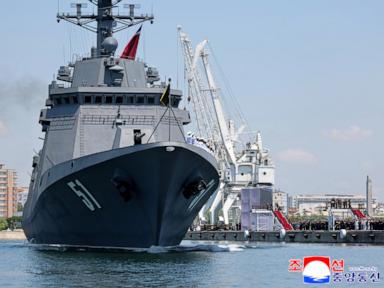
Kim Jong Un recently stood on the deck of a newly commissioned warship, the air thick with the smell of marine diesel and fresh, cheap paint. State media captured the image—the leader surrounded by naval officers, their chests heavy with medals, smiles tightly locked into place. The announcement was loud: progress on a nuclear-armed navy is accelerating. A new surface vessel is in service.
To the casual observer scanning a news feed, it sounds like standard theater. Another day, another threat. But look closer at the human cost, the rusted metal, and the terrifyingly primitive engineering driving this naval expansion, and the narrative shifts from cartoonish villainy to a cold, suffocating reality.
The Welder’s Ghost
Consider a hypothetical worker at the Sinpo South Shipyard. Let us call him Min-ho. Min-ho does not read international intelligence briefings. He does not know about tectonic shifts in regional deterrence. His reality is the blinding flash of an arc welder inside the cramped, damp hull of a patrol boat.
The steel he works with is often substandard, scavenged from domestic scrap or smuggled through porous borders. The air in the docks smells of ozone and malnutrition. In the winters, the metal freezes to the skin. In the summers, the hulls become ovens. Min-ho’s task is to weld missile launch tubes onto vessels never originally designed to carry them. It is a frantic, dangerous improvisation.
When the state demands a nuclear navy, it does not wait for a modern industrial supply chain. It forces old frames to carry new, impossible weights.
This is the hidden friction of the North Korean navy. Unlike their relatively modern ballistic missile program—which receives the lion's share of funding, high-grade telemetry, and elite scientific minds—the navy has long been the stepchild of the regime. Its surface fleet is a floating museum. Most of its ships are relics of Soviet-era design or Chinese hand-me-downs from the 1960s and 70s. They are noisy. They leak. They are prone to mechanical failures that never make the evening news.
Yet, the order has come down from Pyongyang: the navy must be nuclearized.
This forces engineers into an agonizing game of military Tetris. How do you mount a nuclear-capable cruise missile onto a ship that lacks basic digital fire-control systems? You weld. You jury-rig. You bypass safety protocols that western navies consider sacred. The stakes for Min-ho are not about global dominance; they are about surviving the next inspection. A faulty weld is not a technical setback. It is a treasonous act.
The Calculus of Desperation
Why turn to the sea now?
The answer lies in a simple, brutal truth of modern warfare: survivability. For years, North Korea relied on mobile missile launchers hidden in caves and mountain tunnels. But satellite technology has evolved. Western optics can now spot a tire track in the mud from hundreds of miles away. Synthetic aperture radar can peer through clouds and darkness. The mountains are no longer a permanent cloak.
The ocean, however, remains stubbornly opaque.
By pushing nuclear ambitions into the water, the regime is attempting to create what strategic thinkers call a "second-strike capability." If an adversary managed to destroy every missile silo and launch pad on land in a preemptive strike, a single hidden vessel at sea could still strike back. It is the ultimate insurance policy for a dictatorship terrified of its own demise.
But there is a vast gulf between intent and capability.
The Western media often reports these naval milestones with a sense of impending doom. Headlines scream of a "New Era of Naval Threat." The reality is far more complicated and, in some ways, more unsettling. The new warship placed into service is not a stealth destroyer. It is a relatively small, lightly armored corvette or patrol vessel, likely outfitted with Hwasal-2 cruise missiles.
Think of it as putting a sniper rifle on a rickety wooden raft. The weapon is deadly, but the platform is incredibly vulnerable.
During the commissioning ceremony, Kim Jong Un spoke of "equipping the navy with nuclear weapons as an urgent task." He toured the bridge, inspected the artillery, and peered into the water. But behind the propaganda photos lies a desperate math. A surface ship in the East Sea of Korea is a sitting duck for modern anti-ship missiles, attack submarines, and airborne surveillance. The regime knows this. The move is less about winning a naval war and more about raising the psychological price of an intervention.
The View from the Bridge
Now, shift your perspective from the shipyards of Sinpo to the bridge of a South Korean or American destroyer patrolling the DMZ maritime border.
A young sonar technician sits in a darkened room, headphones pressed against his ears. The sound of the ocean is a chaotic symphony—the clicking of shrimp, the deep groan of tectonic plates, the rhythmic thrum of commercial cargo ships. Somewhere in that noise is the signature of a North Korean vessel.
Historically, tracking North Korean ships was easy. They sounded like old tractors rattling down a dirt road. Their machinery vibrated so loudly that sonar could pick them up from leagues away.
But what happens when an adversary becomes desperate enough to accept extreme risk?
That is the true invisible stake of this naval push. If North Korea deploys nuclear-capable cruise missiles on low-tech, unstable ships, the margin for error vanishes. In a standard naval standoff, a mechanical malfunction or a stray shot leads to an international incident, a flurry of diplomatic cables, and an eventual standoff resolution. But when the vessel in question carries a nuclear warhead, a single miscalculation by a panicked, poorly trained captain changes the history of the world.
The terrifying aspect of North Korea's naval modernization is not its sophistication. It is its volatility.
Western military doctrine emphasizes command and control—fail-safes, encrypted links, dual-key authentication systems to prevent accidental launches. In the isolated, paranoid hierarchy of the North Korean military, communications are rigid yet fragile. If a North Korean warship loses contact with Pyongyang during a crisis, what does the captain do? Does he assume the worst and launch? Does he hold fire and risk execution for cowardice?
The Rusted Edge of the Frontier
I remember talking to a naval veteran who spent years patrolling the Northern Limit Line, the disputed maritime border between the two Koreas. He described the eerie experience of watching North Korean patrol boats through binoculars.
"They looked like ghosts," he said. "You could see the rust weeping down the sides of the hull. You could see the sailors moving on the deck without proper gear. Sometimes, they were just using buckets to bail out water. But you never forgot that they were armed to the teeth."
That image sticks. It is the defining paradox of this conflict: a nuclear program wrapped in a burlap sack.
The new warship entering service is a continuation of this paradigm. It represents an immense concentration of national wealth—stolen from a population that faces chronic food insecurity—poured into a weapon system that may never function properly in combat. The tragedy is entirely human. The resources spent on the specialized steel, the missile guidance components, and the rocket propellant could have transformed the agricultural sector of a starving province. Instead, it buys a few minutes of footage on the evening news and a momentary sense of security for a regime in perpetual isolation.
We often talk about these geopolitical developments as if they are chess moves. White pawn to E4. Black knight to F3. But chess assumes both players are using standard pieces on a clean board. This is different. This is one player using cracked plastic pieces, gluing razor blades to the edges, and threatening to flip the table if they start to lose.
The Cold Horizon
The sun sets over the Sinpo shipyard, casting long, distorted shadows across the gray water. The newly commissioned warship sits tied to the pier, its flags fluttering in the damp wind. The dignitaries have left. The black limousines have wound their way back along the bumpy roads to Pyongyang.
Left behind are the sailors who will man the decks, men who know that their ships are essentially floating coffins in the event of a real conflict. Left behind are the engineers who must maintain complex missile systems with improvised tools and no spare parts.
The international community will respond with predictable rhythms. There will be meetings in New York. There will be statements of condemnation from Seoul and Tokyo. Analysts will pore over satellite images, measuring the length of the hull, estimating the displacement, arguing over the radar cross-section.
But the real story isn't the metal. It is the desperation that forged it.
North Korea's push for a nuclear navy is a confession written in steel. It is the admission of a regime that knows its conventional forces are obsolete, that its skies are defenseless, and that its only hope for survival is to make the surrounding seas as dangerous, unpredictable, and terrifying as possible. As the ship rides the swells of the dark harbor, it carries more than just missiles. It carries the weight of a nation trapped in its own myth, floating on an ocean of uncertainty, waiting for a spark.