In the alleyways of Tehran, the air tastes of sulfur and dry dust. It is a familiar metallic tang, carried down from the arid heights of the Alborz mountains, whispering of long-standing defiance. Here, men sit on plastic stools outside neighborhood tea shops, their transistor radios crackling with news of sanctions, shipping lanes blockaded, and an economy slowly being squeezed into a diamond-hard knot. They do not talk about geopolitics in abstract terms of gross domestic product or diplomatic communiques. They talk about the price of cooking oil, the fluctuating value of the rial, and the heavy, suffocating silence of isolation.
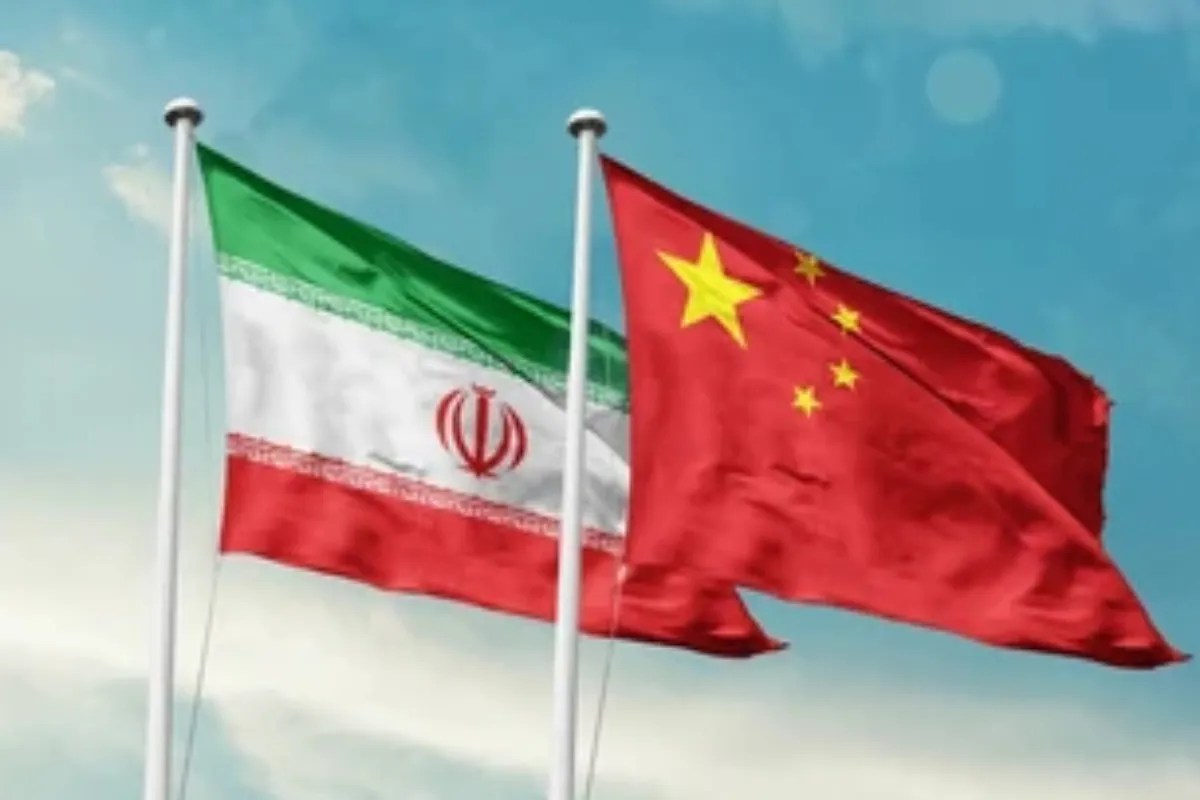
Thousands of miles away, inside the sleek, mirrored corridors of Beijing, a different kind of quiet prevails. It is the quiet of calculation. Maps are illuminated on smart glass; trade vectors are calculated down to the fraction of a cent. For decades, the Dragon and the Lion have circled each other across shifting sands, bound by a mutual skepticism of Western hegemony. But history rarely moves in straight lines. It bends. And right now, it is bending sharply toward an alignment that threatens to redraw the contours of global power.
Consider what happens when a superpower under siege finds an industrial titan willing to look the other way. Or, more accurately, willing to look directly at the opportunity.
For years, the Islamic Republic has stood as a solitary fortress against a wall of international pressure. The sanctions are not merely legal restrictions; they are atmospheric pressure. They press down on hospitals struggling to import specialized pharmaceuticals. They press down on young engineers who dream of building industries only to watch their currency evaporate before their eyes. In the face of this relentless storm, Tehran has long searched for an umbrella.
Now, that umbrella is being unfurled in the East.
The narrative of international relations is often told through treaties and grand summits, but its true weight is felt in the dark. It is felt in the silent transit of container ships slipping past maritime trackers, carrying cargo that keeps an economy breathing when the official arteries have been clamped shut. China, with its insatiable appetite for energy and its defiant stance against unilateral Western dominance, has stepped into the breach.
To understand this dynamic, you have to look past the official press releases issued by foreign ministries. Those documents are written in the bloodless prose of diplomacy, designed to obscure rather than reveal. Instead, look at the physical reality on the ground. Look at the refineries, the pipelines, and the quietly negotiated trade pacts that bypass the dominant global financial architectures.
When Beijing extends a hand to help Tehran protect its sovereignty, it is not an act of sudden humanitarian charity. States do not have friends; they have interests. And China's interest lies in ensuring that the American-led global order does not have the final say over who survives and who starves on the world stage. By offering diplomatic cover at the United Nations, intelligence sharing, and economic lifelines, Beijing is signaling something profound. It is drawing a line in the sand.
Yet, this dance is fraught with peril.
Walking through the grand bazaars of Isfahan, you can feel the deep, historical pride of a civilization that remembers when it was the center of the world. Persians are fiercely independent. They do not bow easily, whether to Western emperors or Eastern patrons. There is an underlying anxiety among local merchants and intellectuals about becoming too dependent on a single external savior. What happens when the dragon demands its price? What does it mean for an ancient nation to trade one form of pressure for another?
These are questions whispered behind cupped hands in university common rooms and private courtyards. They are the invisible stakes of our current era.
The alliance between Beijing and Tehran is forged in the crucible of mutual defiance. As Washington tightens the screws, attempting to isolate both nations through a web of financial containment, the two capitals are quietly building parallel systems. They are trading in local currencies, setting up alternative communication channels, and coordinating diplomatic maneuvers to counter Western resolutions.
It is a game of high-stakes poker played on a global board. And the stakes are nothing less than the architecture of the twenty-first century.
Will this partnership hold when the pressure mounts? History suggests that convenience marriages between giants are tested by the friction of competing ambitions. China is a global trader with massive economic exposure to Western markets; it cannot afford to detonate its global supply chains entirely. Iran is a revolutionary state navigating deep domestic contradictions and economic exhaustion.
And yet, the immediate imperative overrides the long-term doubt. The enemy of my economic hegemon is my strategic partner.
As the sun dips below the horizon in Tehran, casting long, sharp shadows across the ancient bricks of the citadel, the glow of neon signs flickers on in Beijing. Two worlds, separated by thousands of miles of rugged mountains and steppe, are being drawn together by the gravity of geopolitical resistance. The rest of the world watches from the sidelines, holding its breath, waiting to see what happens when the pressure finally cracks the glass.