The media elite spent a week laughing at a felt-tip pen.
They thought they caught a "gotcha" moment. They saw a politician rambling about a writing utensil to a room full of suits. They saw a manufacturer, Newell Brands, playing it safe with a "no comment" or a confused shrug. They concluded it was another case of an eccentric leader losing the plot.
They were wrong.
They missed the most effective product placement masterclass of the decade. While journalists were busy fact-checking the drying time of ink, a multi-billion dollar brand was being cemented as the official tool of power. If you think the "Sharpie saga" was about a confused old man and a pen company, you are failing to see how attention actually converts into equity in the 2020s.
The Myth of the Official Endorsement
The lazy consensus says a brand needs a structured, signed, and sanitized partnership to benefit from a public figure.
Commercial logic dictates that if a President uses your product, you should have a press release ready. When the maker of Sharpie claimed they didn't know what was being discussed, the "experts" called it a PR failure for the administration.
In reality, it was a win for the product.
I have watched Fortune 500 companies spend $5 million on "influencer" campaigns that didn't move the needle by a single percentage point. Why? Because they felt staged. They felt like a transaction.
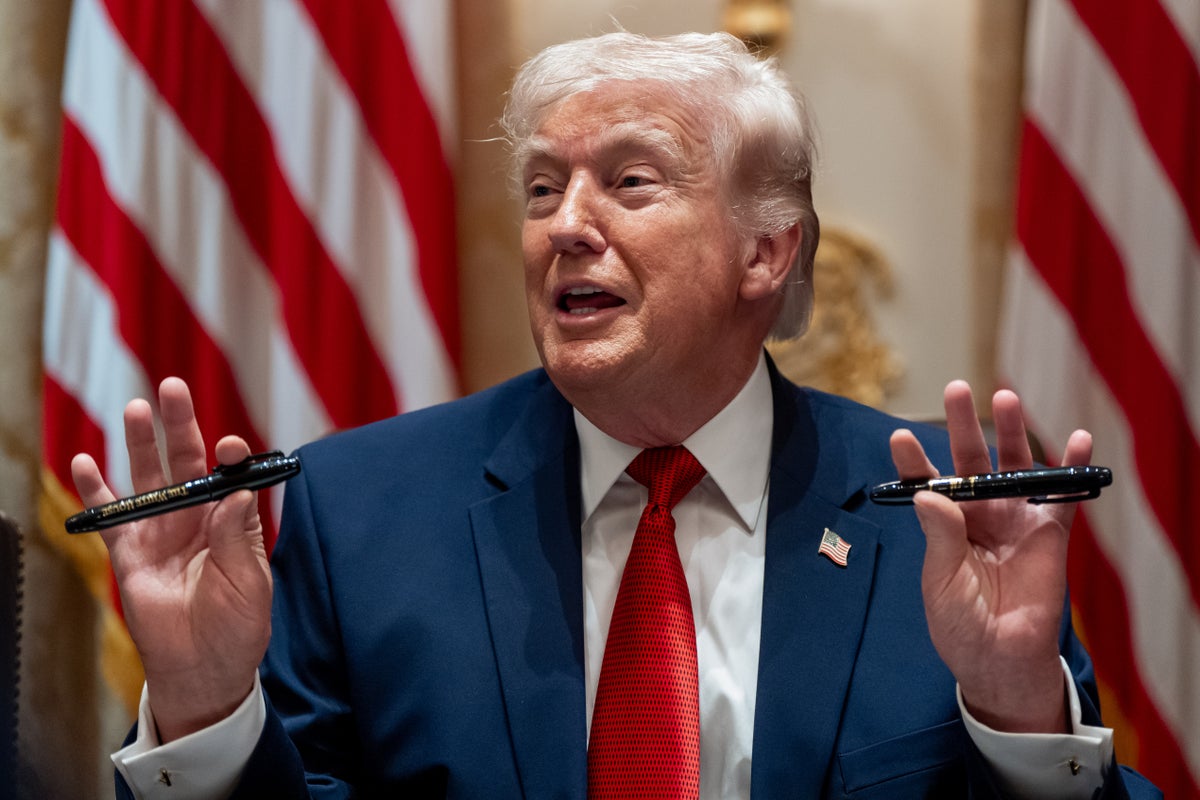
When a leader insists on using a specific, chunky, black marker because "the gold pen didn't work" or "it didn't look bold enough," that isn't a gaffe. That is a raw, unsolicited testimonial. You cannot buy the kind of authenticity that comes from a person stubbornly refusing to use the "official" luxury options in favor of a $2 marker.
Aesthetics of Authority
Let’s talk about the psychology of the "Bold" line.
Standard government business is conducted with fountain pens or fine-point rollers. They are thin. They are delicate. They are precise. They are also invisible on camera.
The pivot to the Sharpie wasn't an accident or a lack of taste; it was a shift in the medium. In a world of high-definition broadcasts and social media snippets, a fine-point pen disappears. A Sharpie creates a signature that can be read from the back of the room. It screams "decisive." It screams "permanent."
Critics focused on the "tackiness" of using a permanent marker for official business. They ignored the fact that the Sharpie became a visual shorthand for executive action. Every time that black cap was pulled off, the audience knew something was being changed.
If you’re running a business and you’re still focusing on the "correct" way to do things rather than the "visible" way, you are losing. Visual dominance beats etiquette every single time.
Why Companies Play Dumb (And Why It’s Smart)
Newell Brands didn't "fail" to capitalize on the moment. They practiced strategic silence.
When a brand becomes a political lightning rod, the board of directors usually panics. They want to distance themselves. But the smart play—the one actually executed here—is to let the product remain the hero while the humans argue.
By not leaning into the "Trump Pen" narrative, they avoided alienating half the country. By not denying it, they kept the free advertising running on a loop for three years.
I’ve seen CEOs incinerate brand value by trying to "clarify" their stance during a viral moment. If your product is being discussed in the Oval Office, shut up and let it happen. The ink speaks for itself.
The Logistics of the Lie
The competitor article suggests the pen maker was baffled by the technical claims made about the pen’s "development."
Who cares?
This is the "Fact-Checker's Trap." You focus so much on the technical specifications of the ink-delivery system that you ignore the cultural footprint. Whether or not the company "customized" a pen for a specific user is irrelevant to the millions of people who now associate that brand with "the pen that signs the laws."
Imagine a scenario where a celebrity claims their favorite sneakers were "engineered for space travel." The manufacturer knows they weren't. Does the manufacturer issue a stern correction? No. They enjoy the fact that people are talking about their sneakers in the same sentence as NASA.
Your Branding is Too Polite
The real takeaway for the industry is that "prestige" is dying.
We are moving into an era of "Aggressive Utility." The Sharpie isn't a luxury item. It’s a tool. By bringing it into the most formal rooms in the world, its user disrupted the expected decorum.
Most marketing departments are terrified of being "loud." They want to be "premium." They want to be "refined."
The Sharpie saga proved that being "loud" is the only way to survive the 24-hour news cycle. If you aren't willing to be the "uncouth" option that actually gets the job done, you will be forgotten in favor of a brand that isn't afraid to be a bit thick-lined.
The Cost of Being "Right"
The media spent hours trying to prove the President was wrong about his pens.
While they were being "right," the brand was getting billions of impressions.
While they were laughing, the visual of the "bold signature" became an icon.
In business, you can be technically correct and bankrupt. Or you can be "wrong" and own the conversation. The Sharpie wasn't a tale spun to a Cabinet; it was a branding stick used to beat the competition into irrelevance.
Stop looking for the truth in the ink and start looking at the power in the grip.
Stop trying to fix the optics. Embrace the boldest line in the room. Or stay thin, precise, and completely ignored.