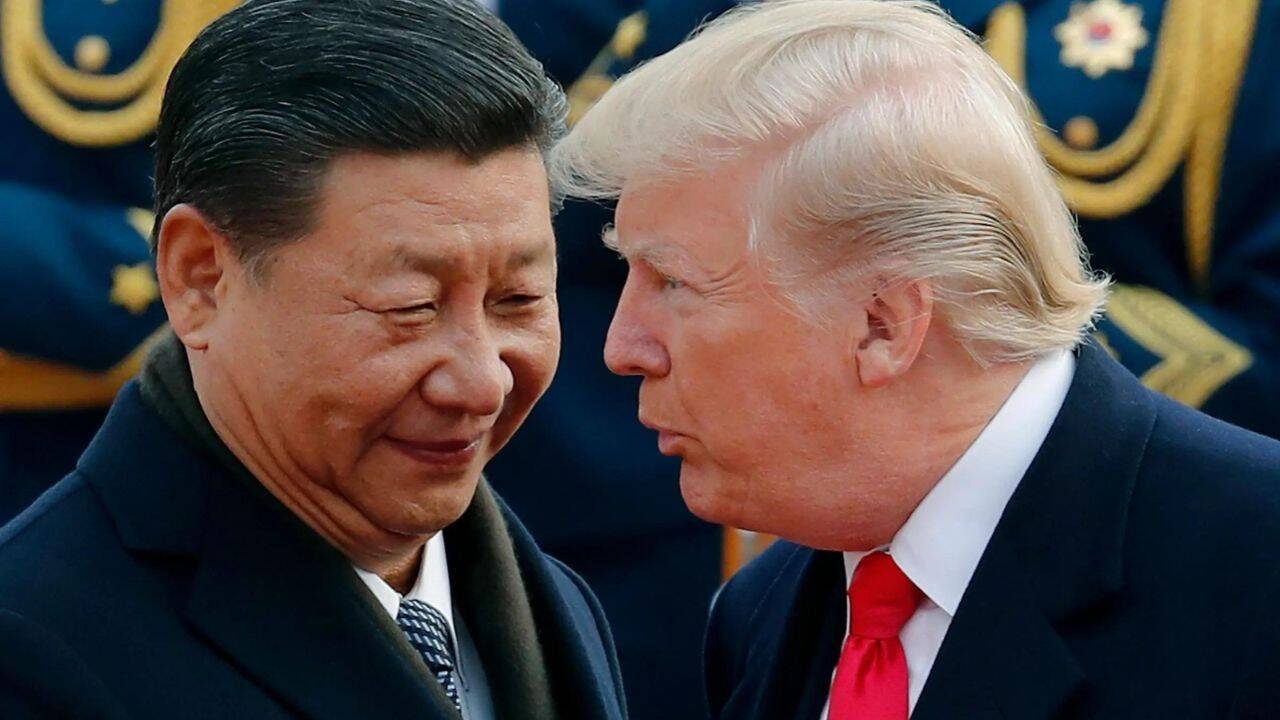
Mainstream business journalism loves a good border town fairy tale. Every few months, another correspondent treks out to Heihe or Blagoveshchensk, stares across the frozen Amur River at a few newly built freight terminals, and declares the birth of a mighty Eurasian economic bloc. They parrot the official diplomatic catchphrase—"a partnership without limits"—as if two authoritarian giants just unlocked an infinite money glitch to bypass Western sanctions.
That narrative is lazy, mathematically illiterate, and completely backward. If you enjoyed this post, you might want to look at: this related article.
What is actually happening along the 4,200-kilometer Sino-Russian border is not a symmetrical trade boom. It is a distressed asset liquidation. When a seller has zero alternative buyers, the resulting transaction is not a partnership. It is a hostage negotiation where one side holds all the cash, all the manufacturing capacity, and all the logistical leverage.
I have watched European and Asian logistics firms burn millions of dollars over the last three years trying to position themselves for a mythical "Siberian renaissance," only to discover that the border infrastructure is a one-way extraction valve. If you are analyzing cross-border trade between Beijing and Moscow through the lens of mutual prosperity, you are asking the wrong question entirely. The real question is how long Moscow can pretend to be a superpower while operating as Beijing’s discounted gas station and captive consumer market. For another look on this development, see the recent update from Business Insider.
The Myth of the "No Limits" Equality
To understand why the border boom narrative fails, you have to look at the structural composition of the trade. Journalists routinely cite headline bilateral trade figures—surpassing $240 billion annually—as proof of an unstoppable economic engine. Raw volume numbers are the favorite hiding place of bad analysts. When you strip away the diplomatic pageantry and examine the customs manifests, the asymmetry is staggering.
Russia exports raw hydrocarbons, timber, coal, and agricultural commodities. China exports finished industrial machinery, semiconductors, consumer electronics, heavy trucks, and automobiles. In classical trade economics, this is not the profile of two peer competitors building a shared future. It is the exact textbook definition of a colonial extraction relationship.
The Pipeline Illusion
Look closely at the energy infrastructure that supposedly anchors this alliance. Russia’s flagship gas route to China, the Power of Siberia pipeline, moves natural gas from Eastern Siberia to northern China. On paper, it looks like a triumph of state-directed engineering. In practice, it is a monument to Russian desperation.
Before 2022, Gazprom used European demand to play buyers against each other, securing premium pricing indexed to European gas hubs. Once Moscow severed its European pipeline network, Beijing became the monopsony buyer—the only customer in town with the infrastructure to take delivery.
Consequently, China pays a fraction of global market rates for Russian gas. Meanwhile, the proposed Power of Siberia 2 pipeline—which Moscow desperately needs to salvage the gas fields in Western Siberia that used to feed Germany—has been stalled in endless negotiations for years. Why? Because Beijing knows Moscow has nowhere else to send the molecules. China refuses to pay for construction, demands domestic Chinese subsidized prices at the border, and refuses to commit to minimum purchase volumes. That is not a "no limits" friendship. That is predatory pricing executed by a patient buyer.
The Infrastructure Bottleneck Nobody Mentions
If you actually walk the freight yards in Manzhouli or Zabaikalsk, the glamour evaporates instantly. The physical border remains an operational nightmare defined by mismatched rail gauges, chronic rolling-stock shortages, and lopsided freight flows.
Russia uses the 1,520 mm broad gauge; China uses the 1,435 mm standard gauge. Every single shipping container moving across the land border must be physically lifted by crane from one train onto another. During peak surges, containers sit stranded for weeks in freezing rail yards waiting for bogie exchanges or flatcars.
Worse, the trade imbalance creates a massive logistical deadweight problem. Trains arrive in Russia packed to the roof with high-value Chinese consumer goods and industrial parts. Those same containers have nothing high-value to carry back. They return to China either completely empty or loaded with low-margin bulk raw materials. In freight economics, empty backhauls destroy unit profitability. Shippers are forced to price the empty return trip into the inbound freight rate, making overland Siberian transit vastly more expensive per ton-mile than maritime shipping.
The Yuan Trap and the Death of Monetary Sovereignty
Western pundits panicked when Moscow and Beijing announced that over 90 percent of their bilateral trade is now settled in rubles and yuan, bypassing the US dollar. They framed it as the death knell of dollar hegemony.
Again, they missed the actual financial mechanics. De-dollarization along the Amur River did not create a multipolar currency zone. It created a yuan colony.
The Russian ruble is volatile, illiquid internationally, and heavily restricted by capital controls. Chinese state banks and exporters have zero interest in holding massive reserves of rubles they cannot spend anywhere else on earth. As a result, "settlement in national currencies" overwhelmingly means settlement in Chinese renminbi.
Why Chinese Banks Are Quietly Enforcing Western Sanctions
Here is the irony that destroys the mainstream narrative: Beijing’s financial sector is terrified of secondary sanctions from the US Treasury.
While diplomats in Beijing issue sweeping statements about resisting Western hegemony, the compliance officers at Industrial and Commercial Bank of China, Bank of China, and China Construction Bank quietly enforce American sanctions rules with ruthless efficiency. Whenever Washington tightens the screws on secondary financial institutions, Chinese banks freeze ruble-yuan clearing channels overnight.
Russian importers routinely wait months to clear basic payments for industrial components. Many are forced to route money through shadowy networks of shell companies in Central Asia, paying exorbitant middleman fees of 5 to 10 percent just to settle an invoice for basic machinery. A partnership where your closest ally’s banks refuse to process your payments out of fear of your mutual adversary is not a strategic alliance. It is a marriage of convenience held together by duct tape.
Dismantling the Common Misconceptions
When businesses and investors look at the Sino-Russian border, they usually ask the wrong questions because they accept the premise that this trade corridor is permanent and growing. Let us dismantle the most common fallacies head-on.
Are Chinese companies permanently replacing Western brands in Russia?
Yes, in terms of market share, and no, in terms of long-term commitment. Chinese automakers like Chery, Great Wall, and Geely captured over 60 percent of the Russian car market after Western manufacturers exited. Walk down any street in Moscow or Vladivostok today, and the traffic looks indistinguishable from a tier-two Chinese city.
However, notice what Chinese companies are not doing. They are not building massive, capital-intensive manufacturing plants inside Russia. They are exporting completely built-up vehicles or shipping semi-knocked-down kits to be bolted together in abandoned Western factories with minimal local value-add.
Beijing’s corporate executives are not stupid. They view the Russian market as a temporary windfall—a captive dumping ground for excess Chinese industrial capacity—not a stable, long-term jurisdiction for fixed capital investment. If geopolitical winds shift, Chinese firms can pack up their sales offices and walk away with almost zero stranded assets.
Is the Northern Sea Route going to replace the Suez Canal?
No. Not this decade, and likely not the next. Moscow loves pitching the Arctic Northern Sea Route—backed by Chinese capital—as a revolutionary shortcut between East Asia and Europe.
The reality is brutal. Arctic shipping requires specialized ice-class vessels that cost double or triple the price of standard container ships. Insurance premiums for Arctic transit are astronomical, search-and-rescue infrastructure across thousands of miles of frozen coastline is virtually nonexistent, and seasonal ice variations make the strict just-in-time scheduling required by modern supply chains impossible. The Northern Sea Route will remain a niche corridor for specialized bulk LNG tankers moving Russian gas to Chinese ports, not a global commercial highway.
Does the Siberian border boom strengthen Russia’s industrial base?
It does the exact opposite. It accelerates Russia’s de-industrialization. Prior to 2022, Russia maintained struggling but functional domestic sectors in heavy truck manufacturing, civil aviation, and specialized machine tools.
Flooding the Russian market with cheap, state-subsidized Chinese imports has obliterated domestic Russian competitors. Kamaz, Russia’s premier truck maker, has watched its market share collapse under the weight of cheaper, better-equipped Chinese alternatives from Shacman and Sinotruk. By opening the floodgates at the Siberian border to solve short-term consumer shortages, Moscow traded away its long-term industrial sovereignty.
The Contrarian Playbook for Global Operators
If you run a supply chain, manage capital, or advise companies operating across Eurasia, believing the "no limits" propaganda will cost you money. You need to adjust your strategy to match the ground truth rather than the press releases.
- Price in chronic payment friction. Never assume normal trade finance timelines when dealing with any entity touching the Russian-Chinese corridor. If you are sourcing components from Chinese suppliers who also maintain heavy exposure to Russian buyers, audit their banking relationships. A sudden secondary sanctions sweep can freeze their operating accounts and stall your own shipments by association.
- Treat Russian infrastructure commitments as political theater. Do not allocate capital based on announced Sino-Russian mega-projects—bridges, rail tunnels, or gas pipelines—until the concrete is actually poured and Chinese state policy banks have disbursed the funds. Beijing routinely signs non-binding memorandums of understanding to flatter Moscow while delaying actual capital deployment indefinitely.
- Watch the grey-market re-export channels. The real growth is not happening on the direct Sino-Russian border; it is happening through circuitous routing in Kazakhstan, Kyrgyzstan, and Uzbekistan. Regulatory scrutiny is aggressively shifting toward these Central Asian transshipment hubs. Compliance teams must map sub-tier suppliers to ensure dual-use technology is not leaking through your own distribution network into Siberian freight terminals.
The Downside of Being Right Too Early
There is a legitimate risk to betting entirely against the integration of the Russian and Chinese economies, and intellectual honesty requires acknowledging it.
Markets and empires do not operate purely on spreadsheet efficiency. When geopolitical survival is on the line, authoritarian states will happily absorb massive financial losses, tolerate inefficient logistics, and subsidize uneconomic trade routes for decades. Even if Russia is slowly turning into an economic appendage of Beijing, that appendage still controls vast reserves of critical minerals, uranium, freshwater, and arable land that China desperately needs to insulate itself from Western maritime blockades.
If a major kinetic conflict erupts in the Indo-Pacific and the US Navy shuts down the Strait of Malacca, every inefficient rail yard in Siberia and every overpriced pipeline across the Amur River instantly transforms from a bad business investment into a vital strategic lifeline for Beijing. In that extreme scenario, the economic absurdity of the Siberian border trade becomes completely irrelevant.
Stop Confusing Survival With Strength
Look past the ribbon-cutting ceremonies on the Amur River bridges and the breathless headlines about record trade volumes. When a wounded bear walks into a tiger’s cave because it has nowhere else to go, the resulting arrangement is not a partnership of equals.
Beijing is systematically locking in cheap raw materials, expanding the international footprint of the yuan, and capturing an entire G20 consumer market without firing a shot or risking significant fixed capital. Moscow gets just enough consumer goods and industrial parts to keep its domestic economy from imploding, paying for the privilege with discounted resources and surrendered geopolitical autonomy.
Call it whatever diplomatic euphemism you want. Just do not call it a boom.