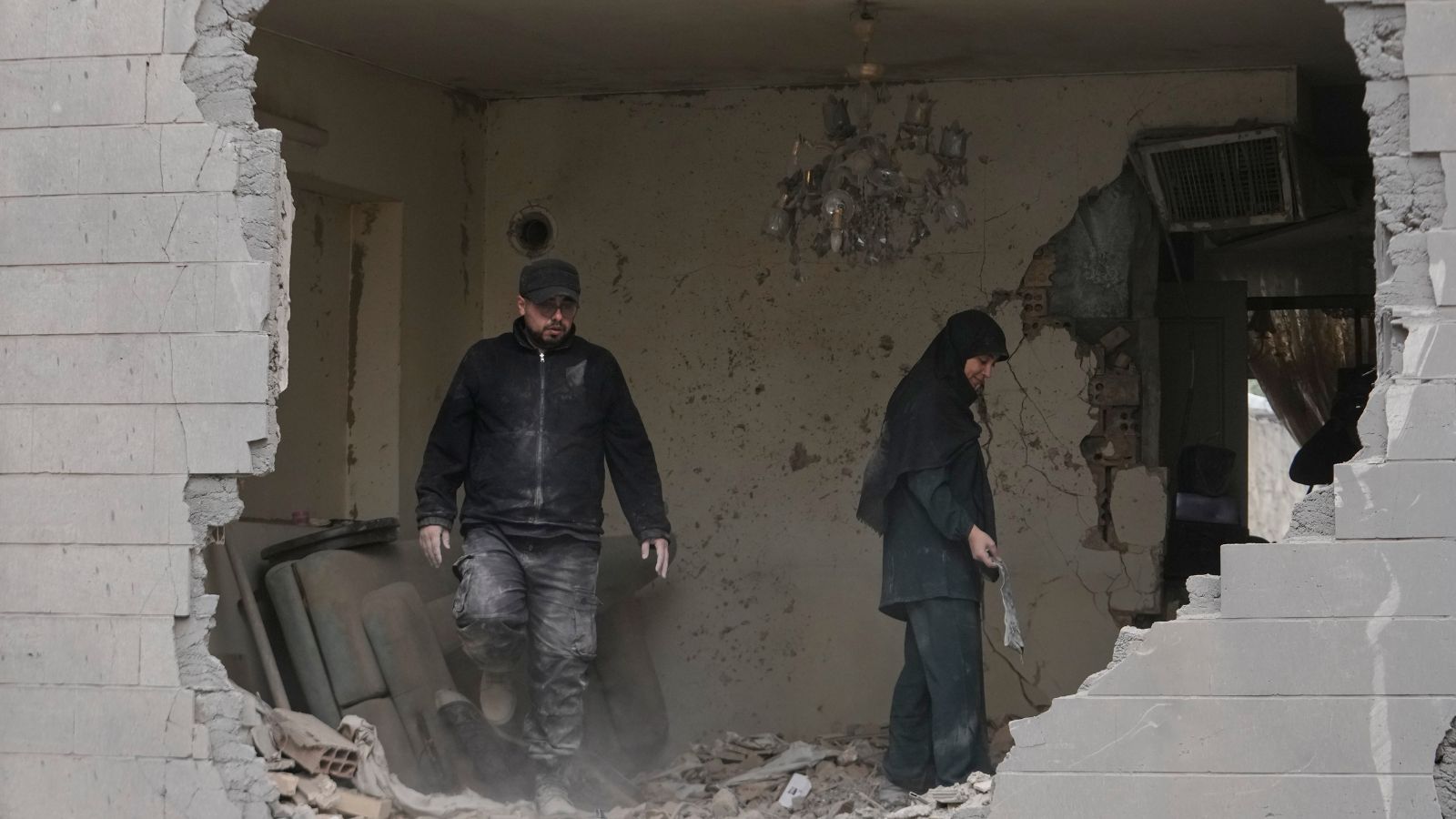
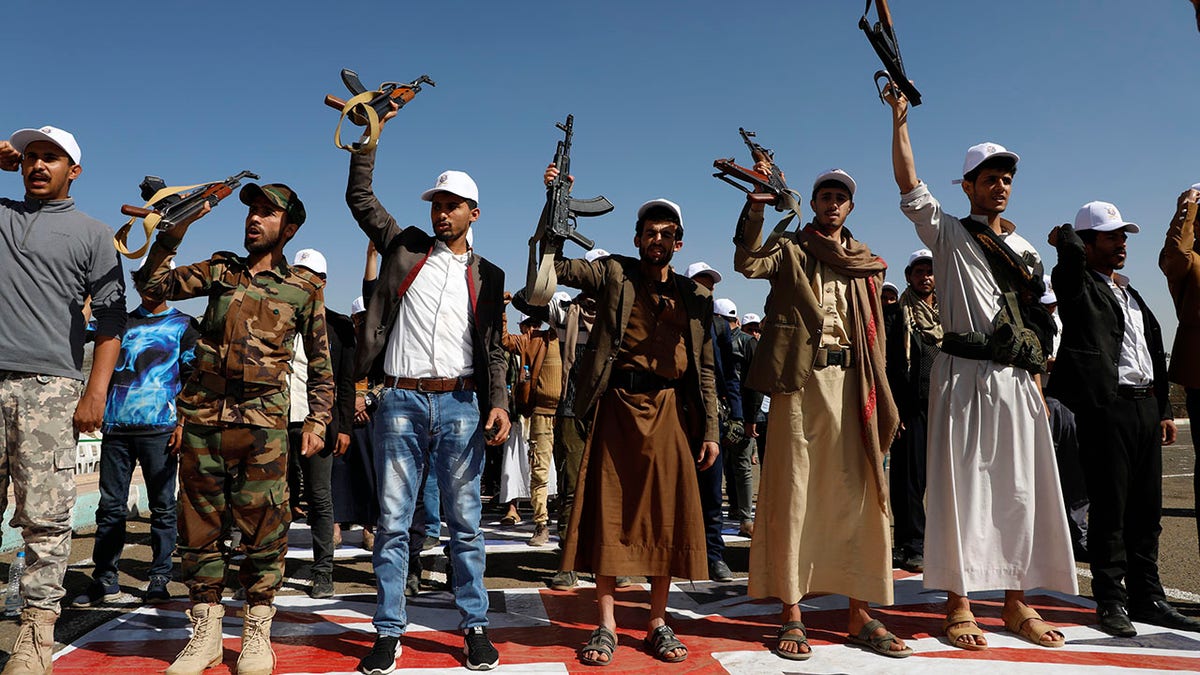
In the cramped, tea-scented backrooms of Tehran, the air doesn’t smell like gunpowder. It smells like old paper and anxiety. For sixteen days, the world held its breath, watching the jagged lines of a conflict that threatened to redraw the map of the Middle East. Then, the signal changed. Iran, a nation often characterized by its steely defiance and long-game strategy, signaled a willingness for a "complete end to the war."
It wasn’t a surrender. It was a calculation.
To understand why a regional powerhouse would pivot so sharply after barely two weeks of kinetic friction, you have to look past the missile trajectories. You have to look at the merchant in the Grand Bazaar clutching a devaluing Rial. You have to look at the strategist staring at a satellite map of crumbling proxies. Most of all, you have to look at the shadow of a domestic fire that hasn't quite been extinguished.
The Paper Fortress
Money is the most honest soldier. While rhetoric can be inflated, the cost of a cruise missile is fixed, and the cost of a blockaded shipping lane is exponential. By day sixteen, the economic reality for Iran had shifted from a manageable strain to a systemic threat.
Think of a household already struggling to pay the electric bill suddenly deciding to fund a neighborhood brawl. For years, Iran has operated under a "resistance economy," a polite term for a nation forced to become an island in a global ocean of trade. Sanctions weren't just a hurdle; they were the atmosphere. When the drums of war grew louder, the Rial didn't just stumble—it plummeted.
For the person on the street, this isn't about geopolitics. It’s about the price of eggs. It’s about the fact that their life savings, tucked away in local currency, might buy a car one week and a bicycle the next. The Iranian leadership knows that a hungry population is far more dangerous than a foreign army. They saw the protests of 2022. They felt the ground shake. Ending the war on day sixteen wasn't an act of pacifism; it was a desperate attempt to stop the internal bleeding before the patient went into shock.
The Broken Mirror of the Proxies
For decades, Tehran’s primary export hasn't just been oil—it’s been influence. They built a "Ring of Fire," a sophisticated network of partners and proxies that allowed them to fight wars without ever getting their own boots muddy. It was a brilliant, if brutal, insurance policy.
But by the middle of the second week, that mirror began to crack.
The assets Iran spent forty years cultivating were being systematically dismantled. It is one thing to fund a militia; it is quite another to watch your most expensive investments disappear in a cloud of precision-guided dust. The "Axis of Resistance" was designed to be a deterrent, a way to say, "If you hit us, our friends will hit you harder."
When that deterrent failed to stop the onslaught, the logic of the war collapsed. If the proxies can’t protect the center, and the center is forced to defend the proxies, the entire hierarchy flips. Tehran found itself in the position of a grandmaster who realized his pawns were gone and his queen was exposed. By calling for an end to the war, they weren't just saving lives; they were trying to salvage the remaining pieces of a multi-decade geopolitical investment. They needed to stop the clock before the "Ring of Fire" became a ring of ash.
The Nuclear Gamble and the Ghost of Diplomacy
There is a specific kind of silence that follows a massive explosion. In the halls of power, that silence is filled by the ticking of the nuclear clock.
Iran’s nuclear program has always been the ultimate bargaining chip, a "break glass in case of emergency" lever. But that lever only works if you have the time and the stability to pull it. A full-scale, prolonged war provides the perfect cover for an adversary to do what they’ve wanted to do for years: erase the centrifuges.
By day sixteen, the risk-reward ratio had inverted. Every day the war continued was another twenty-four hours where Iranian nuclear sites were vulnerable to "incidents" that could set the program back a generation. The leadership realized that they were playing a game of chicken with an opponent who was increasingly comfortable with the idea of a crash.
There is also the matter of the "New York Channel." Despite the fiery speeches, Iranian diplomats have always kept a backdoor open to the West. They know that the only way out of their economic cage is through a grand bargain. A short, sharp conflict can be framed as a defense of sovereignty. A long, grinding war makes you a pariah. By seeking an exit early, they preserved the possibility of returning to the negotiating table. They chose the boredom of a summit over the glory of a graveyard.
The Weight of the Invisible Stakes
We often talk about war in terms of "wins" and "losses," as if it’s a scoreboard at a stadium. It isn't. It’s a ledger of exhaustion.
The Iranian decision-makers aren't the caricatures often portrayed in Western media. They are survivalists. They are the inheritors of a Persian diplomatic tradition that spans millennia, one that prizes the "soft war" of maneuvering over the "hard war" of attrition. They looked at the battlefield on day sixteen and saw a path that led to a collapsed economy, a dismantled proxy network, and a domestic uprising.
Then they looked at the other path—the path of the "Complete End."
That second path allows them to claim they stood their ground. It allows them to tell their people they averted a catastrophe. It allows them to keep their remaining missiles in their silos and their remaining gold in their vaults.
Conflict is a fever. Sometimes, the body realizes it can’t sweat the infection out, so it lowers its temperature to survive. Iran didn't lose interest in the fight; they lost the ability to afford the price of admission.
As the sun sets over the Alborz mountains, the lights in the government buildings stay on. The centrifuges may still be spinning, but the rhetoric has softened. The merchant in the bazaar goes home, his pockets a little lighter, his future a little more uncertain. The war might be ending, but the struggle to stay relevant in a world that is moving on without them has only just begun.
The silence isn't peace. It’s a pause.
Would you like me to analyze the specific economic indicators that triggered this shift in Iranian policy?