The rain in the mountains does not announce itself with anger. It begins as a gray softening of the horizon, a slow blurring of the ridgelines where the earth meets the sky. Then the clouds thicken, swelling with a dark, bruised weight until they can hold no more. When the deluge finally breaks over the valleys of Nepal, it does not merely fall; it arrives with the crushing authority of a physical wall.
Water remembers every path it has ever carved. When swollen rivers burst their muddy banks, they reclaim what was once theirs with ruthless indifference. Stone walls crumble like dry biscuits. Terraced fields vanish beneath churning, chocolate-colored foam. And in the span of a single heartbeat, ordinary lives are upended, swept away, or left stranded in a landscape that has been rearranged beyond recognition.
Thirty days have passed since the worst of the flooding struck. In the bustling alleyways of Kathmandu and the quiet hill settlements alike, the news cycle has moved on. Satellites have rotated away, and foreign camera crews have packed their lenses. Yet, for thousands of families, the calendar is stuck on that single, terrifying night.
To understand what remains a month later, you must look past the initial aerial photographs of brown lakes swallowing villages. You must look at the empty chairs at dinner tables. You must listen to the specific kind of silence that settles over a home when someone is missing.
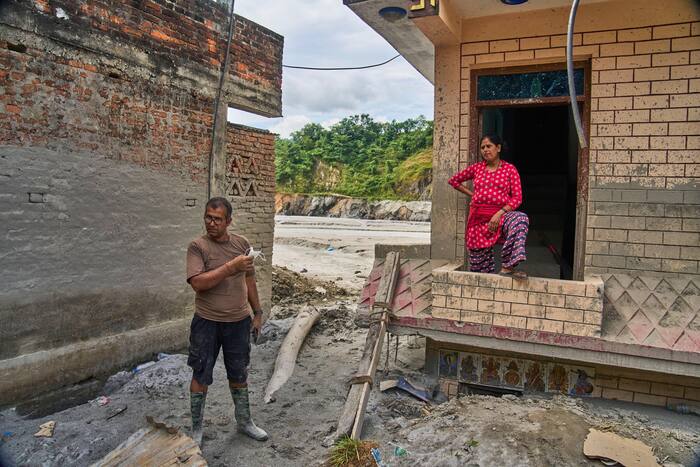
Consider a hypothetical mother standing on the slick, silt-covered bank of what used to be her family's front yard. Let us call her Maya. A month ago, Maya possessed a small stone-and-timber house, a handful of livestock, and a future mapped out by the reliable rhythm of the agricultural seasons. Today, she possesses the clothes on her back and a quiet, hollow terror that refuses to subside.
The water receded weeks ago, leaving behind a thick crust of gray mud that cakes everything it touches. It coats the furniture, hardens inside cooking pots, and smells faintly of rotting vegetation and stagnant earth. But the mud is not the hardest thing to clean. The hardest thing is the uncertainty.
Thousands remain unaccounted for. This is not merely a statistic to be filed away in a quarterly disaster report. Each missing person represents an unclosed loop, a fracture in a family tree that cannot heal because there is no body to mourn, no grave to visit, and no definitive end to the waiting.
In disaster zones, the first phase is survival—clinging to rooftops, dodging floating debris, and praying for the roar of a rescue helicopter. The second phase is recovery, which sounds clinical and orderly, but is actually an agonizing exercise in bureaucratic exhaustion and emotional endurance.
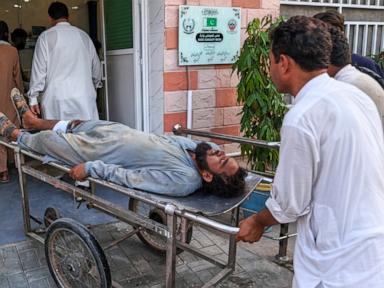
Local rescue workers, often operating with severely limited resources, continue to comb through debris fields that stretch for miles. They turn over massive boulders deposited by flash floods, sift through tangles of uprooted trees, and search the banks of downstream rivers where currents deposit whatever they have carried from the highlands. Every time a rescue team uncovers a personal item—a torn shawl, a school notebook, a rusted bicycle frame—a crowd gathers. They press forward in heavy silence, holding their breath, hoping and dreading in equal measure to discover whose story has reached its final chapter.
The psychological toll of this lingering limbo is profound. Psychologists who work in post-disaster environments often speak of ambiguous loss—a grief that lacks verification or closure. When a loved one is missing after a sudden catastrophe, the mind struggles to accept the finality of death while clinging desperately to the fragile thread of hope. Perhaps they made it to higher ground. Perhaps they lost their memory. Perhaps they are waiting in a relief camp across the valley.
This hope, while sustaining in the immediate aftermath, gradually becomes a heavy burden. It prevents mourning. It paralyzes daily functioning. A family cannot rebuild their home on the very spot where their world vanished if every shadow reminds them of who used to stand there.
At the same time, the physical infrastructure of survival is failing under the strain. Access roads flattened by landslides are slow to clear. Bridges that connected remote farming communities to regional markets remain shattered, hanging over empty riverbeds like broken ribs. Without roads, getting seeds, tools, and building materials to those who need them becomes an agonizingly slow logistical puzzle. Farmers who survived the flood now face the terrifying prospect of destitution because they cannot transport their goods, nor can they plant new crops in fields smothered by feet of sterile silt.
International aid organizations and local grassroots networks have poured into the region, distributing tarps, water purification tablets, and emergency rations. Yet, the sheer scale of the devastation creates a bottleneck of need. Distribution centers are overwhelmed. Supplies run thin before the last person in line receives a warm blanket.
Listen to the chatter in a makeshift relief camp as dusk falls. The temperature drops sharply in the Himalayan foothills once the sun dips behind the peaks. Children huddle in oversized jackets, coughing from the damp air that clings to the canvas tents. Adults speak in hushed tones, calculating the cost of tomorrow. How much longer can they rely on food distributions? Where will they go when the temporary shelters must close? How do you start over when you have lost not just your property, but your livelihood, your neighbors, and your sense of safety?
The answer does not lie in grand political speeches or temporary influxes of charity. True recovery is slow, grueling, and deeply personal. It happens in the quiet moments when a neighbor helps another shovel dried mud out of a doorway. It happens when a teacher gathers displaced children under a plastic tarp to practice math on a salvaged chalkboard, offering them a fleeting sense of normalcy.
We live in a world that craves speed. We want our news fast, our crises resolved within a single news cycle, and our solutions neatly packaged. But nature does not operate on our schedule. Rivers take decades to carve valleys, and in a single night, they can erase generations of human toil.
The waters have gone back to their channels, leaving behind a scarred earth and shattered communities. But beneath the mud, beneath the grief, and beneath the overwhelming weight of what was lost, something else persists. It is the stubborn, quiet resilience of people who have farmed these steep hillsides for centuries, knowing full well the volatility of the mountains they call home.
They are not waiting for a miracle. They are waiting for daylight, for the next shovel full of mud to be cleared, and for the strength to build again, one stone at a time.