The sky over eastern Ukraine does not change color gradually anymore. It bruised. On Sunday, the horizon turned a violent shade of plum and charcoal, a visual echo of the fifty-five separate clashes that tore through the landscape before the sun even dipped below the tree line.
Fifty-five.
In a briefing room, that number is a metric. It is a data point on a slide deck used to measure "operational intensity." But on the ground, fifty-five is a symphony of concussions. It is fifty-five different moments where a young man in a muddy trench held his breath, wondering if the whistle in the air was meant specifically for his coordinates. It is the sound of metal meeting earth, over and over, until the vibration becomes a permanent resident in the marrow of your bones.
Kiev reported these numbers with the weary precision of a bookkeeper recording a debt that can never be paid. They tell us the front is holding. They tell us the pressure is immense. Yet, behind the official tally lies the more chilling reality of what happened in the diplomatic corridors: the refusal of a pause.
The Anatomy of a Refused Breath
Imagine a boxer who has been trading blows for twelve rounds. His eyes are swollen shut, his ribs are cracked, and his lungs feel like they are filled with hot glass. Now, imagine the referee leans in, not to stop the fight, but to whisper that the bells have been removed. There will be no breaks. No stool to sit on. No water. Just the infinite continuation of the struggle.
This is the weight of Russia’s refusal to prolong the principle of a truce.
A truce is not peace. It is a deep breath. It is the chance for a father to call home without the sound of outgoing artillery masking his voice. It is the opportunity for a medic to change a bandage without wondering if the roof is about to collapse. By rejecting the extension of a ceasefire principle, the Kremlin isn't just maintaining a military stance; they are opting for the deliberate exhaustion of the human spirit.
They are betting that the Ukrainian soul will fatigue before the Russian supply chain does.
The logistics of war are often discussed in terms of shells and fuel, but the most vital resource is the nervous system. When a conflict reaches the fifty-five-clashes-a-day mark, the human brain stops processing the future. It shrinks. It exists only in the next three seconds. Will I trip? Can I hear the drone? Is that smoke or fog? By denying even the theoretical hope of a truce, the Russian leadership is attempting to turn those three-second intervals into a permanent state of being.
The Ghost of the Orthodox Calendar
There was a time when the calendar held power over the cannon. In the collective memory of Eastern Europe, certain dates carried a sanctity that even the most hardened commanders hesitated to violate. Truces were often tied to these cultural anchors—a nod to a shared history that existed before the borders were redrawn in blood.
That sanctity is gone.
The refusal to honor the principle of a truce signals a shift from a war of territory to a war of erasure. When you refuse to stop for a holiday, a holy day, or a humanitarian window, you are saying that the enemy is no longer a human being with whom you share a heritage. They are an obstacle. You don't negotiate with a wall; you hammer at it until it crumbles.
In the village of Pokrovsk, or what remains of it, the distinction between "combat" and "existence" has vanished. On Sunday, while the official reports were being filed, people were likely crouched in cellars, listening to the fifty-five thuds and trying to guess the caliber. There is a specific kind of expertise that comes with living in a war zone—the ability to tell the difference between a 122mm and a 152mm shell by the way the floorboards shiver. It is a dark, unwanted mastery.
The Invisible Stakes of the Long Game
We often talk about "war fatigue" in the West as if it’s a feeling we get from reading too many headlines. We are tired of the news. We are tired of the economic ripples.
But real war fatigue is the woman in Kiev who stopped flinching at the air raid sirens because she’d rather sleep through the explosion than spend another night shivering in a subway station. It’s the soldier who realizes that the "principle of a truce" was the last thread of a world that cared about rules.
When Moscow rejects the truce, they aren't just talking to Kiev. They are talking to us. They are signaling to the world that they have moved beyond the "civilized" constraints of 20th-century warfare. They are settling in for a grind that ignores the seasons and the screams.
This isn't a chess match anymore. It's a siege of the senses.
The fifty-five combats on Sunday occurred in places with names that sound like poetry to the locals and like static to the rest of the world. Avdiivka. Bakhmut. Marinka. These aren't just points on a map. They are graveyards of normalcy. In these places, the refusal of a truce means that the fires started on Saturday will simply burn into Monday, unquenched, because the firemen are also in the trenches.
The Weight of the Unspoken No
There is a psychological cruelty in the "No."
When a truce is proposed and rejected, it lingers in the air like a taunt. It tells the defender that their suffering is recognized and purposefully ignored. It is a tool of demoralization. "We see that you are tired," the refusal says. "And we have decided that you should be more tired."
Ukraine’s insistence on reporting every single clash is an act of defiance against this exhaustion. It is a way of saying: We are still counting. We are still here. Each of these fifty-five moments matters because each one represents a failure to break us.
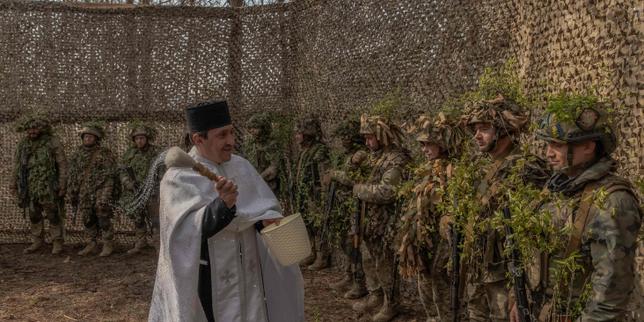
But the cost is etched into the faces of the people. Look at the photos coming out of the front lines. The eyes are the first things to go. They become hollowed out, "the thousand-yard stare" becoming a permanent national feature. This is what happens when the concept of "rest" is removed from the equation. The human body was never designed to endure fifty-five distinct traumas in a single rotation of the earth.
The Horizon at Midnight
As the reports from Sunday were finalized and the sun disappeared entirely, the "principle of a truce" became a ghost. It is a relic of a time when we believed that even in the worst of humanity, there was a floor—a basement level of decency where we could agree to stop, if only to bury the dead.
Now, there is no floor. There is only the descent.
The refusal to pause is a declaration that the war has become its own ecosystem. It feeds on its own momentum. The fifty-five combats of Sunday will likely become sixty on Monday, and sixty-five on Tuesday, because when you remove the brakes, the machine only goes faster.
Somewhere near the front, a soldier is looking at his watch. He isn't checking for the time of a ceasefire. He isn't waiting for a bell to ring or a whistle to blow the end of the round. He is simply watching the seconds tick by, knowing that for the foreseeable future, the only peace he will find is the silence between the shells. And in that silence, he waits for the fifty-sixth.