The Western United States is currently the world’s largest laboratory for a high-stakes experiment in survival. As droughts lengthen and forests turn to tinder, state agencies from California to Colorado are handing the binoculars over to machine learning. The goal is simple: detect smoke before it becomes a firestorm. By mounting sophisticated cameras on mountaintops and feeding the live streams into neural networks, officials hope to slash response times from hours to minutes. This isn't just about efficiency; it is about stopping the "megafire" era by killing the spark before it gains momentum.
The End of the Human Lookout
For nearly a century, the frontline of fire defense was a lonely person in a wooden tower. These lookouts were the eyes of the forest, scanning the horizon for the "white puff" that signaled trouble. But humans get tired. They sleep, they blink, and they can only see what is directly in front of them. Most importantly, there aren't enough of them left to cover the millions of acres currently at risk.
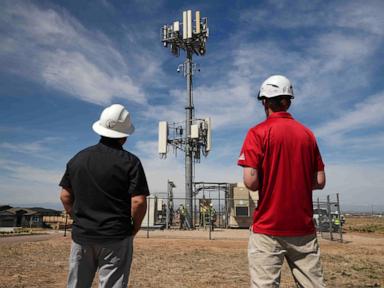
Enter the digital grid. Networks like ALERTWest and various utility-funded camera arrays have blanketed the ridgelines with high-definition, near-infrared lenses. These aren't passive security cameras. They are connected to vision-based algorithms trained on millions of images of smoke, haze, clouds, and dust. When the software identifies a signature that matches the chemical and physical behavior of a rising plume, it triggers an instant alert to a dispatch center.
The speed is undeniable. In some documented cases, these systems have flagged ignitions at 2:00 AM in remote canyons where no human would have been watching. By the time a 911 call would have typically come in, fire crews were already on the scene.
Training the Machine to Ignore the Clouds
The technical hurdle isn't just seeing smoke; it’s ignoring everything else. The Western landscape is a chaotic visual environment. Fog rolls through coastal ranges. Dust kicks up from construction sites or dry lake beds. Even the shift in shadows during a sunset can trigger a false positive if the software isn't calibrated correctly.
Early iterations of these systems were notorious for "crying wolf." Every false alarm pulls resources away from potential real threats, creating a dangerous fatigue among dispatchers. To solve this, developers are using more than just visual data. Modern systems integrate satellite thermal anomalies and local weather station data to cross-reference what the camera sees. If the camera sees "smoke" but the satellite detects no heat signature and the humidity is 90%, the system learns to deprioritize the alert.
This iterative learning process is where the heavy lifting happens. Engineers spend thousands of hours labeling data, telling the machine, "This is a cloud, this is a controlled agricultural burn, and this is a structural fire." Over time, the error rate drops, but it never hits zero. The machine is a tool for narrowing the search, not a replacement for the final human "yes" or "no."
The Infrastructure of a Surveillance State Forest
We are seeing a massive shift in how public land is managed. The "forest" is becoming a piece of critical infrastructure, wired with sensors and backhauled via microwave links or Starlink terminals. This requires a level of investment that small, rural counties often cannot afford on their own. Consequently, we see a patchwork of protection.
In California, the integration of CAL FIRE with the ALERTCalifornia network represents the gold standard. They have over 1,000 cameras positioned strategically across the state. These cameras provide a 360-degree view and can be controlled remotely by staff to zoom in on a suspect plume. However, across the border in neighboring states, the coverage map starts to look like Swiss cheese.
The disparity creates a "detection gap." If a fire starts on the Nevada side of a ridge and the wind pushes it into California, the AI might catch it late because the sensors weren't positioned to look eastward. True early detection requires a continental-scale grid that ignores state lines and private property boundaries.
The Data Ownership Conflict
Behind the altruistic goal of saving homes lies a brewing battle over data. Many of these camera networks are funded or managed by private utility companies—the same companies often held liable for sparking fires via downed power lines.
When a utility company owns the camera that detects a fire sparked by its own equipment, who owns that footage? There is a tension between public safety and legal liability. Transparency advocates argue that all detection data should be public and unedited, ensuring that the "black box" of AI isn't used to scrub evidence of corporate negligence. Currently, the agreements vary from state to state, creating a legal gray area that has yet to be tested in a major class-action suit.
The False Security of the Early Alert
There is a danger in believing that detection equals prevention. An AI can tell you a fire has started in three minutes, but if the wind is blowing at 70 miles per hour through a canyon full of dead timber, three minutes might still be too late.
The focus on high-tech detection often sucks the oxygen out of the room for more boring, physical solutions like forest thinning, prescribed burns, and home hardening. We cannot "compute" our way out of a landscape that is fundamentally out of balance. If the public believes the cameras will save them, they may be less likely to do the hard work of clearing brush around their own foundations.
Furthermore, these systems rely on a functioning power grid and internet backbone. In the very "Red Flag" conditions where fires are most likely, utilities often shut off power to prevent ignitions (Public Safety Power Shutoffs). If the camera's battery backup fails or the local cell tower burns down in the first ten minutes of an inferno, the "eyes" go dark exactly when they are needed most.
Refining the Neural Network
The future of this technology lies in moving beyond simple smoke detection. Researchers are now testing "multimodal" models that can predict where a fire is likely to go before it even starts. By crunching live fuel-moisture levels, topographical maps, and real-time wind gusts, the AI doesn't just send a photo of smoke; it sends a predicted path of destruction.
This allows commanders to order evacuations for specific neighborhoods with much higher confidence. Instead of a broad "evacuate the county" order that clogs roads and causes panic, the data-driven approach allows for surgical strikes. It turns the fire department into a proactive force rather than a reactive one.
The Cost of Staying Human
Despite the billions being funneled into these digital sentinels, the most critical link remains the person behind the console. The AI flags the anomaly, but a human dispatcher—often someone working a 24-hour shift in a high-stress environment—must decide whether to scramble a multi-million dollar air tanker.
As we automate more of the detection process, we risk de-skilling the human workforce. If a generation of fire lookouts grows up only looking at screens and trusting the "red box" drawn by the computer, they may lose the intuitive sense of weather and terrain that old-timers relied on. Technology should augment the veteran’s instinct, not overwrite it.
The transition to an AI-augmented forest is inevitable, but it must be viewed as a thinning of the margin of error, not the elimination of risk. We are building a digital shield over a landscape that is increasingly prone to breaking.
Verify the source of your local detection data. Ask your state representatives if the AI alerts are integrated directly with local fire stations or if they are filtered through a third-party corporate office. The time between a spark and a response is the only metric that matters, and in the West, that time is measured in heartbeats.