The deadbolt on a rural Tennessee back door makes a very specific sound when you throw it at two in the afternoon. It is a heavy, metallic clack that usually belongs to midnight, a sound meant to seal out the dark rather than the bright, deceptive glare of a Tuesday sun.
Listen.
You can hear it echoing down county roads from the Cumberland Plateau to the Mississippi River whenever an emergency alert hijacks the local radio broadcast. A voice, flat and bureaucratic, announces that a convicted murderer has walked away from a state facility, slipped a perimeter, or vanished from a work detail. Law enforcement calls it a manhunt. News tickers reduce it to a mugshot, a height, a weight, and a felony classification.
To the people living within a twenty-mile radius of the razor wire, however, it is never just a headline. It is an immediate, suffocating suspension of normal life.
The Architecture of a Breach
To understand what happens when a high-risk inmate disappears into the Tennessee brush, you first have to understand the illusion of containment. We like to think of prisons as absolute fortresses—impenetrable boxes of poured concrete and high-voltage fencing designed to keep the worst of human nature permanently separated from the rest of us.
That is a comforting fiction.
In reality, a correctional facility operates much like an aging dam holding back a relentless river. The structure does not need to collapse entirely to fail; it only needs a single hairline fracture, a momentary lapse in pressure monitoring, or a shift in the foundation that goes unnoticed during a shift change. According to data compiled by the Bureau of Justice Statistics and state correctional audits, the vast majority of prison escapes do not involve cinematic tunnels dug with spoons. They happen in the seams of routine. A gate left unlatched during a supply delivery. A trustee trusted one week too long. A blind spot between camera sweeps where thick Appalachian foliage meets chain-link.
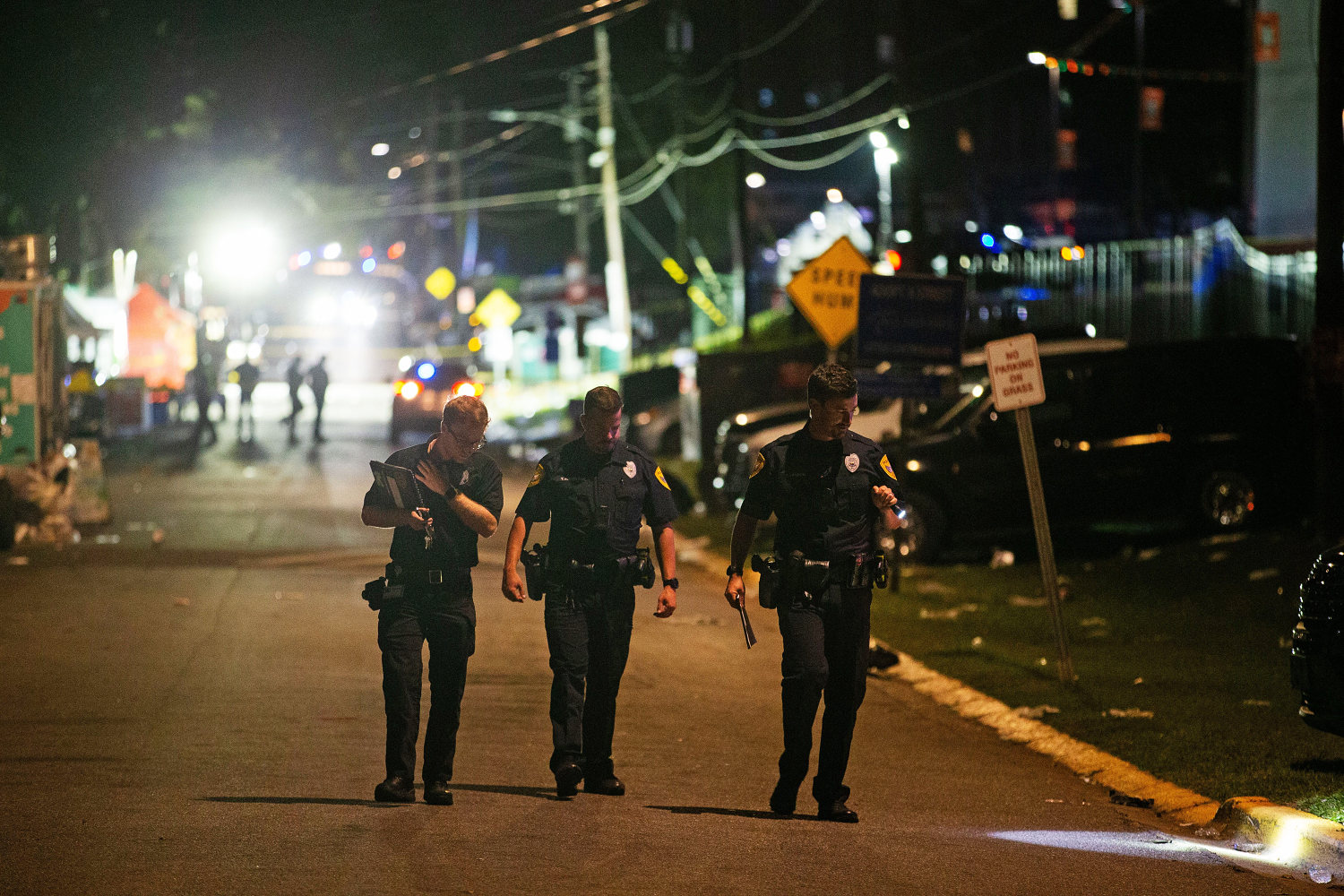
When the Tennessee Department of Correction activates a fugitive task force—pulling in the Tennessee Bureau of Investigation, U.S. Marshals, and county sheriff deputies—the public sees the spectacle. They see the helicopters thumping low over the treetops, thermal imaging cameras scanning creek beds, and bloodhounds straining against leather leads.
What the cameras miss is the quiet terror settling into the kitchens of ordinary homes just beyond the search perimeter.
The Invisible Perimeter
Consider a hypothetical scenario, one that plays out in different variations across small Southern towns every few years. Imagine a retired schoolteacher named Martha, living alone in a clapboard house three miles down a gravel road from a state correctional complex. She knows the rhythm of the facility. She hears the shift horns blow across the valley on still mornings. She has lived beside that concrete giant for thirty years without a second thought, protected by the unspoken social contract that the state keeps its promises and its locks.
Then comes the reverse-911 call.
Suddenly, every familiar feature of Martha’s property transforms into a liability. The thick stand of loblolly pines behind her garden, once a sanctuary for songbirds, becomes an impenetrable wall of cover for a desperate man with nothing left to lose. The unlocked shed holding her late husband’s tools becomes an armory. The spare keys hanging by the mudroom door for her daughter’s weekend visits become a getaway vehicle waiting in the driveway.
This is the psychological tax of a manhunt that never appears in a press release. Fear does not require a physical confrontation to do damage; it simply rewires how a community perceives its own home. Neighbors stop waving from porches and start peering through blinds. School buses run behind armed escorts or cancel routes entirely. Every snapping twig in the woods sounds like boots on dry leaves.
I remember the first time a lockdown hit a rural county where I was staying, years ago, during a similar fugitive search. The air itself seemed to thicken. You find yourself checking the latches on windows you haven't opened since spring, calculating the distance from your bed to the hallway closet, and realizing with a cold jolt how thin drywall really is. You feel foolish for panicking, yet entirely rational for preparing. That contradiction—the urge to live normally while bracing for violence—exhausts you faster than physical labor ever could.
The Anatomy of Desperation
Why does a convicted murderer run, especially when historical capture rates prove the odds are overwhelmingly stacked against them? Criminology experts and former federal marshals point to a grim behavioral reality: escapees rarely operate on long-term strategy. They operate on pure, unadulterated triage.
A person already serving life without parole, or facing decades behind bars for taking a human life, views freedom through a fundamentally distorted lens. For them, forty-eight hours of breathing unfiltered air without a guard watching them eat is worth the near-certainty of eventual recapture—or worse.
Look at the mechanics of the chase once an inmate clears the perimeter:
- The First Six Hours: This is the critical window that dictates the entire trajectory of the manhunt. During this phase, the fugitive is running on adrenaline, moving fast and often recklessly, trying to put maximum distance between themselves and the facility before K-9 units lock onto a scent trail.
- The Resource Scramble: Hunger, dehydration, and exposure quickly replace the initial rush of escape. Tennessee’s terrain—marked by dense hardwood forests, steep ridges, and winding waterways—offers brilliant concealment, but it is unforgiving. A fugitive without supplies must eventually risk exposure to find water, clothing, or transportation.
- The Desperation Threshold: Once the perimeter tightens and helicopters block major roadways, the fugitive's decision-making deteriorates. This is the moment law enforcement dreads most, because an unarmed runner suddenly becomes willing to break into an occupied home or confront a lone motorist to secure a vehicle.
Historians of American corrections often note that the most prolonged manhunts in the South—from the infamous Brushy Mountain escapes of the twentieth century to modern breakdowns in state security—succeed only when the fugitive understands the land better than the pursuers, or when systemic staffing shortages delay the initial alarm.
The Cracks in the System
To be entirely honest, the most unsettling part of any prison break is not the fugitive himself. It is the realization that the system designed to prevent it is often held together by overworked humans running on fumes.
Across the United States, and acutely within several Southern state prison systems, correctional facilities have battled chronic understaffing for years. Mandatory overtime stretches twelve-hour shifts into sixteen-hour marathons. Veteran officers burn out and leave for better-paying jobs in private security or local policing, leaving green recruits to manage maximum-security populations with inadequate supervision.
Think of a correctional facility like an air traffic control tower. The technology can be state-of-the-art, the protocols written in crystal-clear ink, and the concrete reinforced with steel. None of it matters if the person watching the radar has been awake for twenty hours and is trying to monitor three sectors at once.
When a convicted killer slips through the net in Tennessee, the immediate public focus lands squarely on the man in the woods. Rightly so. Bringing him back into custody is the urgent, non-negotiable priority. Yet once the handcuffs click shut and the tactical teams stand down, a harder, more uncomfortable question remains hanging in the humid air: How did the door open in the first place?
Usually, the official investigation reveals a chain of mundane failures rather than a brilliant criminal mastermind. A broken motion sensor that sat on a maintenance ticket for three months. A headcount procedure that was rushed so the night shift could go home. A perimeter fence obscured by overgrown brush because the grounds crew was reassigned to cover cellblock shortages.
Living in the Waiting
While the task force works the grid—piecing together blurry trail-camera footage, following up on false sightings at rural gas stations, and sweeping abandoned barns—life in the search zone settles into a strange, suspended animation.
Parents keep their children indoors, inventing games to mask their own tension while keeping one eye on the local sheriff’s social media updates. Farmers carry sidearms while checking cattle fences at dusk. Storefronts in small town squares close an hour early, their neon signs flickering off as twilight drops over the hills.
There is a profound vulnerability in admitting that we do not always know where the danger is. Law enforcement officials walk a delicate line during these hours. If they share too little information, panic breeds in the vacuum, fueled by wild rumors on community message boards where every passing pickup truck becomes a suspect. If they share too much, they risk tipping off the fugitive to the exact boundaries of the net closing around him.
So the public waits. They watch the news vans park along the shoulder of the state highway. They listen to the distant thrum of rotor blades chopping through the night sky, a mechanical heartbeat reminding them that the hunt is still on, that the border between safety and chaos has temporarily blurred.
Eventually, the break comes. It almost always does. A homeowner notices a missing pair of boots from a mudroom. A bloodhound picks up a fresh track near a creek bed. A thermal camera catches a heat signature huddled beneath a fallen oak three miles from where everyone thought he had gone.
The sirens wail one last time, sharp and triumphant, cutting through the stillness of the Tennessee morning. The bulletins update. The mugshot gets stamped with a single, relieving word: Captured.
Neighbors step back onto their front porches, blinking in the sunlight, trading nervous laughs as the tension drains out of their shoulders. The schools reopen. The highway patrol cars pull off the county roads.
Yet long after the helicopters bank away toward Nashville and the news crews pack up their satellite dishes, Martha walks back into her kitchen, looks at the heavy brass deadbolt on her back door, and leaves it thrown for the rest of the afternoon.