Halloween night has a sound of its own. Usually, it is the crinkle of candy wrappers, the distant thump of bass from a house with a fog machine on the porch, the crunch of cheap plastic heels on dry pavement. In Los Angeles, a city built on wide boulevards and late-night momentum, that sound stretches out across dozens of neighborhoods at once. Every year, thousands of people put on costumes, step out of their front doors, and gamble that the streets will stay forgiving until morning.
Then comes a different sound. A wail that rises and drops, cutting straight through music and laughter.
When a patrol car is dispatched to a noisy party or a crowd complaint on a holiday night, the urgency feels baked into the moment. Someone called. A neighbor couldn't sleep, or a gathering spilled onto the sidewalk, or a dispute threatened to turn sharp. The officer behind the wheel hears the tone in the dispatch, sees the clock ticking past midnight, and presses down on the accelerator. In the mind of someone rushing toward an incident, speed looks like duty.
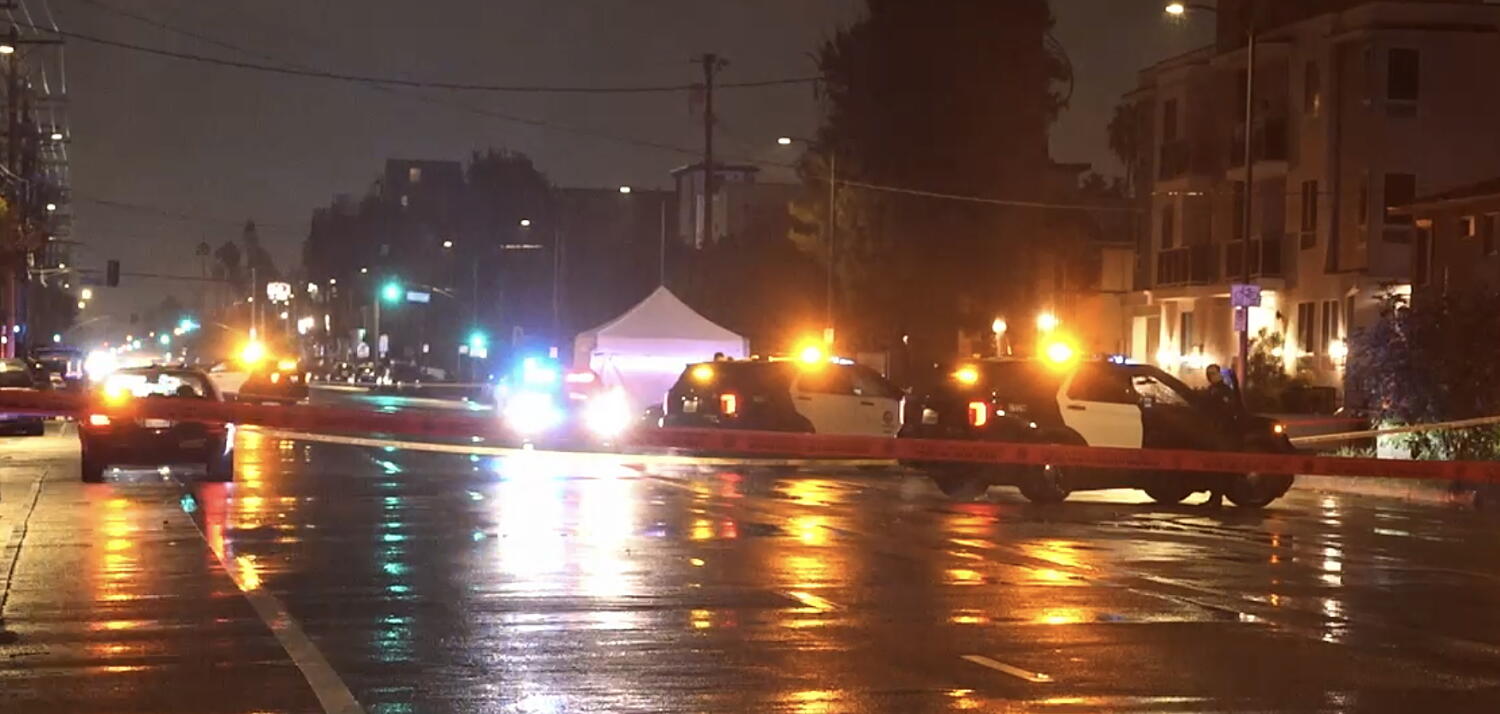
Yet speed on a dark city street carries a heavy, quiet tax. Every mile per hour added to a heavy cruiser narrows the margin between a routine response and an irreversible tragedy. When a pedestrian crosses an intersection—perhaps adjusting a sleeve, checking a phone, or simply walking home from a night out—a vehicle traveling fast leaves almost no room for error. A fraction of a second is all it takes for a festive night to turn into flashing red and blue lights reflecting off wet asphalt and shattered glass.
I have stood at the edge of too many scenes where the air smelled like burnt brake dust and cold rain, watching people try to make sense of something that happened in less time than it takes to blink. You don't forget the silence that follows the sirens when the ambulance pulls away. You don't forget the way a routine call—something that started with a noise complaint or a crowded porch—can end with a family getting a knock at the door at three in the morning.
Why Routine Calls Turn Dangerous Fast
To understand how a woman can be killed by an LAPD patrol car responding to a Halloween party call, we have to look past the headline and examine the mechanics of urgency. Headlines are blunt instruments. They compress hours of context, policy, lighting, traffic, and human split-second decisions into a single sentence.
Consider what happens next: an officer receives a call on one of the busiest, most chaotic nights of the year. Streets are crowded. Drivers have been out celebrating, some responsibly, some not. Pedestrians wear dark colors or costumes that break up familiar silhouettes. Streetlights cast pools of amber separated by pockets of deep shadow.
In law enforcement, response protocols exist to balance speed against risk. Calls involving immediate threats to life generally carry higher urgency than lower-level disturbances or party calls, though officers and dispatchers constantly weigh evolving information. Even when a call feels pressing, the street does not care about the badge number on the door or the reason behind the siren. Physics remains indifferent. Stopping distance grows steeply with speed, and human reaction time—the beat between seeing a person in the crosswalk and getting a foot onto the brake—rarely shrinks under stress.
Think of a heavy steel pendulum swinging faster and faster through a crowded room. Even if the person holding the rope means well and is trying to reach someone in trouble at the far end, the momentum itself becomes a hazard to anyone standing in the arc. (Note: This is a metaphor used to illustrate momentum and stopping distance, not a literal description of vehicle movement.)
That tension—between the desire to arrive quickly and the reality of navigating a dense urban environment at night—sits at the heart of almost every tragedy involving emergency vehicles and pedestrians. Nobody sets out to harm a stranger on a holiday night. People set out to do a job, or to get home, or to meet friends. Still, good intentions do not stop a two-ton vehicle.
A Hypothetical Night That Feels Too Familiar
Because cold statistics often numb us rather than move us, let us trace a hypothetical scenario grounded in the patterns of a typical Southern California Halloween night. (This scenario is hypothetical, constructed to show how ordinary choices and street conditions intersect.)
Imagine Elena, twenty-nine, a graphic designer living a few blocks from a lively stretch of avenue. She spent the evening at a friend's apartment, wearing a dark velvet jacket and boots, laughing over cheap takeout before deciding to walk home rather than wait twenty minutes for a rideshare. The air is crisp. A few groups of trick-or-treaters and partygoers are still drifting along the sidewalks.
Three miles away, Officer Marcus, a patrol officer with four years on the job, hears a call come over the radio about a loud party and possible rowdy crowd near a residential corner. It is past eleven. Halloween calls stack up fast, and dispatchers juggle dozens of pings across the division. Marcus turns onto the main boulevard, lights flashing, hoping to clear the disturbance before it escalates into a fight or a traffic mess.
Elena reaches the crosswalk near her building. She looks left, sees headlights a block or two back, and steps off the curb, assuming she has plenty of time. In her mind, those lights are far enough away.
In Marcus's mind, he is closing distance on a call, scanning ahead for stalled cars, double-parked rideshares, and erratic drivers. A car pulls out ahead of him or a shadow shifts near the curb. By the time the pedestrian is clearly visible in the beam of the headlights, the gap has closed to almost nothing.
One second.
Two seconds.
There is no time for a neat calculation. There is only instinct, a slammed brake pedal, the shriek of rubber, and a sound no one ever wants to hear on a city street.
When you read about a real case where a woman is killed by an LAPD patrol car responding to a Halloween party call, that hypothetical stops feeling abstract. Behind the public record is a real person who had plans for the next morning, a real family whose phone rang in the dark, and an officer who will carry the weight of that split second for the rest of a career.
The Invisible Stakes Behind Every Siren
Why does this keep happening across major cities, not just in Los Angeles, whenever holidays bring extra crowds onto the streets?
Part of the answer is human perception. When people hear sirens or see flashing lights, many drivers freeze, swerve unpredictably, or speed up out of confusion. Pedestrians, too, sometimes misjudge how fast an emergency vehicle is actually moving—especially at night, when a single bright light source makes distance hard to gauge. Depth perception flattens in the dark. A car moving fifty miles an hour can look as though it is thirty miles per hour until it is right on top of you.
Another part is institutional and cultural. Policing in a massive metropolis demands constant adaptation. Departments review pursuit and emergency-driving policies repeatedly, weighing public safety against response times. Community members often ask fair, pointed questions after a fatal crash: Was the speed necessary for the type of call? Were lights and sirens engaged properly? What happened in the seconds right before impact? How transparent will the investigation be?
Those questions are not attacks on basic order; they are the price of public trust. When a public agency takes a life—even unintentionally during an emergency response—the accountability that follows shapes how residents view the streets they walk every day. If people feel their safety is secondary to speed on a routine or lower-tier call, trust frays. Conversely, if officers feel caught between pressure to arrive fast and strict scrutiny when things go wrong, morale and judgment both suffer.
I will admit openly: I find this territory deeply unsettling. It is easy from a distance to speak in clean policy terms about "risk mitigation" and "response tiers." It is much harder to stand in the shoes of a grieving parent or a shaken driver at two in the morning when the facts are still being pieced together. Uncertainty hangs heavy in those first hours. Rumors move faster than official reports, and grief leaves no room for neat explanations.
What Happens After the Flashing Lights Fade
In the days after a fatal patrol-car collision, the story usually splits into two parallel tracks.
On one track is the official process. Traffic investigators measure skid marks, pull vehicle telemetry, review body-worn or dash camera footage where available, interview witnesses, and examine dispatch logs. Oversight bodies and department leadership review whether policies were followed. Legal claims, public records requests, and community briefings often stretch out for months.
On the other track is real life, which refuses to move at the speed of a bureaucracy. A desk sits empty at work. A text thread goes quiet. Neighbors walking past the same corner slow down a little more for a few weeks, glancing toward the curb where flowers or candles sometimes appear, before the relentless pace of Los Angeles pulls everyone back into motion.
Looking at the broader pattern over time, cities that manage to reduce pedestrian deaths involving emergency vehicles tend to focus on practical, unglamorous details rather than grand speeches. They emphasize disciplined driving habits under stress, clear distinction in urgency based on actual danger, better street lighting and crosswalk visibility, and honest communication when mistakes occur. None of that erases sorrow when a tragedy happens, yet every sensible safeguard lowers the odds of another family getting that midnight call.
Night after night, across every neighborhood, people step out into the glow of streetlights with ordinary hopes—getting home safe, checking on a friend, enjoying a brief break from routine. A holiday like Halloween only magnifies that impulse. We dress up, we gather, we walk a little farther than usual, trusting that the city around us will hold steady.
A single wail in the night reminds us how fragile that trust can be when speed outruns caution.
The red and blue reflections fade from the pavement eventually, leaving only the steady hum of traffic and a corner that will never look quite the same to the people who loved her.