Silence.
In a dense, sun-baked island nation where the hum of air conditioners and the distant thrum of container ships form a permanent acoustic wallpaper, silence is never natural—and when it is shattered by the mechanical, rising shriek of civil defense sirens, every single person within earshot understands immediately that the invisible boundary between routine daily life and sudden geopolitical crisis has just dissolved.
Picture a family in Juffair, a bustling neighborhood in Bahrain's capital of Manama, sitting down to dinner while the humid Persian Gulf evening settles against the windowpanes. This is a hypothetical scene, yet it mirrors the exact lived reality of hundreds of thousands of residents whenever regional tensions spill over into the airspace above this tiny archipelago. Just a few blocks away from apartment towers, grocery stores, and coffee shops sits Naval Support Activity Bahrain—the sprawling headquarters of the United States Navy’s Fifth Fleet. When six Iranian drones streak across the dark water toward that installation, the alarm does not discriminate between military personnel in uniform and a schoolteacher rinsing dishes in an adjacent apartment building.
That is the fundamental, terrifying truth that sterile defense bulletins always miss. Headlines reduce these moments to cold arithmetic—six unmanned aerial vehicles, an interception tally, a geopolitical chess move—while erasing the visceral human reality of what it feels like to stand in a hallway with your shoes on, waiting to find out whether the sky above your roof is about to catch fire.
The Geography of Proximity
To understand why an alarm in Bahrain carries such immediate, suffocating weight, you have to look at a map and realize how little margin for error exists here. Bahrain is not a vast continental expanse with remote desert bases tucked hundreds of miles away from civilian centers. It is an island kingdom roughly the size of New York City, packed with more than 1.5 million people, where strategic military infrastructure and ordinary residential neighborhoods exist almost side by side.
Consider how modern drone warfare interacts with that geography. Unlike traditional ballistic missiles that require massive launch complexes and predictable trajectories, one-way attack drones—often cheap, slow-flying, and engineered to hug the coastline or skim low over the water to evade conventional radar—turn geography into a weapon. Flying across the narrow stretch of the Persian Gulf takes minutes, not hours.
For the radar operators staring at glowing screens inside air defense command centers, those minutes represent a frantic race against physics and clutter. The Gulf is one of the busiest commercial corridors on Earth, crowded with civilian airliners descending into Bahrain International Airport, cargo vessels navigating the shipping lanes, and fishing boats bobbing in the dark. Distinguishing six low-altitude drones from background noise requires split-second verification. By the time the threat is confirmed and the Ministry of Interior triggers the public warning network, the margin between detection and arrival has already shrunk to a sliver.
Wait. Think about what happens in that sliver of time.
Inside homes, phones vibrate with emergency alerts while outdoor sirens begin their unmistakable wail. People who have lived in the Gulf for years know the drill, yet familiarity never dulls the surge of adrenaline. You step away from windows because shattering glass causes more injuries during aerial interceptions than falling debris ever does. You gather children, check on elderly neighbors, and listen intently for the dull, rhythmic thump of interceptor batteries engaging targets miles above the coastline. Even when air defenses succeed—and modern layered defense systems are built specifically to neutralize these swarms before they reach their targets—the sound of a successful interception still shakes window frames and rattles plates in kitchen cabinets.
Why Six Drones Change the Calculation
Why send six? Military analysts and defense planners look at that number and see a deliberate, calibrated message rather than an all-out invasion.
In the vocabulary of modern asymmetric conflict, launching a half-dozen unmanned aircraft at a major American naval hub serves multiple purposes at once. First, it tests response times. Every radar sweep, every electronic warfare jamming pulse, and every surface-to-air missile fired in defense reveals valuable data about how a base protects itself, where its blind spots lie, and how quickly its operators react under pressure.
Second, it exploits an absurd economic imbalance. A basic long-range attack drone can be assembled for a fraction of the cost of a single sophisticated interceptor missile. Even if all six drones are destroyed harmlessly over the water, the defender has been forced to expend expensive munitions, burn fuel, and place an entire civilian population on high alert. It is the geopolitical equivalent of throwing stones at a stained-glass window: cheap for the thrower, exhausting and costly for the person tasked with keeping the glass intact.
Third—and perhaps most importantly—it weaponizes uncertainty. When sirens sound in Bahrain, the psychological shockwave travels far faster than any propeller-driven aircraft. International shipping insurers immediately recalculate risk premiums for tankers passing through the Strait of Hormuz. Expatriate workers call anxious relatives in London, Manila, Mumbai, and Houston to reassure them that they are safe. Local business owners wonder whether tomorrow morning will bring normal traffic or empty streets.
I remember speaking with an engineer who had worked in Manama through previous regional flare-ups, and what stayed with him wasn't the politics or the military hardware. It was the sensory whiplash. One hour, he was arguing over spreadsheet projections in a glass-walled office tower; the next, he was sitting on the concrete stairwell of his apartment building, listening to the muffled boom of distant air defenses while watching dust drift down from the ceiling light fixture. When the all-clear finally sounded and he walked back upstairs, his coffee was still warm on the kitchen counter. That contrast—between total normalcy and sudden mortal danger—is what makes living near a strategic flashpoint so uniquely disorienting.
The Invisible Shield Over the Gulf
Whenever news breaks of drones targeting a U.S. base in the Middle East, the immediate question from people watching from afar is straightforward: How do you actually stop something like that?
The answer lies in an overlapping, multi-tiered defense architecture that functions much like a series of concentric nets. Imagine trying to catch a handful of fast-moving pebbles thrown across a dark room. A single net might miss one, so defenders layer different tools on top of one another, each designed to catch what the previous layer missed.
At the outermost edge sit maritime patrols, airborne surveillance aircraft, and long-range phased-array radars constantly scanning the horizon across the Persian Gulf. Their job is early warning—spotting small radar cross-sections skimming above the waves before they cross into sovereign airspace.
Closer in, electronic warfare systems come into play. Because drones rely on satellite navigation and radio frequency links to stay on course, defenders can jam their signals, spoof their GPS coordinates, or sever the connection between the aircraft and its guidance system. When successful, a drone doesn't even need to be shot down; it simply loses its bearings, veers off course, or drops harmlessly into the sea without an explosion.
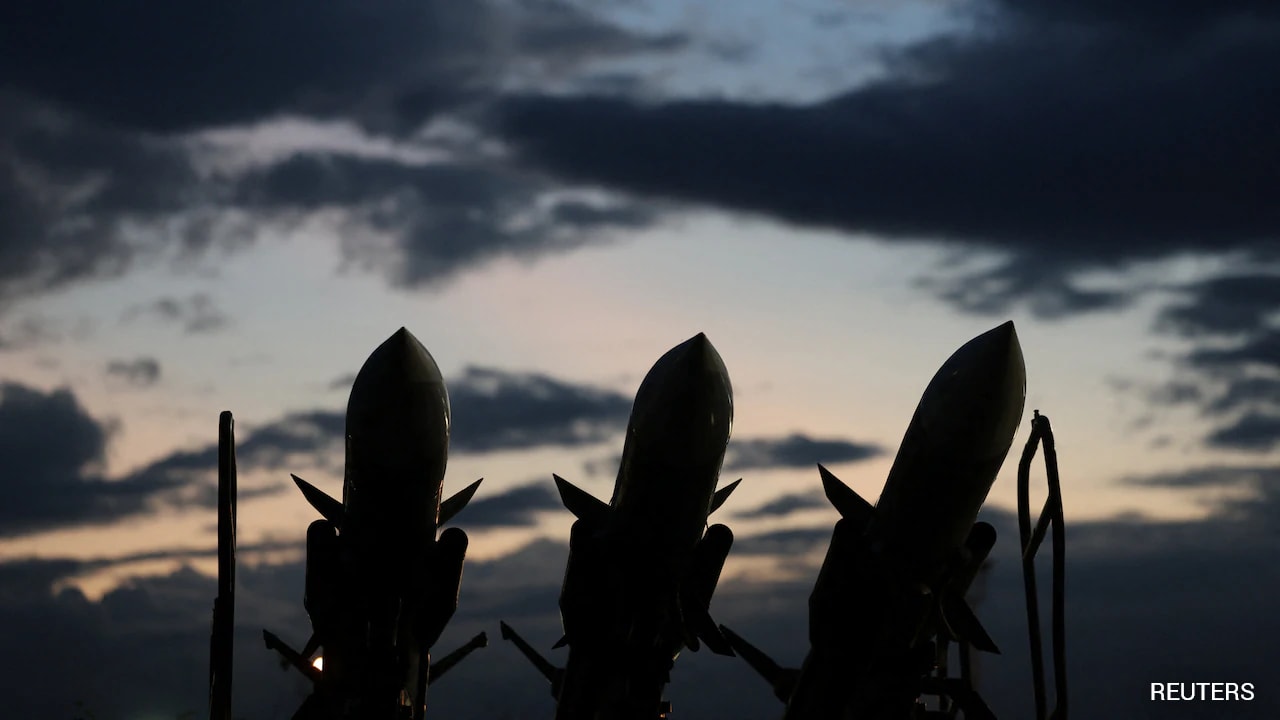
Finally, for anything that pushes through the outer layers, kinetic air defenses take over. Patriot missile batteries, short-range point-defense systems, and shipboard interceptors lock onto incoming targets and destroy them mid-air. It is an extraordinary feat of engineering—hitting a slow, small, low-flying object in the dark before it can reach a crowded shoreline—yet it is never something anyone on the ground takes for granted.
Because defense is never magic. It is human beings watching monitors at two in the morning, executing checklists under immense stress, knowing that missing even one target could mean casualties on the base or collateral damage in the surrounding city.
Living in the Shadow of Strategic Importance
Bahrain has occupied this delicate position for decades. As the permanent home of the U.S. Fifth Fleet, the kingdom sits at the nerve center of maritime security for the entire region, overseeing patrols across the Persian Gulf, the Red Sea, the Arabian Sea, and parts of the Indian Ocean. Nearly a fifth of the world's petroleum passes through the chokepoints monitored from these headquarters.
That strategic importance brings security guarantees and international partnerships, yet it also places a heavy burden on the people who call the island home. Residents did not choose for their neighborhoods to sit beside one of the most consequential naval installations on the planet. They are bakers, nurses, students, port workers, and retirees trying to build ordinary lives in an extraordinary geopolitical crossroads.
When sirens wail across Manama, the world’s attention briefly snaps to Bahrain. Cable news tickers flash urgent banners; social media fills with grainy smartphone videos of streaks in the night sky; commentators debate escalation ladders and deterrence strategies from studios thousands of miles away.
Then, once the immediate threat passes and the interceptors fall silent, the global spotlight moves on to the next crisis.
Yet on the island itself, the lingering tension does not vanish when the sirens stop. Parents still glance toward the windows before turning off the hallway light. Commuters still check news alerts on their phones before starting their cars in the morning. The water of the Gulf still laps quietly against the seawall, deceptively calm under the streetlights, carrying the unspoken knowledge that across that narrow stretch of dark sea, someone else is always watching—and deciding whether to push the button again.