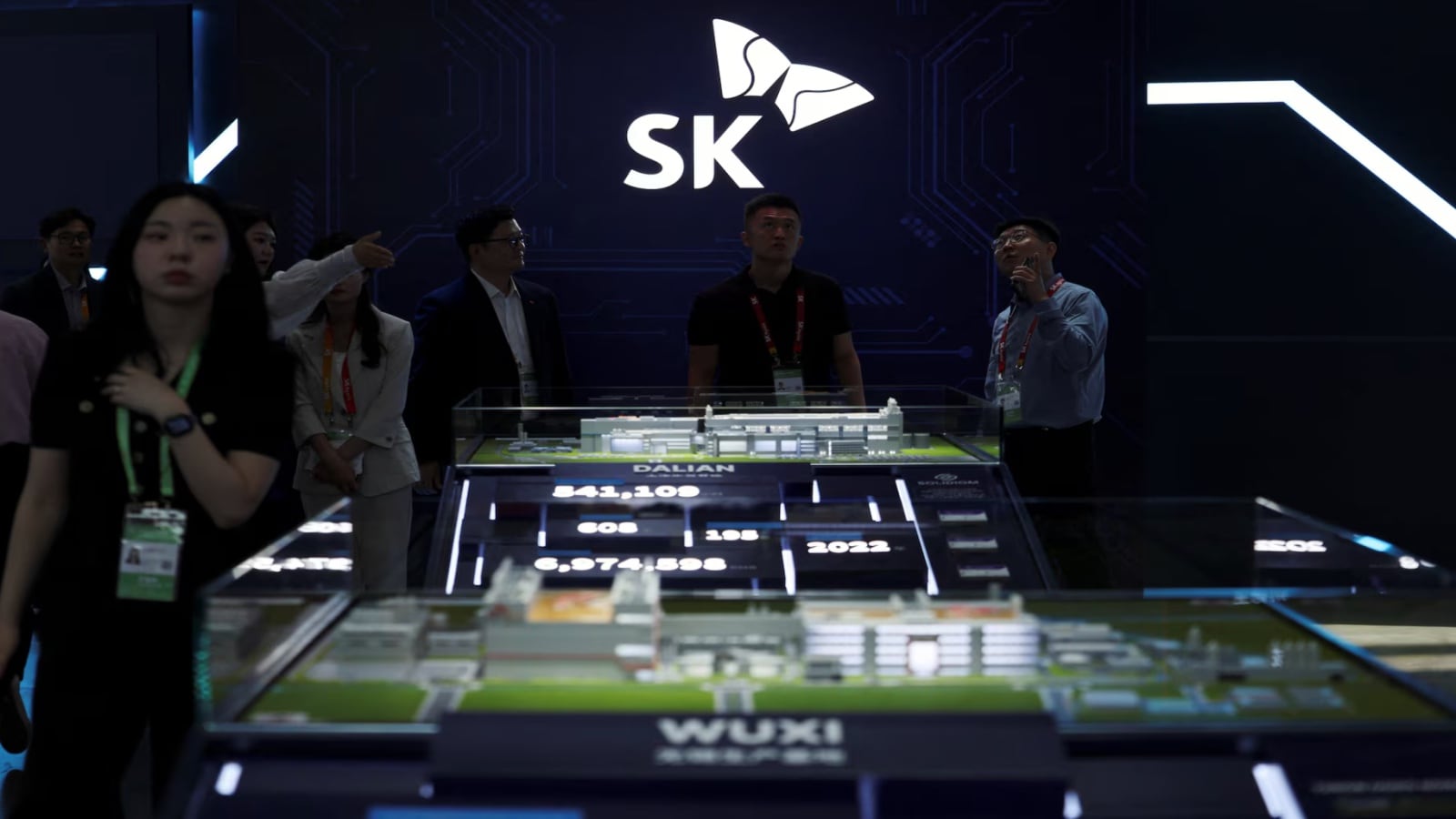
Wall Street isn't waiting around. The ink is barely dry on the massive $26.5 billion Nasdaq debut of South Korean memory giant SK Hynix, and exchange-traded fund issuers are already sprinting to capitalize on it. If you think this is just another tech listing, you're missing the bigger picture. This is the largest US market debut by a foreign company since Alibaba, and it completely rewrites how investors trade the hardware underpinning the artificial intelligence boom.
For years, if you wanted to bet heavily on the physical hardware driving AI, you bought Nvidia or Micron. Accessing South Korean tech required navigating local brokerage friction or dealing with illiquid over-the-counter markets. Not anymore. SK Hynix is officially live on the Nasdaq via American depositary receipts under the ticker symbol SKHY. The sheer scale of the offering—seven times oversubscribed with heavy hitters like Baillie Gifford and Coatue fighting for allocations—has sent a clear signal to ETF providers: the hunger for concentrated chip plays is insatiable.
The Sudden Scramble for Single Stock SK Hynix Funds
Wall Street product creators move fast, but the velocity of the filings following this debut is something else. Issuers are bypassing broad sector funds to build single-stock leveraged ETFs designed to give traders hyper-amplified exposure to SKHY.
ProShares has already prepared its Ultra SK hynix ETF under the ticker SKHU, aiming for two times the daily returns of the chipmaker. Not to be outdone, Corgi Funds is launching its own 2x SK hynix Daily Leveraged ETF, explicitly timed to hit the market days after the underlying stock begins trading. Leverage Shares is entering the ring too, pushing its own 2x Long SKHY Daily ETF under the ticker SKHX.
Why the rush? Simple math and institutional demand. Fund managers realize that retail and institutional traders want ways to aggressively play the specific components of the AI supply chain without owning a basket of slower-moving legacy tech companies. Single-stock leveraged ETFs have become a massive cash cow for issuers, and SK Hynix offers the perfect blend of high volatility and institutional credibility to anchor these products.
Why SK Hynix Is Not Just Another Chipmaker
To understand why fund issuers are racing each other to launch these products, look at what SK Hynix actually does. This isn't legacy silicon. The company controls over 50% of the market for High-Bandwidth Memory, the ultra-fast memory chips that sit directly alongside Nvidia processors to handle massive AI data workloads.
High-Bandwidth Memory is the literal pipeline of modern AI architecture. Without it, the fastest graphics processing units sit idle, starved of data.
While its cross-town rival Samsung has stumbled through qualifying its latest memory generations, SK Hynix locked down a dominant position as the primary supplier to Nvidia. Look at the financial transformation that fueled this Nasdaq debut. In the first quarter of 2026, SK Hynix pulled in revenue of 52.6 trillion Korean won, roughly $34.5 billion. That's nearly triple what it earned in the same quarter last year. The firm swung from a deep annual loss in 2023 to staggering profitability, prompting analysts at KB Securities to forecast operating profits reaching 290 trillion won this year.
The Great Valuation Gap
Historically, South Korean equities have suffered from a persistent valuation discount. Investors call it the "Korea discount," driven by governance structures and geopolitical tensions. Before the Nasdaq listing, SK Hynix traded at just 4.5 times forward earnings. Compare that to US peers like Micron, which frequently command much higher multiples despite sharing a similar market structure.
The Nasdaq listing changes the game. By offering an institutional-grade ADR, SK Hynix effectively forces a re-rating of its equity. Wall Street trading desks are already playing the arbitrage. Leading up to the debut, firms like UBS advised clients to buy the upcoming US listing, predicting the new ADRs would trade at a premium relative to the primary shares listed on the Kospi in Seoul. We have seen this exact dynamic play out with Taiwan Semiconductor Manufacturing Co., where the US-listed ADRs regularly trade at a double-digit premium over the local Taiwanese shares.
ETF providers know that this structural premium, combined with massive domestic trading volumes, makes for an incredibly liquid and lucrative underlying asset.
Micron Versus SK Hynix for Portfolio Allocation
If you are evaluating how to play this shift, the choice isn't necessarily between SK Hynix and Nvidia. It's between SK Hynix and Micron. Both companies are riding the memory super-cycle, but they offer completely different risk profiles.
Micron gives you a broader, liquid, diversified footprint across standard computing DRAM and flash storage alongside its growing HBM business. It is the safer, more traditional play. SK Hynix is pure, concentrated conviction on the absolute leader of high-bandwidth memory architecture. It boasts fatter operating margins and an entrenched technical advantage that won't be easily unseated during the current product cycle.
The impending arrival of these leveraged ETFs means you don't just have to choose the stock; you can chose how aggressively you want to express that view.
The Practical Play for Investors
Don't buy into these new leveraged ETFs blindly. Products like SKHU or SKHX use a daily reset mechanic. Due to the mathematical effects of compounding, holding a 2x leveraged single-stock fund for longer than a single day will cause your returns to deviate wildly from twice the long-term performance of the underlying stock. They are tactical trading tools, not long-term core holdings.
If you are looking to take action on this news, start by watching the spread between the US ADRs and the underlying Seoul listing. Use standard, unleveraged SKHY shares for long-term equity exposure to the AI hardware cycle. Save the incoming wave of leveraged ETFs for short-term tactical plays around corporate earnings announcements or major product updates from the broader AI hardware ecosystems. Keep your position sizes disciplined as the market settles into this massive new liquidity pool.