A plastic drone weighing less than a family bag of flour buzzes over a treeline. It costs about two thousand dollars, ordered online with a few clicks. Suspended beneath its commercial-grade rotors is a modified mortar shell.
Miles away, inside a command bunker, a radar screen flashes red. The response protocol is triggered. A multimillion-dollar air defense missile fires from its canister with a deafening roar, tearing into the sky to obliterate the plastic intruder.
The drone is destroyed. The threat is neutralized.
But look closer at the math of that exchange. The defender just spent two million dollars to stop a two-thousand-dollar piece of mail-order hardware. Do that a hundred times, and the defender bleeds out financially without the enemy ever putting a soldier on the ground.
This is the terrifying asymmetry of modern warfare. It is not a hypothetical crisis. It is happening right now in Ukraine, across the Red Sea, and in the strategic planning rooms of every major military power on Earth. The defense industry is facing a math problem it cannot afford to lose, and traditional weapons giants are scrambling to find an answer before the ledger tilts permanently into chaos.
The Tyranny of the Ledger
For decades, military technology focused on exquisite engineering. We built faster jets, heavier tanks, and smarter missiles. These systems were designed to counter equally expensive threats built by rival nation-states.
Then the hobbyists took over.
Cheap, off-the-shelf First Person View (FPV) drones transformed from filmmaking toys into precision-guided artillery. Suddenly, a decentralized force could swarm a battlefield with thousands of expendable, lethal flying machines.
Consider the boots on the ground. A young soldier crouches in a trench, listening to a high-pitched whine overhead. It sounds like a angry wasp. They know that if that sound stops, the drone is diving. To shoot it down, they need a solution that is fast, accurate, and critically, cheap.
If you use a traditional surface-to-air missile to knock down every hobby-store drone, you run out of missiles long before the enemy runs out of plastic. It is a war of economic attrition. The side that spends millions to defend against thousands will eventually bankrupt itself into defeat.
Rewriting the Price of Survival
This brings us to the defense giant Thales. Engineers inside their laboratories looked at this economic imbalance and realized that the solution could not be another heavy, golden missile. They needed to change the cost-per-engagement equation entirely.
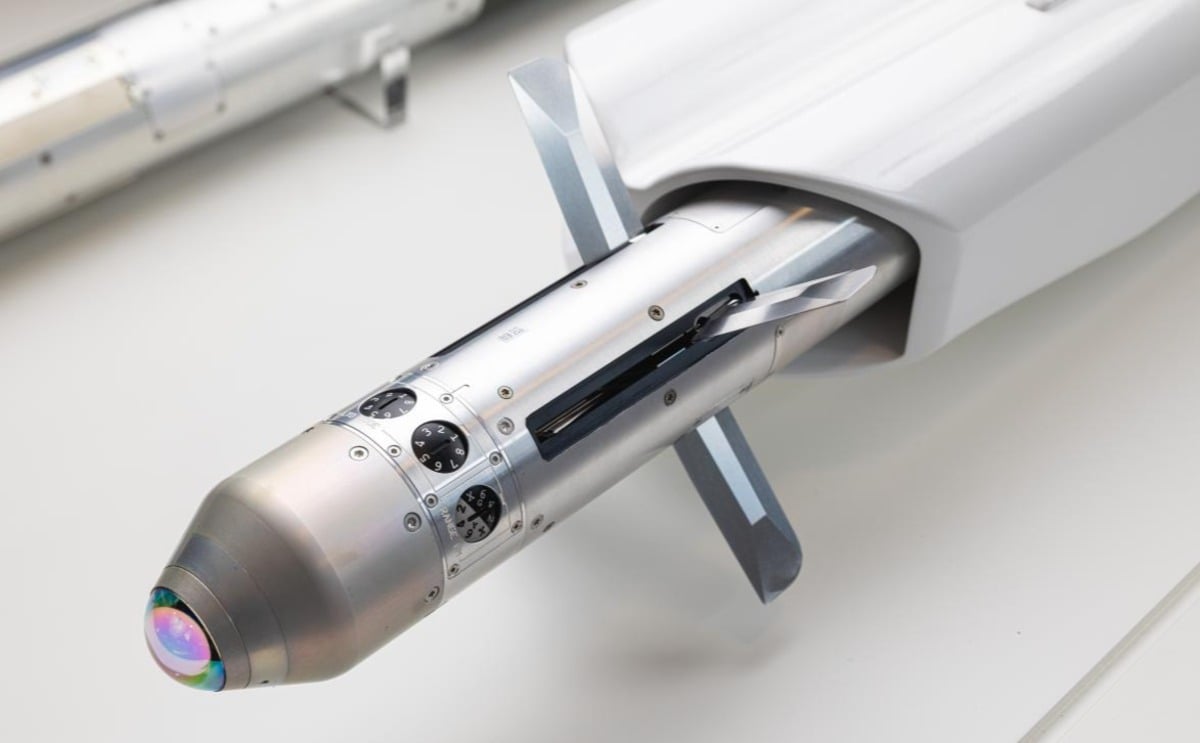
Their strategy hinges on repurposing existing, proven hardware rather than inventing a luxury system from scratch. They looked at the lightweight multi-role missile (LMM) system, known as Martlet, and realized it could be adapted for drone interception at a fraction of the cost of heavy air-defense batteries.
But the real breakthrough lies in the software and the tracking systems.
To intercept a drone cheaply, you have to find it without turning on massive, power-hungry radar systems that broadcast your position to the entire world. You need passive tracking. You need sensors that listen and watch silently, calculating the trajectory of a target no larger than a shoebox, and then guiding a low-cost interceptor to meet it.
It is a shift from brute force to elegant efficiency. Instead of blowing up a fly with a hand grenade, you use a flyswatter designed with digital precision.
The Human Cost of High-Tech Delays
Talk to the people who actually have to operate these systems. They do not care about corporate press releases or quarterly earnings reports. They care about reliability and simplicity.
Imagine standing on the deck of a cargo ship passing through a hostile strait. The radar screen shows five incoming signatures. They are small, slow-moving, and low-flying. Are they migratory birds, commercial surveillance craft, or explosive-laden kamikaze drones?
You have seconds to decide.
If you fire your primary defense grid, you are defenseless against a second wave of actual anti-ship missiles. If you wait, you risk a catastrophic hull breach from a weapon made of carbon fiber and duct tape.
That is the psychological pressure of modern asymmetric conflict. The anxiety does not stem from a lack of technology; it stems from the paralysis of having the wrong kind of technology for the threat at hand.
By driving down the cost of interception, developers are trying to remove that paralysis. When an interceptor costs a fraction of a standard missile, the decision to fire becomes instinctual rather than agonizing. The commander can protect their crew without worrying if they are falling into an economic trap set by the adversary.
The Race for the Invisible Shield
The competition to secure the low-altitude sky is intensifying. Companies worldwide are racing to deploy directed-energy weapons, high-powered microwaves, and automated jamming nets. Everyone is hunting for the magic bullet that offers zero-cost per shot.
Laser weapons promise this future, but they suffer in heavy fog, rain, or smoke. Jammers work until the drones are programmed to fly autonomously without a radio link, guided only by internal optical sensors that recognize targets visually.
That leaves physical kinetic interception—hitting the drone with an object—as the most reliable backup. And that is where the Thales initiative matters. It bridges the gap between the vulnerable electronic warfare of today and the unproven laser weapons of tomorrow.
We are watching a fundamental restructuring of airspace security. The sky used to belong to those who could afford the most expensive machines. Now, the sky belongs to whoever can manage the math of the masses.
The soldier in the trench does not need a weapon that belongs in a museum of engineering marvels. They need a system that works every single time, available in quantities that match the endless swarm overhead, keeping the sky clear without costing the earth.