The coffee in the terminal kiosk was still hot when the world fractured.
Morning in Riyadh usually arrives with a deliberate, measured warmth. The desert sun crests the horizon, bleaching the concrete and glass towers of the Saudi capital into stark shades of ivory and gold. For the travelers standing in the cavernous departure halls of King Khalid International Airport, it was supposed to be a routine Tuesday. Suitcases rolled across polished marble. Boarding passes crinkled in anxious hands. Families whispered final goodbyes, the low hum of global transit masking the underlying anxieties of an era caught between old hatreds and fragile modernities.
Then came the sound.
It was not the polite rumble of a Boeing engine pushing back from a jet bridge. It was a sharp, concussive tear in the fabric of the morning air, followed by a secondary concussive wave that rattled teeth and set emergency alarms screaming across the tarmac.
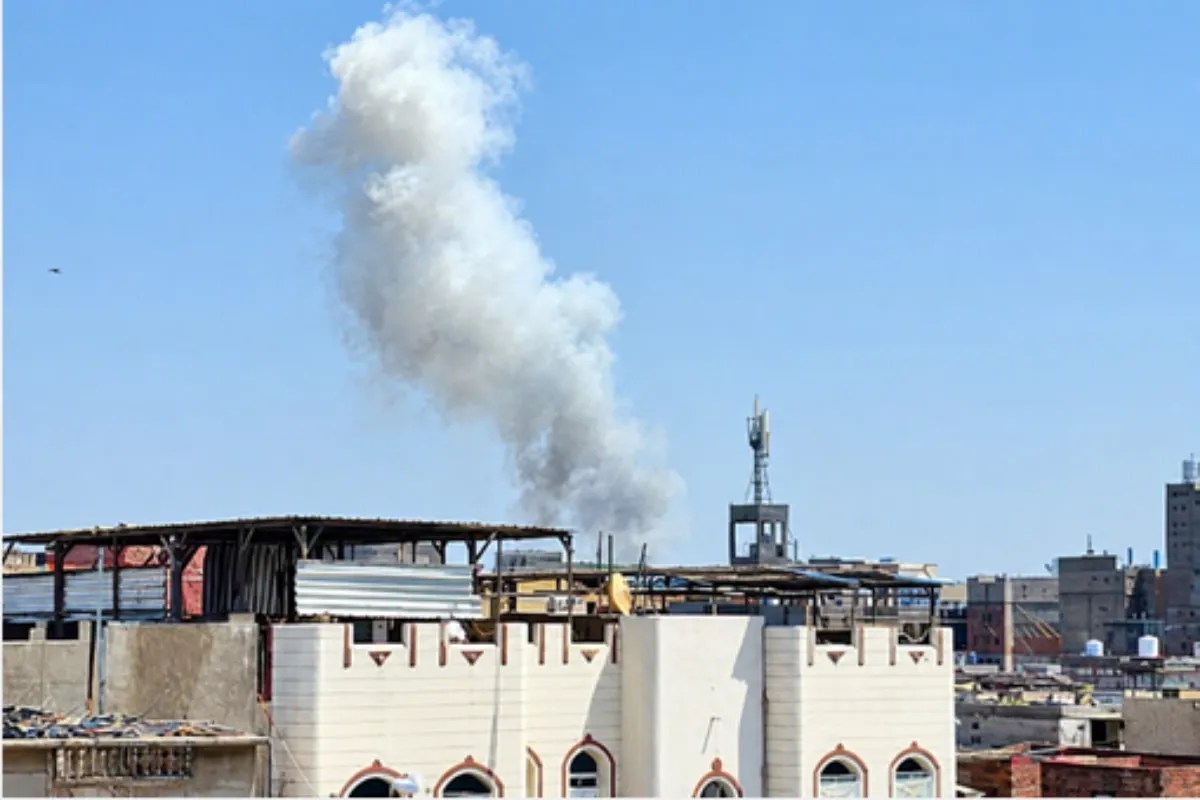
Smoke bloomed against the crisp blue sky, dark and greasy, clawing upward from the perimeter of the airfield.
Panic does not always look like cinematic screaming. Often, it looks like sudden, paralyzed silence. A woman dropping her passport. A security guard freezing mid-stride, his hand hovering over a holster. In that single, violent instant, the invisible architecture protecting millions of daily flyers was laid bare. This was not a mechanical failure. This was the sudden, brutal intrusion of the regional war in Yemen directly into the glass-and-steel heart of the Saudi kingdom, delivered via the grim mechanics of an explosive-laden drone deployed by Houthi forces.
To understand why a morning in Riyadh can shift from mundane to catastrophic in a fraction of a second, you have to look past the sterile maps of the Arabian Peninsula and stare directly into the mechanics of asymmetric warfare.
Wars used to be fought over trenches and fortified ridges. Today, they are fought across the supply chains of commercial aviation and the fragile psychological tolerance of civilian populations.
Consider what happens when a drone—a machine assembled from off-the-shelf commercial electronics, a GPS module, and a payload of high explosives—crosses an international border. It does not carry the insignia of a grand imperial army. It hums with the anonymous malice of modern proxy conflict. When the Houthi movement, entrenched in the rugged mountains of northern Yemen, fires these flying improvised explosive devices northward, they are playing a calculated psychological game. They know they cannot defeat the Saudi military in a traditional theater. But they can puncture the illusion of safety. They can turn a civilian airport into a frontline.
The statistics tell a terrifying story of escalation, but statistics lack a pulse.
Imagine, hypothetically, a baggage handler named Tariq, standing three hundred yards from the impact zone. Tariq has worked the ramp at King Khalid for a decade. He knows the weight of a suitcase from London, the particular smell of jet fuel in the desert heat, the rhythmic symphony of pushback tractors. For Tariq, the war was always something on a television screen in the breakroom—a muted map with red arrows pointing north.
Until the shockwave hit his chest.
When debris rained down onto the tarmac, puncturing the fuselage of a grounded Airbus, Tariq did not think of geopolitics. He thought of his youngest daughter’s birthday party that evening. He thought of the simple, beautiful arrogance of believing that civilian spaces are somehow exempt from the fury of nations.
That is the true target of these attacks. The explosion at the airport was not merely an assault on aluminum and aviation fuel; it was an assault on the premise of normalcy.
For years, the Saudi-led coalition has engaged in a grinding, devastating conflict in Yemen, a war born of the 2014 Houthi takeover of Sanaa and the subsequent collapse of the internationally recognized government. It has been a tragedy of famine, airstrikes, displaced millions, and forgotten children. But as the war dragged on, a grim technological leveling took place. Deprived of an air force, the Houthis turned the skies into their own asymmetric equalizer. Iranian-supplied technology, smuggled in pieces and assembled in the rugged valleys of Yemen, gave a non-state actor the reach to strike targets hundreds of miles away with terrifying precision.
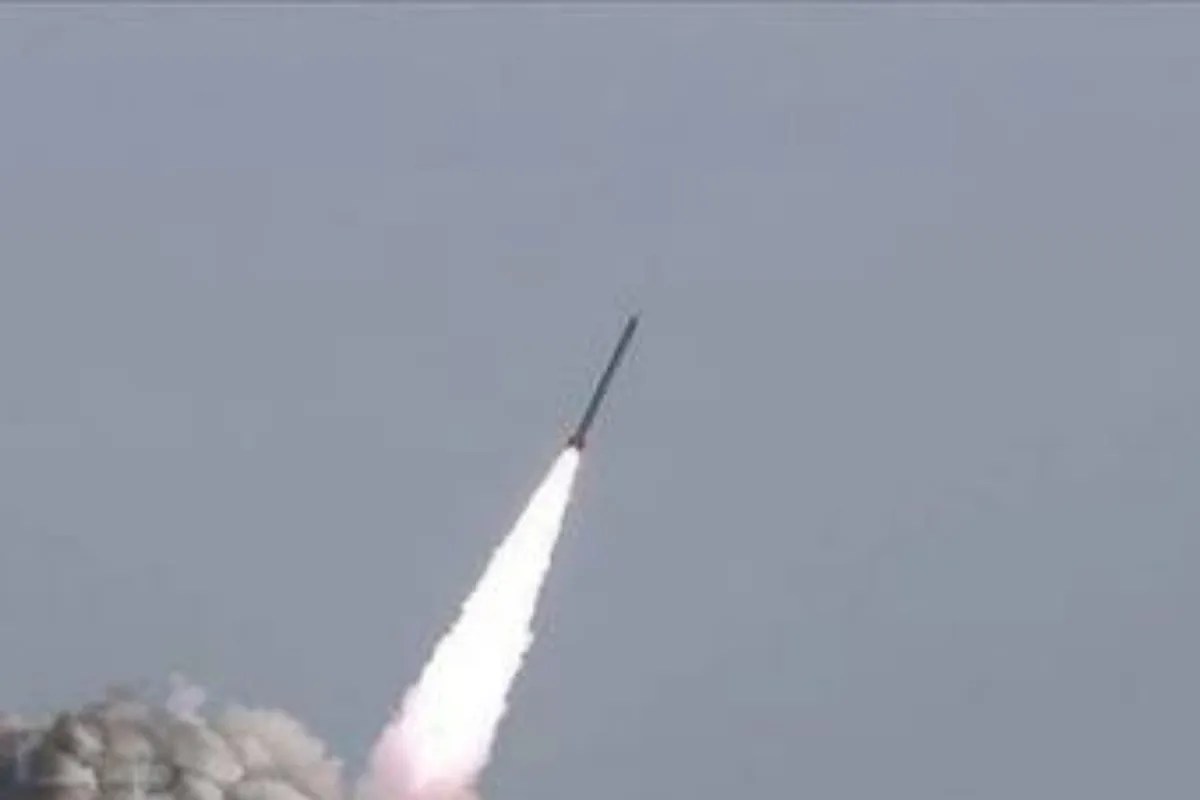
When those drones and ballistic missiles arc toward Riyadh, Patriot missile batteries light up the night. Most are intercepted. The sky flashes with silver flowers of counter-fire, and life in the capital goes on. People return to their offices. Malls reopen. The coffee shops sweep up the dust.
Yet every interception leaves a psychological residue. What happens when the defense fails, even just once? What happens when a stray piece of shrapnel or an unintercepted delta-wing drone finds its mark near a fuel depot or a crowded terminal?
The attack on Riyadh airport was a stark, brutal answer to that question. It punctured the firewall between the battlefield and the boardroom. It reminded the international business community—those who view Riyadh through the gleaming lens of Vision 2030, smart cities, and futuristic giga-projects—that prosperity requires peace, and peace in this region remains painfully, terrifyingly contingent.
We often speak of foreign policy as if it were a game of chess played by men in tailored suits in air-conditioned rooms in Geneva or New York. We talk of ceasefires, UN resolutions, and backchannel diplomacy as clinical abstractions.
Walk the perimeter of a smoking airport runway, and those abstractions evaporate.
Diplomacy is not just about signing papers; it is about the desperate race to stop the next drone before it clears the horizon. It is about the families waiting in arrival halls who will never look at an airplane landing the same way again. It is about the realization that in our hyper-connected world, violence does not stay neatly contained within borders. It travels on the wind, carried by small engines humming with cheap fuel and deep-seated grievances.
The smoke eventually cleared from the skies over Riyadh. Flights resumed under the watchful eyes of heightened security. Passengers queued up again, desperate to return to their lives, trying desperately to reassemble the fragile illusion of safety that modern civilization depends upon.
But down on the tarmac, beneath the pristine belly of the next departing flight, the scorch mark remained. A dark, jagged reminder that the peace we enjoy is never a permanent condition. It is a thin, fragile crust over a boiling sea, maintained only by constant vigilance, and haunted always by the next sound in the morning sky.