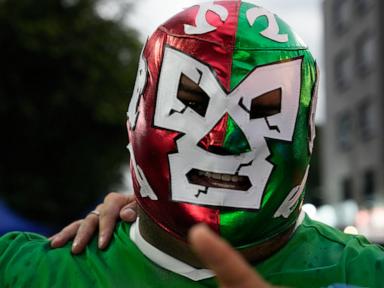
You can't walk down a street in Mexico City right now without bumping into El Santo, Blue Demon, or Místico. They are buying tacos, drinking beers, and riding the subway. Except they aren't the legendary luchadores themselves. They are soccer fans from England, Brazil, Japan, and Spain, currently taking over the country for the World Cup.
The global soccer tournament has turned Mexico into a giant, colorful melting pot where two completely different obsessions collide. If you thought the World Cup was just about soccer jerseys and national flags, you haven't stepped outside Arena México lately. International visitors are actively taking a break from the pitch to submerge themselves in the chaotic, high-flying theater of lucha libre. It turns out that a multi-colored spandex mask is the ultimate souvenir, bridging the gap between global sports culture and authentic Mexican identity. For another perspective, consider: this related article.
The Collision of Two National Obsessions
Soccer is a global religion. Lucha libre is uniquely Mexican DNA. Right now, those two worlds are completely blurred. Walk past any stadium vendor or street market in the host cities, and you will see rows of classic wrestling masks hanging right alongside the official national team kits.
International tourists are using Mexico as a primary travel hub during the tournament, often staying in the capital before heading out to matches across North America. For many of these travelers, the trip isn't complete without experiencing a Friday night at the cathedral of wrestling. While heavy-hitter soccer matches take place in cities like Guadalajara, tens of thousands of fans are packing into Arena México to watch stars like Místico and Máscara Dorada take on rivals like The Beast Mortos. Similar analysis on the subject has been provided by The Athletic.
Look closely at the crowd in the arena stands. You won't just see traditional wrestling aficionados. You'll see groups of friends wearing England, Brazil, or South Korea soccer jerseys, all screaming at the top of their lungs while wearing neon luchador masks.
The Hypocrisy of Stadium Security Protocols
There is a weird catch to this sudden explosion of mask cultural fever. FIFA security protocols technically prohibit fans from wearing full-face masks inside the stadiums during official World Cup matches. The rules are strict about security and identification, meaning you can't stroll past the turnstiles looking like a 1970s comic book hero.
But football fans are notoriously stubborn. Go to any fan zone or walk around the outside perimeter of the stadiums, and the masks are absolutely everywhere. Some fans even manage to sneak them past security checks or put them on the second they hit their seats. The sheer volume of enmascarados on the streets proves that official tournament guidelines can't suppress a tradition this loud.
This crossover isn't actually new. Soccer and lucha libre have shared a mutual respect in Mexico for decades. Local players like Gabriel Pereyra famously celebrated goals by pulling out a Místico mask from their shorts and slipping it on. Wrestlers like América Salvaje literally built their entire ring persona around the colors and identity of local soccer clubs like Club América. The two sports feed off each other's energy.
Why a Wrestling Mask Represents More Than a Soccer Jersey
If you ask the locals, they will tell you straight up: soccer is a massive passion, but lucha libre is who they actually are. Local wrestlers often argue that soccer doesn't fully capture the raw spirit of the Mexican working class the way the ring does. Lucha libre is a equalizer. On any given night, you'll find grandmothers, wealthy corporate executives, and local street vendors sitting side-by-side, losing their minds over the same acrobatic stunts.
The mask itself carries a deep historical weight that traces back to Aztec and Mayan warriors, who used facial coverings in rituals and battles to channel the power of gods and animals. When an international fan buys a mask on the street for a few pesos, they aren't just buying a cheap gimmick. They are participating in a century-old tradition of personal transformation. In the ring, losing a mask is the ultimate humiliation, a permanent loss of identity. On the streets during the World Cup, putting one on is an instant invitation to become part of the local culture.
How to Experience Authentic Lucha Libre Right Now
If you are currently navigating the chaotic World Cup crowds in Mexico and want to see this spectacle firsthand, skip the commercialized tourist packages. Get your tickets directly at the Arena México box office for a Tuesday or Friday night show.
Avoid buying the cheapest masks inside the stadium if you want something durable; the street vendors outside the arenas offer a massive variety of heavily stitched, traditional designs for a fraction of the price. Pick a side immediately—you're either cheering for the técnicos (the good guys) or the rudis (the villains). Lean into the noise, ignore the corporate FIFA rules for an evening, and embrace the beautiful madness that happens when the world's game meets Mexico's true national art form.