The sea does not care about decrees. It rolls against the seawall of the Caribbean city with the same indifferent rhythm it has kept for centuries, churning white foam under a heavy, salt-thickened sky. But the streets above the shore are changed.
Silence has a weight. This morning, that weight is made of steel.
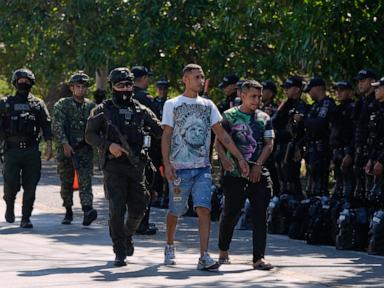
Armored trucks idle near the corner of a bustling commercial avenue, their exhaust pipes belching grey smoke into the humid morning air. Young men in camouflage helmets sit atop the metal hulls, rifles resting across their knees, eyes scanning balconies and alleyways with a practiced, exhausting vigilance. They did not grow up walking these blocks. They smell of diesel fuel, distant mountain rain, and institutional command.
Orders came down from the presidential palace hundreds of miles away in the cool Andean capital. A sudden surge of bloodshed—extortion demands turning into grenade attacks, daylight assassinations on motorcycle taxis, merchants shuttering their doors before noon—forced the hand of the state. Troops were mobilized. Planes landed on the local tarmac. Trucks rolled into the neighborhoods.
Now, the soldiers are here. And the city holds its breath.
The Anatomy of an Emergency
Violence rarely arrives with cinematic drama. It seeps in slowly, like moisture through concrete.
Ask Mateo. He has run a small hardware shop on the edge of the historic district for thirty years. He knows the sound of every shutter going up at dawn. Lately, though, those shutters stayed down. A slip of paper slid under his front door three weeks ago demanded a weekly tribute—protection money paid to an invisible syndicate operating out of the crowded hillside slums. When Mateo refused, thinking it was an empty bluff, a brick wrapped in a warning note came through his front window.
The police were stretched thin, their radios crackling with multiple simultaneous emergencies across neighborhoods separated by miles of winding asphalt and sun-baked plazas. In cities like this, municipal forces often find themselves outmatched by decentralized criminal networks that move with the fluidity of water and the firepower of small armies.
When the local governor made the frantic call upward, echoing the panic of business owners and terrified families, the presidency responded with the ultimate instrument of domestic deterrence: federal military intervention.
This is not a new script in Colombia. For decades, the nation has wrestled with the ghost of internal conflict, shifting from rural guerrilla warfare to urban criminal cartels and extortion rings. Sending troops into city streets is an admission of failure and a show of strength rolled into one desperate maneuver. It declares that civil policing has reached its absolute limit, leaving the state with only one tool heavy enough to command attention.
Behind the Tinted Windows
Consider the perspective of a nineteen-year-old infantry soldier from Boyacá, dropped into the tropical heat of the Caribbean coast. His uniform is soaked with sweat within ten minutes. The slang spoken by teenagers on the street corners is foreign to him. The humidity feels like a physical barrier pressing against his chest. He holds his rifle tightly, not out of malice, but out of sheer, unadulterated fear of the unknown. Every shadow looks like a threat. Every passing motorbike sounds like a potential ambush.
On the other side of the barrel are the residents. To them, the sight of soldiers on the boardwalk evokes a complex web of historical memories. For some, the camouflage brings a sense of relief—a sign that someone, anyone, is finally taking control. For others, it stirs deep anxiety, recalling past abuses of authority, heavy-handed crackdowns, and the unsettling realization that normal civilian life has broken down entirely.
Trust is fragile. It shatters easily under the weight of combat boots.
A mother walks her daughter to school past a checkpoint. She keeps her eyes fixed straight ahead, ignoring the soldier standing six feet away with his weapon lowered. Her daughter reaches out to touch her sleeve, whispering a question that gets swallowed by the roar of a passing bus. The mother does not answer. There are some things children should not have to understand about the fragile architecture of public safety.
The Cost of the Show of Force
Armored vehicles parked in central plazas create an immediate illusion of order. Extortion phone calls drop off for twenty-four hours. Criminals melt into the background, retreating into the labyrinthine alleys where heavy trucks cannot follow. The headlines in the national newspapers praise decisive leadership.
Yet beneath the surface calm, the underlying rot remains untouched.
Troops are blunt instruments. They are trained to secure territory, not to conduct delicate forensic investigations or build community trust. They cannot dismantle the complex financial webs through which criminal organizations launder extortion money. They cannot provide therapy to traumatized shopkeepers or reform corrupt local municipal offices.
When the military occupies a city, it treats a systemic infection with a tourniquet. The bleeding stops, but the limb is starved of circulation.
Merchants whisper behind closed doors that the gangs will simply wait. They know how this game is played. The soldiers cannot stay forever. Budgets have limits. Political cycles shift. Eventually, the trucks will roll away, the camouflage will vanish down the highway, and the local bosses will emerge from the shadows to collect what they believe is owed to them, with interest.
Living in the Interim
Life in the city continues, compressed and cautious.
At dusk, the cafes along the waterfront fill up with tourists who remain blissfully unaware of the political machinery shifting beneath their feet. They order local seafood and listen to live music drifting from open-air terraces, snapping photographs of the sunset against the colonial fortresses. Just ten blocks away, however, iron security gates clang shut at six in the evening. Families lock their doors, double-check their padlocks, and turn off their porch lights.
This dual reality defines the modern urban crisis. A city can be simultaneously a postcard-perfect paradise and a pressure cooker of hidden violence.
The president's decision was broadcasted as a triumph of swift governance. Cameras flashed as commanders stepped out of helicopters to survey the territory. Speeches were delivered about restoring dignity and law to the coast. But speeches do not clean the blood off the pavement, and decrees do not put food on the tables of people whose livelihoods have been crushed by fear.
The Final Chord
The sun dips below the horizon, painting the Caribbean sky in violent shades of violet and orange.
On a corner near the old port, an elderly man sweeps stray palm fronds off his pavement. He moves slowly, methodically, ignoring the armored vehicle parked twenty yards down the street. The soldiers inside the truck are smoking cigarettes, talking in hushed tones about their families back home, waiting for a shift that feels like it will never end.
No one speaks. The city waits for tomorrow. The sea keeps rolling in.