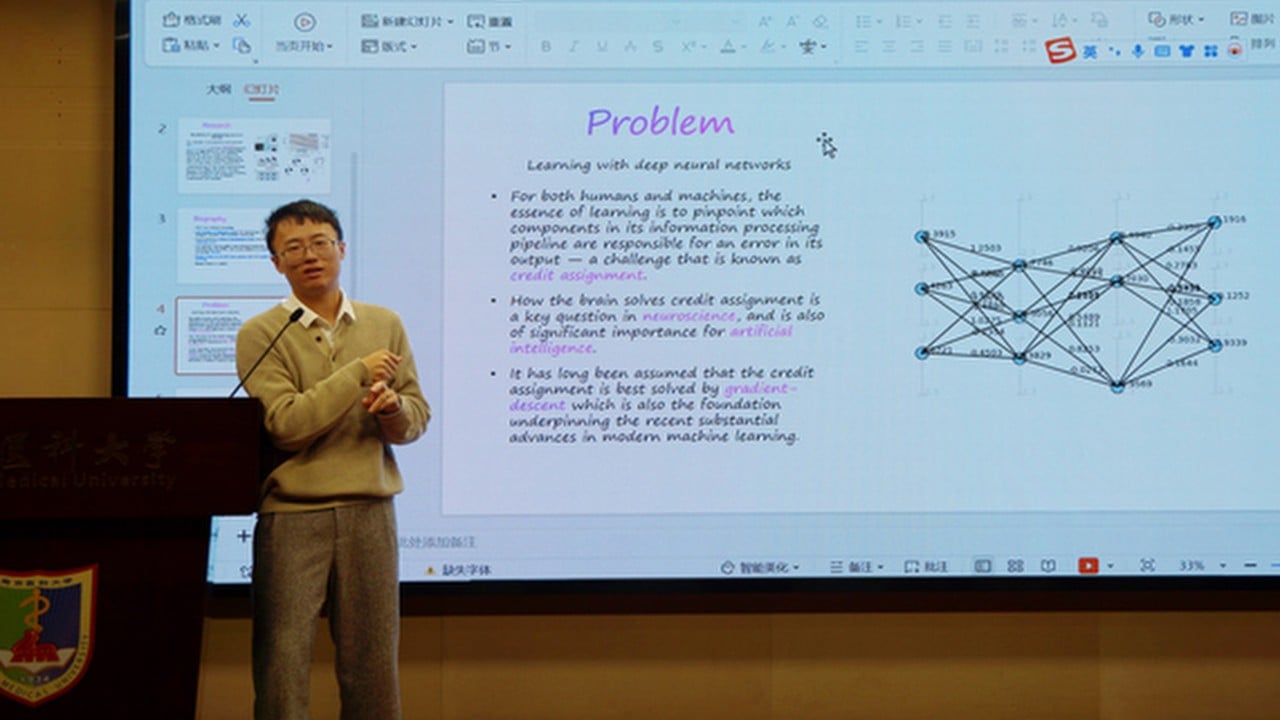
The headlines make it sound like a simple career move. Oxford-educated AI prodigy Song Yuhang leaves his high-flying UK startup, Fractile, and heads back to China to join Nanjing University. But if you look closely at the timing and the political climate, it's not just another resignation. It’s a loud signal of how toxic the "national security" label has become for researchers caught between two superpowers.
Song isn't just any researcher. He’s a specialist in predictive coding and brain-inspired AI—the kind of tech that could make current GPUs look like calculators. When he co-founded Fractile in London, the goal was to build chips that actually run AI the way a human brain processes information. Then, the scrutiny started.
The Beihang University factor and the cost of a degree
The real reason Song left Fractile wasn't a lack of vision or a better paycheck in Nanjing. It was his undergraduate degree. Song graduated from Beihang University in Beijing. In the world of international defense and high-tech trade, Beihang is often flagged because of its historical ties to China's aerospace and military research.
I've seen this play out before. A brilliant mind moves to the West, contributes to the local ecosystem, and then gets squeezed out by compliance departments. Reports suggest that internal concerns about his academic background—specifically those "Seven Sons of National Defence" ties—made his position at a UK-based chip startup untenable. Fractile is trying to build a global competitor to Nvidia. You can't do that if your CTO makes Western investors or government grant offices nervous.
It’s a brutal reality. We’re seeing a "de-risking" of talent. If you have the wrong university on your CV, your ceiling in Western tech is suddenly much lower than it was five years ago.
Why Nanjing University is the real winner here
While the UK loses a pioneer in neuromorphic computing, China is rolling out the red carpet. Song’s appointment at Nanjing University’s School of Artificial Intelligence isn't a "step back" into academia. It’s a strategic placement.
China’s AI industry hit a valuation of over 1.2 trillion yuan in 2025. They aren't just looking for software developers; they’re desperate for the "hard tech" Song specializes in. By bringing him home, Nanjing University gains someone who understands the exact hardware bottlenecks facing the West.
The shift from backpropagation to predictive coding
Song’s research focuses on moving beyond "backpropagation"—the standard way AI learns today. Backpropagation is incredibly energy-intensive. It’s why AI data centers are eating up the world's power grids.
Song’s work on predictive coding suggests that chips can learn more like biological brains:
- Efficiency: Only updating what's necessary, not every single weight in a massive network.
- Speed: Processing information in parallel without needing a central controller to manage every step.
- On-chip learning: Making it possible for devices to learn locally without sending data back to a giant server.
If Song can implement these theories into physical silicon in China, the "chip war" takes a very different turn. While the US and UK focus on blocking H100 exports, China is now funding the people who want to reinvent how the chips work from the ground up.
The talent drain is a policy choice
We keep talking about "keeping AI safe," but we’re doing it by pushing away the people who actually understand it. Song Yuhang’s exit from Fractile is a textbook example of how rigid security policies backfire.
When you tell a researcher they’re a "security risk" because of where they went to school at age 19, they don't stop being brilliant. They just go somewhere else. Usually, they go to the very place you were worried about in the first place.
I’ve talked to founders who are terrified of hiring top-tier talent from certain regions because the paperwork is a nightmare. They’d rather hire a "safer" but less capable candidate than deal with the scrutiny. That's a losing strategy in a field as fast-moving as AI.
What happens to Fractile now
Fractile is still a company to watch. They recently raised significant seed funding and are pushing ahead with their aim to make AI 100x faster. But losing a co-founder with Song’s specific expertise in neuroscience-inspired algorithms is a massive blow.
You can replace a manager. You can replace a coder. It’s much harder to replace a guy who can bridge the gap between biological brain dynamics and computer architecture. The company has to move forward under a cloud of "national security" compliance that might limit who they can partner with in the future.
The next steps for tech founders
If you're running a deep-tech startup today, you've got to be smarter than the regulators. You need to vet your founding team’s "geopolitical footprint" before you even pick a company name. It’s unfair, and it’s a waste of human potential, but it’s the world we’re living in.
For researchers, the lesson is even simpler: the era of the "global scientist" is shrinking. You’re increasingly defined by your passport and your alumni network. If you're in Song's position, don't wait for the compliance department to knock on your door. Build your own labs, secure your own funding sources, and recognize that the most valuable thing you own is your intellectual property—and you should take it where it's actually wanted.
Fractile's co-founder exit over China ties
This video explains the broader context of China's massive investment in the AI sector and the policy support driving the return of top-tier talent.