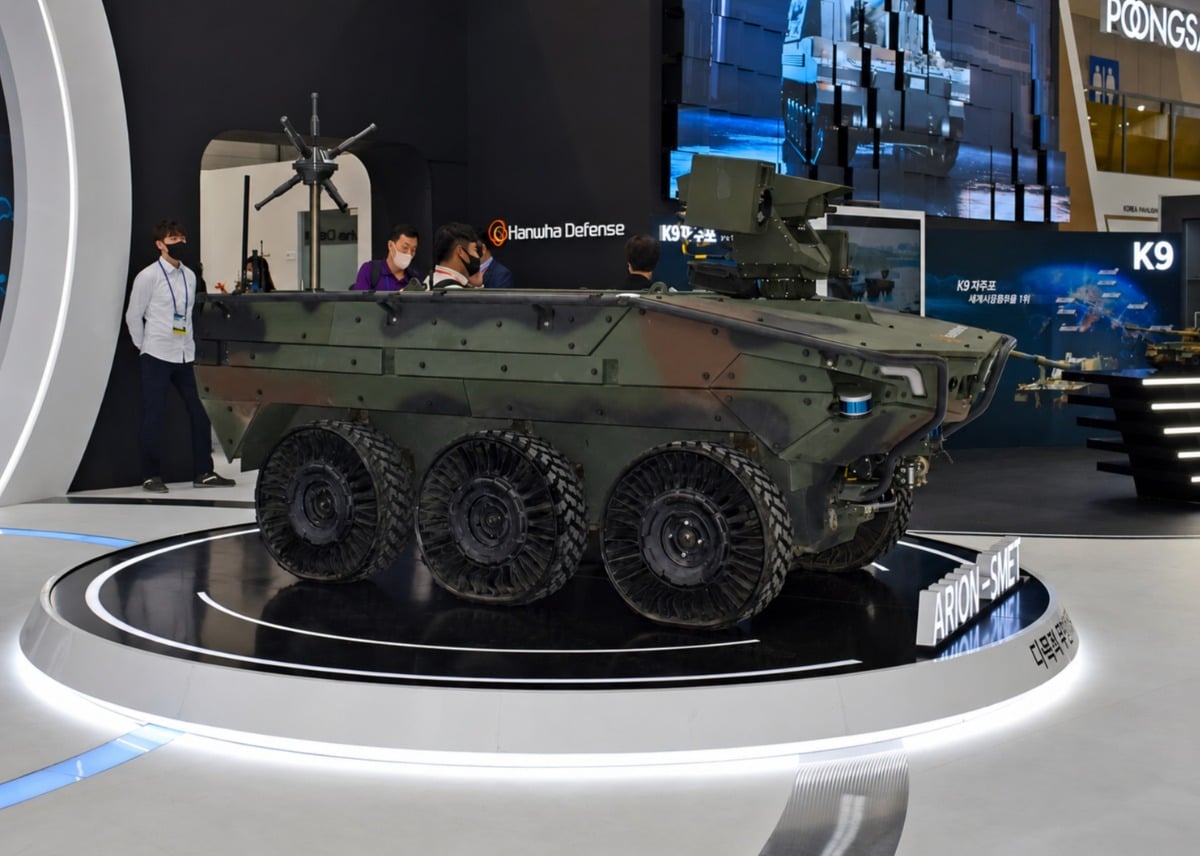
South Korea is building an autonomous defense robotics cluster in South Chungcheong Province, committing 49.9 billion won to establish a sprawling testing facility in Nonsan. This initiative aims to address a severe manpower deficit rather than simply advancing military hardware. The nation faces a critical demographic crisis, with its standing military force dropping 20% in six years to 450,000 personnel, and projected to hit 350,000 by 2040. Faced with empty barracks and a highly volatile border, Seoul is forced to replace human soldiers with mechanical surveillance, logistics, and perimeter platforms to maintain its national security.
The Demographic Trap Inside the Barracks
Military strategists usually build autonomous weapons systems to achieve battlefield dominance or keep soldiers out of harm's way. South Korea is building them because the soldiers do not exist. The country has broken its own record for the lowest total fertility rate in the world year after year.
A standing army requires bodies. The drop from over half a million active-duty personnel down toward an anticipated 350,000 by 2040 creates structural vulnerabilities across the Demilitarized Zone. General staff cannot hold lines with empty chairs. The central government increased its defense transformation and machine learning computing budgets by 84% under current industrial policies. The investment in the Nonsan hub, spanning 45,190 square meters for testing and certification, represents a desperate effort to maintain defensive parity through sheer hardware volume.
Warehouses to Trenches
The industrial strategy behind South Korea's new military ecosystem relies heavily on commercial manufacturing lines. Rather than tasking traditional defense contractors with building bespoke, multi-million-dollar combat droids from scratch, the government is tapping consumer and industrial giants.
Hyundai Motor Group and its affiliates have spent years refining automated mobile platforms and hardware systems for commercial operations. This commercial technology transitions easily into military support applications.
- Four-Legged Surveillance: Boston Dynamics’ Spot, acquired by Hyundai, is moving from industrial plant inspection to active perimeter patrols along sensitive border installations.
- Logistics Runners: Wheeled droids originally engineered for automated factory floors or last-mile urban deliveries are being ruggedized to transport ammunition, water, and medical supplies to forward positions.
- Wearable Strength: Exoskeletons like the X-ble Shoulder, designed to protect factory workers from repetitive strain injuries, are being repurposed to help infantry units carry heavy equipment across mountainous terrain.
This shift blurs the distinction between a car manufacturer, a logistics firm, and a defense supplier. The industrial base realizes that a robot capable of navigating a chaotic, unstructured warehouse can, with minor software modifications, navigate a rocky hillside.
The Certification Bottleneck
Pouring money into regional innovation hubs does not instantly produce a reliable mechanical army. The true challenge for the Nonsan cluster, which brings together institutions like the Korea Testing Laboratory and KAIST’s Mobility AX Research Institute, is the brutal process of military certification.
Commercial software can afford occasional bugs. A warehouse robot that drops a box requires a simple reboot. A 300-pound autonomous ground vehicle that misinterprets a sensor feed along the DMZ can trigger an international crisis.
The five-year timeline running through 2030 focuses on creating standardized evaluation environments. These systems must prove they can operate in sub-zero winter temperatures, resist electronic jamming from adversaries, and distinguish between a wild animal and an infiltrating combatant. Establishing absolute software reliability remains a significant obstacle.
Non-Combat Operations as a Gateway
Public anxiety over autonomous systems often centers on weaponized machines acting without human intervention. To bypass political resistance and regulatory hurdles, Seoul's procurement strategy focuses strictly on non-combat operations.
The machines currently undergoing testing are designed to carry, watch, and follow, but not to shoot. By restricting initial deployments to logistics, surveillance, and casualty evacuation, the military can integrate automated systems into daily operations without triggering ethical debates over autonomous lethal force.
This approach creates an indirect path to weaponization. A mobile platform that can reliably track a target for reconnaissance purposes can be fitted with a remote weapons station relatively quickly if geopolitical realities shift. The immediate goal, however, remains relieving the physical burden on the shrinking pool of human conscripts.
The Global Stakes of the Korean Experiment
Every industrial nation facing a collapsing birth rate is watching the development of the Nonsan cluster closely. Western Europe and parts of East Asia face similar, albeit slower, demographic shifts. The traditional model of mass conscription is becoming unviable in aging societies.
If South Korea successfully integrates autonomous systems into its defense framework, it creates a new playbook for mid-sized powers. National defense will no longer be measured by the size of the population, but by the scale of the automated manufacturing base and the reliability of the software running it.
The 49.9 billion won spent on the South Chungcheong facility is a down payment on a fundamental shift in how nations defend their borders when they run out of citizens.

:max_bytes(150000):strip_icc()/Logistics-db9279223e6c4ccbbdd7b891f20a056e.jpg)