The map of the modern alliance is drawn in fiber-optic cable and filtered through the glow of encrypted terminals. For decades, the architecture of Western defense has rested on a quiet, unspoken agreement: the infrastructure of command belongs to those who built the scale. Washington wrote the code, laid the protocols, and established the neural pathways of NATO. When generals in Brussels or Paris wanted to talk, they spoke across a network shaped by American technological hegemony.
Silence can be a vulnerability.
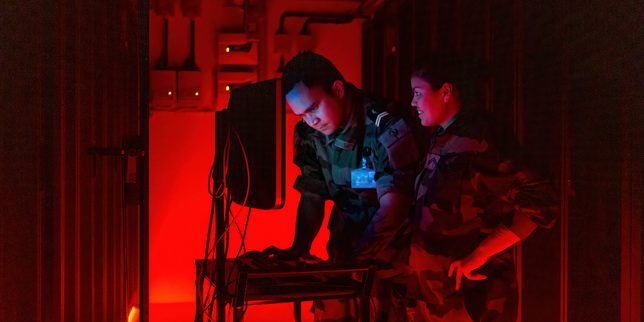
Imagine an officer sitting in a concrete bunker beneath the Parisian suburbs, watching a data stream flicker across a screen. The orange light catches the fatigue in his eyes. He is looking at intelligence gathered from a contested frontier, processed through machine-learning algorithms designed three thousand miles away. Every calculation, every automated threat assessment, every whisper of artificial intelligence filtering the noise of war has passed through a foreign filter. The answers are fast. The algorithms are brilliant. But they do not speak French. They do not carry the strategic DNA of a nation that has spent centuries guarding its own counsel.
France has decided to change the language of the machine.
This is not merely a procurement contract or a bureaucratic realignment. It is a quiet, fierce assertion of digital sovereignty. In the high-stakes theater of military artificial intelligence, Paris is moving to crack open the American dominance over NATO’s classified networks.
Consider what happens when an army hands its cognitive faculty to an algorithm. In modern combat, data arrives like a tidal wave. Satellite feeds, intercepted communications, thermal signatures, drone telemetry—no human brain can synthesize the deluge in real time. The side that computes faster wins. But speed without autonomy is a gilded cage. If your artificial intelligence models are trained entirely on foreign datasets, optimized for foreign doctrines, and hosted on architectures you cannot fully inspect, you are no longer entirely sovereign. You are renting your security.
For years, French defense planners watched the digital gap widen. American tech giants and defense primes built the foundational layers of coalition intelligence. They set the standards for how classified networks share machine-learning models. To participate was to conform. To refuse was to be left deaf and blind in a coalition that moves at the speed of gigabits.
Yet, conformity carries a heavy toll. Military algorithms are only as neutral as the environment that bore them. They encode assumptions about threat thresholds, tactical priorities, and acceptable collateral damage. When those assumptions are foreign, a nation’s strategic instincts can be overridden by software it did not write.
France’s counter-offensive is happening away from the television cameras, inside specialized research laboratories like the Directorate General for Armaments and specialized defense tech cells. The strategy relies on building domestic, sovereign artificial intelligence engines capable of plugging directly into NATO's classified ecosystems without losing their independent core.
To understand the weight of this effort, look at the sheer physics of military data sharing. NATO networks are not ordinary internet connections. They are multi-layered, heavily guarded digital fortresses known as Federated Mission Networking environments. Every node must trust every other node. When a French tactical unit shares a target coordinate processed by an AI model, that model must be vetted, secure, and interoperable. For a long time, interoperability meant Americanization.
France is proving that interoperability can be achieved through sovereign strength rather than submission. By developing high-performance neural networks that run on indigenous hardware and use locally curated training data, French engineers are creating cognitive systems that can reason alongside American systems without surrendering their source code.
This requires an uncomfortable kind of honesty about where Europe stands in the global technology race. For a long time, the continent suffered from a collective hesitation. We regulated the digital world while others built it. We debated the ethics of artificial intelligence while superpowers weaponized it. The awakening has been sobering.
In a hypothetical command post during a simulated cyber-electronic conflict, the difference between a foreign-dominated network and a sovereign neural mesh becomes stark. When an anomaly appears on the classified network—a sophisticated spoofing attack designed to blind radar installations—an imported algorithm might hesitate, misinterpreting the threat signature because it deviates from standard training profiles. A sovereign model, tuned to the specific tactical sensitivities and historical threat patterns recognized by French military intelligence, catches the nuance instantly. It whispers a warning in the exact cadence the command staff expects.
This is the human element at the heart of the silicon. Technology in uniform is never objective. It reflects the culture, the geopolitical anxieties, and the historical memory of the people who command its development.
The push against American dominance on NATO networks is not an act of hostility. It is an act of balance. An alliance of equals cannot function effectively if one partner provides all the muscle and all the thought. True collective security requires diverse minds, even when those minds are artificial.
Paris is betting that the future belongs to those who control their own cognitive supply chain. As these sovereign AI modules begin to thread their way through classified coalition channels, the balance of power within the alliance shifts subtly, perceptibly.
The terminal screen in the Parisian bunker still glows with incoming data. But the code running beneath the glass is no longer an echo from across the Atlantic. It bears a different signature. It thinks with an accent of its own.


