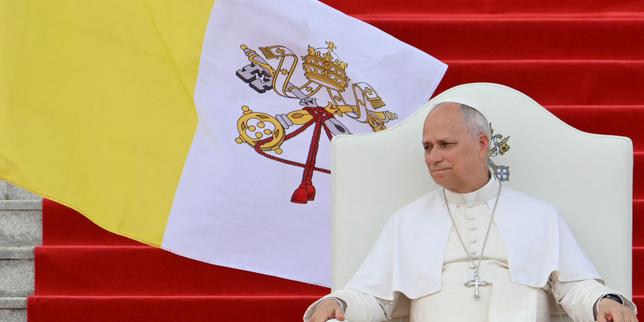
The classification of the Roman Pontiff within modern international relations theory presents an irreducible anomaly. Standard Westphalian models define state actors through fixed geographic boundaries, a permanent citizen demographic, and a centralized monopoly on internal physical coercion. The Holy See and the Vatican City State violate every conventional parameter of this institutional taxonomy. Deconstructing the mechanics of papal authority requires abandoning standard political science paradigms and analyzing a dual-track architecture comprising micro-territorial sovereignty and transnational ideological governance.
The Dual Architecture of Papal Power
To evaluate the political weight of the papacy, one must separate its temporal apparatus from its ecclesiastical jurisdiction.
- The Territorial Shell: Vatican City encompasses approximately 0.44 square kilometers. It possesses no native industrial base, no domestic resource extraction, and an indigenous population largely functionally bound to institutional service rather than multi-generational civic life. The territorial footprint exists solely to guarantee independence from any host government, acting as a physical anchor for a non-territorial entity.
- The Transnational Network: The primary vector of papal influence operates independently of square mileage. The Holy See maintains diplomatic relations with over 180 sovereign nations through nunciatures, operating as a permanent observer or full participant in multilateral frameworks.
This creates an asymmetric power distribution. While traditional states project influence proportional to their gross domestic product or military projection capabilities, the Holy See projects influence through an institutional hierarchy embedded within domestic populations globally.
The Mechanics of Diplomatic Leverage
Conventional heads of state derive their mandate from electoral cycles or dynastic succession, bound by domestic constitutional constraints and economic cycles. The papal office operates on a distinct administrative timeline, insulating policy formulation from short-term electoral feedback loops.
| Operational Dimension | Traditional Sovereign State | The Holy See |
|---|---|---|
| Primary Asset | Economic output, military capacity, territorial resources | Ideological alignment, moral arbitration, diplomatic network |
| Feedback Loop | Electoral cycles, domestic public opinion, market reactions | Canonical law, theological tradition, global episcopal alignment |
| Coercive Power | Institutional monopoly on physical force (police, military) | Soft power, moral suasion, excommunication or canonical sanction |
When a standard executive engages in bilateral negotiations, the exchange rate of influence relies on transactional leverage, trade agreements, or security guarantees. Papal statecraft bypasses these vectors, targeting the domestic social cohesion of counterparty nations. By addressing populations directly across borders, the pontiff exerts gravitational pull on internal political debates within foreign jurisdictions, rendering traditional geopolitical deterrence models ineffective.
The Cost Function of Moral Universalism
Operating as both a temporal sovereign and a universal religious leader introduces systemic friction. A standard state optimizes foreign policy for national interest, security maximization, and economic efficiency. The Holy See must reconcile realpolitik with doctrinal consistency.
This structural constraint produces a unique cost function. When the Vatican intervenes in international disputes—whether through peace mediation, refugee advocacy, or environmental policy—it cannot easily reverse course for pragmatic expediency without undermining its core asset: perceived moral coherence. Consequently, diplomacy from the Holy See exhibits high rigidity. It trades tactical flexibility for long-term ideological persistence.
Furthermore, the domestic populations of foreign states often parse papal actions through polarized local political lenses. A single encyclical or diplomatic intervention is simultaneously interpreted as progressive social advocacy or conservative institutional defense, depending on the domestic ideological battlefield of the observer. The Vatican cannot insulate its global messaging from local partisan weaponization.
Strategic Allocation of Institutional Capital
The operational utility of the papacy in the twenty-first century relies on its capacity to act as a trusted neutral intermediary in zones of intense geopolitical friction. Where conventional nation-states are disqualified from mediation due to historical alliances or adversarial postures, the Holy See retains residual diplomatic optionality.
The strategic trajectory of the office points toward an intensification of this arbitration role. As multilateral institutions face gridlock driven by great power competition, non-state actors and hybrid authorities like the Holy See occupy the structural vacuum left by traditional diplomatic channels. The efficacy of the papacy does not stem from traditional state power, but from its systematic exploitation of sovereignty without territory, converting moral authority into actionable geopolitical leverage.
[ The Pope, a head of state like any other? ]
This video provides additional context on the political nature and diplomatic history of the papacy within global affairs.



