The air at Spa-Francorchamps does not just sit; it weighs. It is a thick, damp curtain of Ardennes mist that clings to the skin and settles into the lungs. When you stand at the bottom of the climb toward Eau Rouge, looking up at the ribbon of grey tarmac that disappears into the sky, you aren't just looking at a corner. You are looking at a cathedral of momentum.
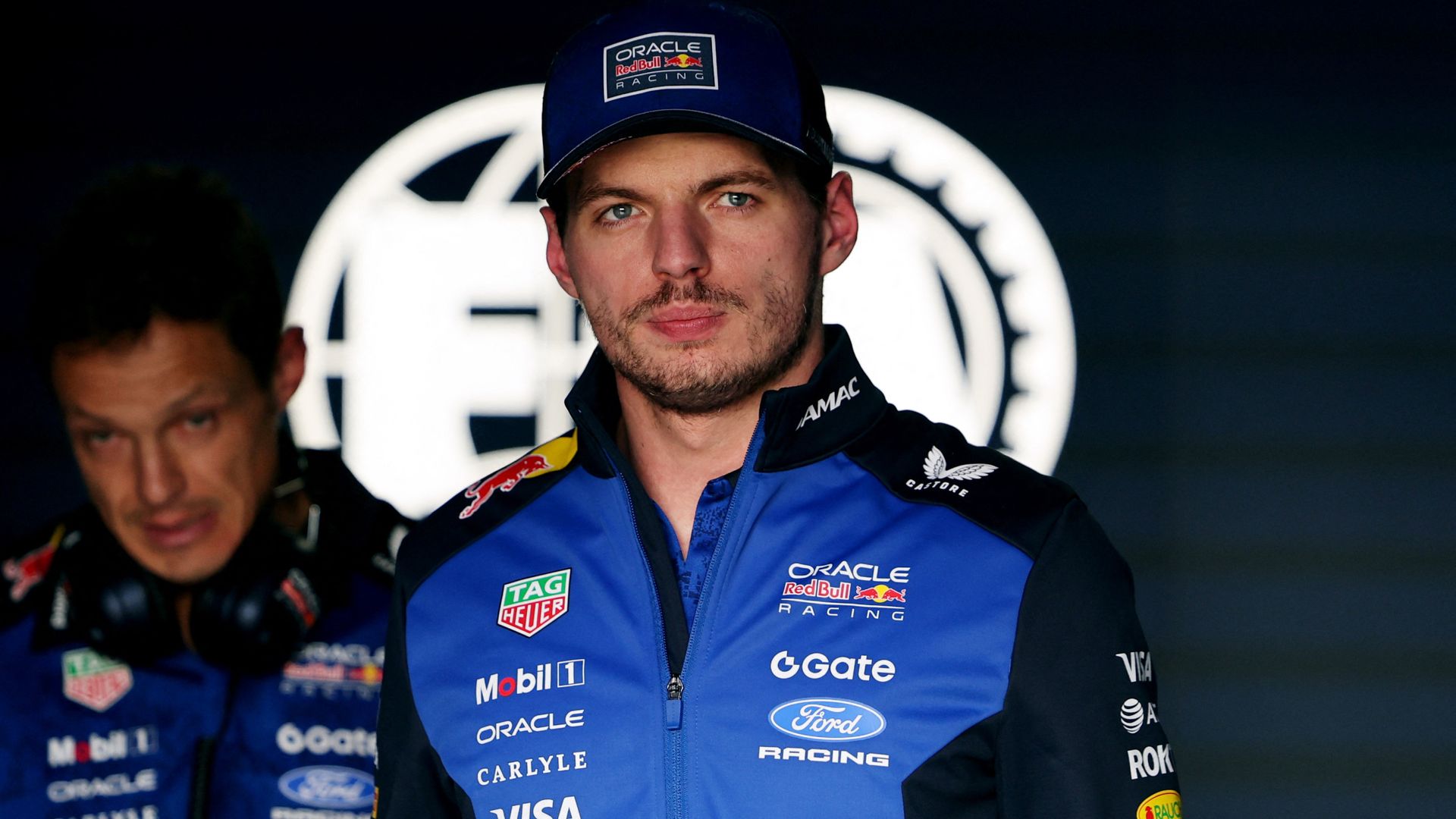
Max Verstappen knows the weight of that air better than anyone. He grew up an hour's drive from here. He has felt the vibration of the RB19 beneath him, a machine so finely tuned it feels less like a car and more like a nervous system made of carbon fiber. But in July 2023, the vibration felt different. It wasn't the engine. It was the silence left behind by Dilano van 't Hoff.
Racing is a sport of brutal arithmetic. We track the gaps in milliseconds. We measure the G-forces on a driver’s neck—up to 5G or 6G through the high-speed bends—and we calculate fuel loads to the gram. But there is a different kind of math that happens when a eighteen-year-old boy doesn’t come home. That is the math of an empty seat at a dinner table. It is the math that the world of Formula 1 tries to ignore until the rain starts to fall and the visibility drops to zero.
The Grey Wall
Dilano van 't Hoff was a name the racing world was beginning to memorize. He was the 2021 Spanish F4 champion. He had the kind of eyes that looked like they were already seeing three turns ahead. Then came the Formula Regional European Championship at Spa. It was a Saturday. It was raining. Not the kind of rain that refreshes a garden, but the kind that turns a race track into a blind, watery grave.
On the final lap, a collision sent Dilano’s car spinning into the middle of the Kemmel Straight. In the spray, he was invisible. He was a ghost before he was dead. Another car, traveling at speeds that defy human reaction time, struck him broadside.
Imagine sitting in a cockpit. You are inches from the ground. Your visor is a sheet of grey static. You are trusting that the space in front of you is empty because your heart cannot afford to believe it is full. Then, the impact.
When Max Verstappen arrived at the track for the Belgian Grand Prix shortly after, he wasn't just a world champion looking for another trophy. He was a man walking through a crime scene that had been scrubbed clean. The skid marks might wash away, but the memory of a peer—a kid who lived the same dream—doesn't.
The Cost of the Show
We often treat these drivers like gladiators, but even gladiators had the benefit of seeing their opponent. In modern racing, the opponent is frequently the weather. The physics are unforgiving. A car hitting a stationary object at 200 km/h carries kinetic energy that no amount of carbon fiber can fully dissipate.
Verstappen spoke out, and his words lacked the polished sheen of a PR representative. He was blunt. He was angry. He looked at the track and saw a design that demanded a blood sacrifice every few years. It had only been four years since Anthoine Hubert lost his life in a horrifyingly similar fashion at the same spot.
Two young men. Same corner. Same outcome.
The statistics are sobering. Since the inception of the Formula 1 World Championship in 1950, over 40 drivers have died during a Grand Prix weekend. If you include testing, private sessions, and junior categories like the one Dilano was in, the number climbs significantly. We like to think we have "solved" safety with the Halo device and better barriers. We haven't. We have only moved the line of what is acceptable risk.
The Empty Space in the Paddock
Max’s tribute wasn't a grand, theatrical gesture. It was the heavy silence of a man who realized that the gap between a podium finish and a funeral is often nothing more than a gust of wind or a patch of standing water. He called it "unnecessary."
Think about that word.
Death in pursuit of a dream is often romanticized as "heroic." Verstappen stripped that away. There is nothing heroic about a teenager dying in the spray because the race wasn't red-flagged. There is nothing noble about a "the show must go on" mentality when the actors are being buried.
The invisible stake in every race is the sanity of the people left behind. For every Max Verstappen celebrating a win, there is a family like the van 't Hoffs, for whom the sound of an engine will never be a melody again. It will only be a scream.
The Physics of Grief
A Formula 1 car is a marvel of engineering, but the human body is a fragile vessel of salt water and bone. When a driver like Max pays tribute, he is acknowledging his own mortality. He is looking at the screen and seeing himself in that wreckage.
The Kemmel Straight is a long, daunting stretch where the cars reach their terminal velocity. It is where you find out what you are made of. But at Spa, under the weeping clouds, it is also where the sport finds out what it values. Is it the points? Is it the broadcast rights? Or is it the lives of the boys who have spent their entire existence trying to reach the pinnacle?
Verstappen’s tribute was a demand for change. He wasn't just mourning a person; he was indicting a system. He pointed to the visibility issues, the "rooster tails" of water that make racing in the rain a game of Russian roulette. He used his platform to say what the junior drivers couldn't: that the price of admission has become too high.
Beyond the Checkered Flag
The race went on, as it always does. Max drove with the precision of a surgeon, slicing through the field, proving yet again why he is the benchmark of his generation. But as he crossed the line, the celebration felt muted. The champagne didn't taste as sweet.
He had spent the weekend talking about Dilano. He had spent the weekend looking at the spot on the track where the light went out for a fellow racer.
The real story isn't the trophy. It’s the fact that a three-time world champion felt the need to stand up and remind the world that behind the helmets and the logos, there are kids who still have rooms at their parents' houses. There are sisters waiting for phone calls. There are dreams that shouldn't end in a cloud of carbon fiber dust on a Saturday afternoon in Belgium.
The sport moves forward. The cars get faster. The technology evolves. But the ghost of Dilano van 't Hoff remains at the top of the hill, a permanent reminder that in the world of high-speed racing, the most important part of the car is the soul inside it.
Max drove for himself, for his team, and for the record books. But for a few quiet moments in the rain, he drove for a boy who would never drive again.
The mist eventually cleared over the Ardennes, but the weight remained. It always does. You can’t outrun a ghost, no matter how fast your car is.
.jpg?width=1200&auto=webp&trim=0%2C100%2C0%2C100)