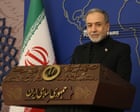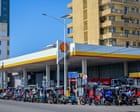
Sri Lanka has officially moved to a four-day workweek for public sector employees, a desperate gamble to preserve dwindling fuel stocks as regional instability in the Middle East chokes off global energy corridors. While the government frames the move as a progressive shift toward work-life balance and "urban agriculture," the reality is much bleaker. This is a survival mechanism for a nation that cannot afford to keep its lights on or its buses running. By shuttering government offices on Fridays, the administration aims to slash national energy consumption and provide a pressure valve for a population currently spending hours in stagnant petrol queues.
The crisis is fueled by a volatile cocktail of domestic debt and the escalating conflict involving Iran, which has sent Brent crude prices spiraling and disrupted traditional shipping lanes. For Sri Lanka, a country already reeling from a historic sovereign default, these external shocks are more than just an economic hurdle. They are an existential threat.
The Arithmetic of a Shuttered Friday
The logic behind the four-day mandate is simple, if somewhat cynical. By keeping thousands of civil servants at home, the state immediately reduces the demand for transport fuel and electricity in massive colonial-era office complexes. Government estimates suggest this could lower public sector fuel consumption by nearly 20%—a vital margin when shipments are being purchased on a hand-to-mouth basis.
However, the "savings" on paper rarely translate to a seamless transition in reality. When the state stops moving, the economy slows with it. The public sector in Sri Lanka is a behemoth, employing over 1.5 million people. When these workers stay home, the administrative machinery required for permits, exports, and social services grinds to a halt. We are seeing a classic trade-off where short-term resource preservation risks long-term economic atrophy.
The Iran Factor and the Fragility of Supply
Sri Lanka’s energy grid is uniquely vulnerable to the tremors of the Persian Gulf. Historically, the Sapugaskanda refinery—the country’s only refinery—was designed specifically to process Iranian Light crude. While the country has attempted to diversify its intake in recent years, the infrastructure remains stubbornly tied to specific grades of oil that are now caught in the crosshairs of geopolitical brinkmanship.
When conflict flares in the Middle East, the "risk premium" added to every barrel of oil hits frontier markets like Sri Lanka twice as hard. They lack the foreign exchange reserves to hedge against price spikes. They are forced to buy on the spot market, often at the mercy of traders who demand immediate payment in US dollars—a currency that is currently a rare commodity in Colombo.
The blockade of certain shipping routes and the skyrocketing insurance premiums for tankers passing through the Strait of Hormuz mean that even if Sri Lanka finds the money, the oil might not arrive on time. The four-day week is an admission that the cavalry isn't coming.
The Myth of the Backyard Garden
One of the more surreal aspects of the government’s directive is the encouragement of "home gardening." Officials have urged public servants to use their new day off to plant crops, citing a looming food security crisis. This is a staggering pivot for a nation that, only a few years ago, prided itself on a budding middle class and a robust service economy.
Asking a desk worker in a Colombo suburb to solve the national food shortage with a backyard plot is a PR distraction from the failure of large-scale agricultural policy. The disastrous 2021 ban on chemical fertilizers already decimated crop yields. Now, without the fuel to transport what little produce is grown in the rural heartlands to the urban centers, the government is essentially telling its citizens to fend for themselves.
Power Cuts and the Productivity Trap
It isn't just about the petrol in the tank. Sri Lanka’s power generation is heavily dependent on thermal plants that run on heavy oil and coal. When fuel stocks run low, the rolling blackouts return. A four-day workweek might save fuel on the commute, but it does little to address the fact that industrial zones require a steady, 24-hour supply of power to remain competitive in the global garment and tea markets.
Manufacturers are now forced to run expensive diesel generators to keep their assembly lines moving. This drives up the cost of production, making Sri Lankan exports less attractive than those from Vietnam or Bangladesh. The "short week" creates a perception of instability that scares off foreign direct investment. Investors don't look for countries that are rationing the very hours of the day; they look for reliability.
The Shadow Economy and Social Unrest
While the public sector enjoys—or endures—a three-day weekend, the private sector is left in a state of limbo. Small business owners, retailers, and daily-wage laborers cannot afford to stop. For them, the four-day week in the public sector means one less day to get licenses renewed or goods cleared through customs. It creates a bottleneck that slows the velocity of money throughout the entire system.
There is also the psychological toll. A shortened workweek born of necessity, not choice, creates an atmosphere of permanent emergency. It reminds every citizen, every time they see a closed government gate on a Friday, that the state is failing in its basic duty to provide the infrastructure of modern life. This resentment is a dry tinderbox. We saw the "Aragalaya" protests topple a presidency in 2022. The current administration is walking a tightrope, trying to manage a bankruptcy without triggering another mass uprising.
The Failure of the Global Financial Safety Net
Sri Lanka’s predicament highlights a broader failure in how the international community handles debt-distressed nations during energy shocks. The IMF bailouts come with strings that demand austerity, but austerity is difficult to maintain when global oil prices are dictated by drone strikes and naval blockades thousands of miles away.
The country needs more than just debt restructuring; it needs a fundamental overhaul of its energy architecture. Moving toward renewables is the long-term answer, but you cannot build a wind farm or a solar park when you can't even afford the freight costs to import the turbines. The four-day week is a symptom of a nation stuck in an "energy trap"—too poor to buy oil, and too broke to build a future without it.
The Infrastructure of Desperation
Walking through the administrative district of Battaramulla on a Friday is a haunting experience. The silence is not the peaceful quiet of a prosperous society enjoying leisure; it is the heavy silence of an engine that has stalled. The buses are parked. The lights are off. The air conditioning units, which usually hum in a constant chorus against the tropical heat, are still.
This policy is a temporary bandage on a gaping wound. It buys the government a few extra weeks of fuel, perhaps pushing the next total blackout a month further down the line. But it does nothing to address the underlying reality that Sri Lanka is a casualty of a global energy system that prioritizes the powerful and leaves the vulnerable to sit in the dark.
If the conflict in the Middle East escalates further, the four-day week may soon become a three-day week. Or a two-day week. There is a limit to how much a society can shrink before it collapses entirely.
Analyze the energy consumption data of your own operations and move to a decentralized, renewable-first model before the next regional conflict makes the decision for you.