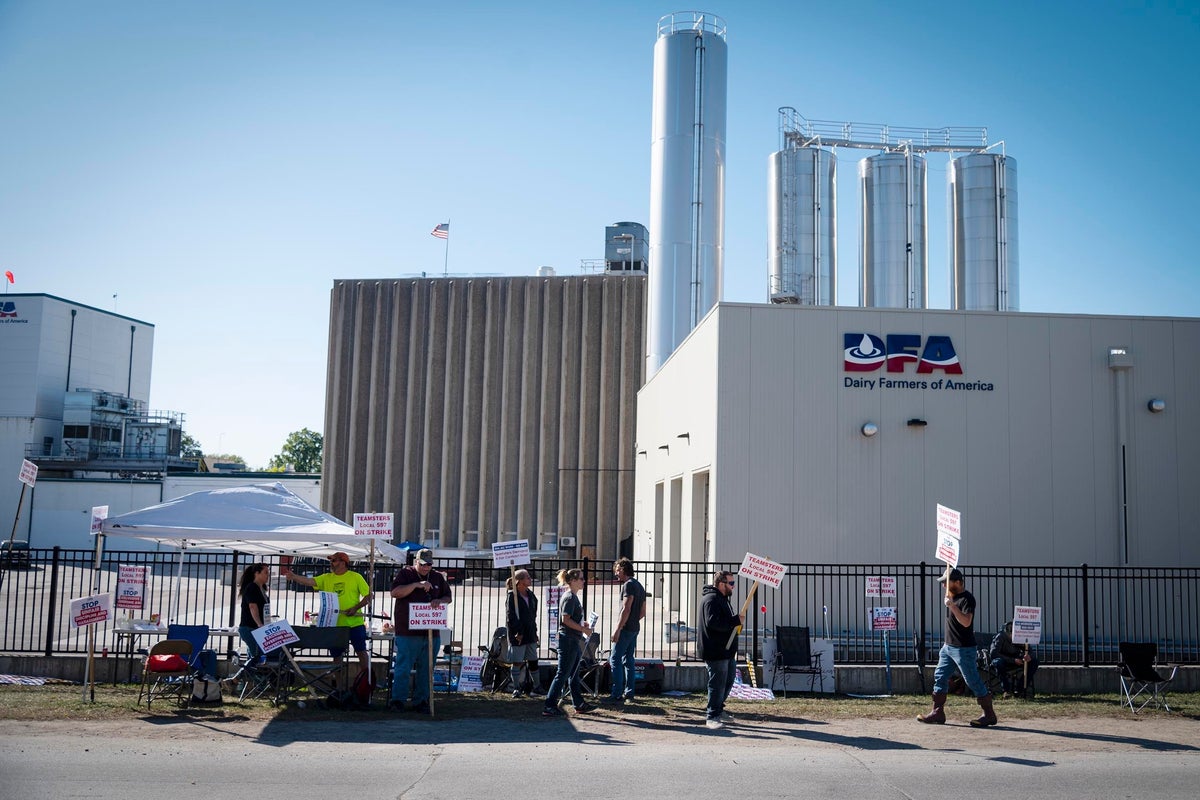
The narrative surrounding the Dairy Farmers of America idling their St. Albans plant in Vermont is entirely predictable. Local headlines are mourning the loss of 80 jobs. Politicians are issuing statements about the erosion of Vermont’s agricultural heritage. Activists are blaming corporate greed and demanding interventions to save a dying model.
They are all missing the point.
The closure of the St. Albans facility is not a sudden tragedy. It is the logical, inevitable conclusion of a structural failure that the dairy industry has ignored for three decades. For years, regional processing plants have operated on thin margins, propped up by nostalgia and political willpower rather than economic reality. Pretending that this facility could survive in a market defined by massive logistical shifts and changing consumer habits is a form of collective delusion.
The hard truth is that keeping this plant open would have been an exercise in burning capital. The idling of St. Albans is a necessary correction, and the sooner the industry stops crying over spilled milk, the sooner it can build something that actually survives on its own merits.
The Myth of the Regional Processing Savior
Every time a regional dairy plant shuts down, the same flawed premise circles the internet: If we just subsidize local processing, we can save family farms. I have watched agricultural boards and state task forces throw millions of dollars at this exact theory. It fails every single time.
Dairy processing requires massive scale to achieve efficiency. Liquid milk is heavy, highly perishable, and expensive to transport. It requires an immense amount of energy to pasteurize, separate, and package. When a facility like St. Albans operates below peak capacity due to declining regional milk production, its fixed costs per hundredweight of milk skyrocket.
Look at the underlying numbers that the mainstream coverage ignores. Fluid milk consumption in the United States has been dropping consistently for decades, declining by over 20% since 2010 alone. Meanwhile, mega-processing facilities in the Midwest and West have scaled up to handle millions of pounds of milk per day with automated systems that reduce labor costs to fractions of a cent per gallon.
A medium-sized plant in New England simply cannot compete with a massive, state-of-the-art facility in Indiana or Texas on a cost-per-unit basis. To force a cooperative like Dairy Farmers of America (DFA) to keep an underutilized, aging plant operational out of sentimentality is asking them to subsidize inefficiency using their own members' equity. That is a fast track to bankrupting the entire cooperative.
The Cooperative Paradox
Critics love to target DFA, pointing out that a farmer-owned cooperative should protect its farmers and its workers at all costs. This argument fundamentally misunderstands how a cooperative functions in a globalized market.
A cooperative's primary duty is to maximize the net return to its member-owners across the entire network. If one node in that network is leaking cash because its regional supply pool is shrinking and its equipment requires millions in capital upgrades just to stay compliant with modern environmental regulations, the board has an absolute obligation to shut it down.
Consider the dynamic of milk balancing. A plant like St. Albans often serves as a "balancing plant"—a facility designed to absorb excess milk during the spring flush when cows produce more than the market demands. Balancing plants are notoriously difficult to run profitably because their volume fluctuates wildly. They run hot for three months of the year and sit half-empty for the other nine.
Maintaining a massive, fully staffed industrial footprint just to handle seasonal surpluses is an operational nightmare. It is far cheaper to route that excess milk to other facilities with diversified product lines, such as ultra-filtered milk or cheese production, even if it means longer haul times.
The False Promise of Government Intervention
Whenever these closures happen, the immediate reaction from local representatives is to call for government intervention, price floors, or emergency grants.
Let’s dismantle the premise of the standard "People Also Ask" query: Can government subsidies save local dairy infrastructure?
No. They cannot. They only prolong the agony.
When governments inject capital into uncompetitive processing plants, they create a false market signal. They tell farmers to keep producing a commodity for a facility that cannot survive without a taxpayer-funded life support machine. This prevents the necessary diversification into high-margin, value-added products that consumers actually want to buy, such as artisan cheeses, grass-fed butter, or organic yogurt components.
The downside to this cold-eyed approach is obvious: eighty people in Franklin County are out of work, and local hauling routes will become longer and more expensive for the remaining farms. That is a real, painful disruption for those families. But keeping an inefficient plant open on the public dime doesn't save those jobs permanently; it just delays the inevitable lay-offs while draining resources that could be used to retrain workers for industries that are actually growing.
Stop Fighting Scale
The path forward for New England agriculture is not to rebuild the mid-tier commodity processing infrastructure of the 1980s. That ship has sailed, sunk, and been forgotten.
If you want to survive in the modern food supply chain, you have two choices: achieve massive, brutal scale, or pivot entirely to high-margin niche markets. The middle ground—where the St. Albans plant lived—is a death zone.
Instead of fighting the consolidation of commodity milk processing, regional stakeholders need to accept that fluid milk will increasingly be processed in massive, hyper-efficient hubs outside the region. The remaining agricultural footprint in places like Vermont must shift entirely toward decoupled, premium products that can command a high price point regardless of transportation costs.
Stop trying to save the factories that process cheap commodity milk. You cannot win a price war against a mega-dairy in the Central Valley of California using an aging plant in New England. Accept the math, cut the losses, and stop sentimentalizing an industrial model that has been broken for a generation.