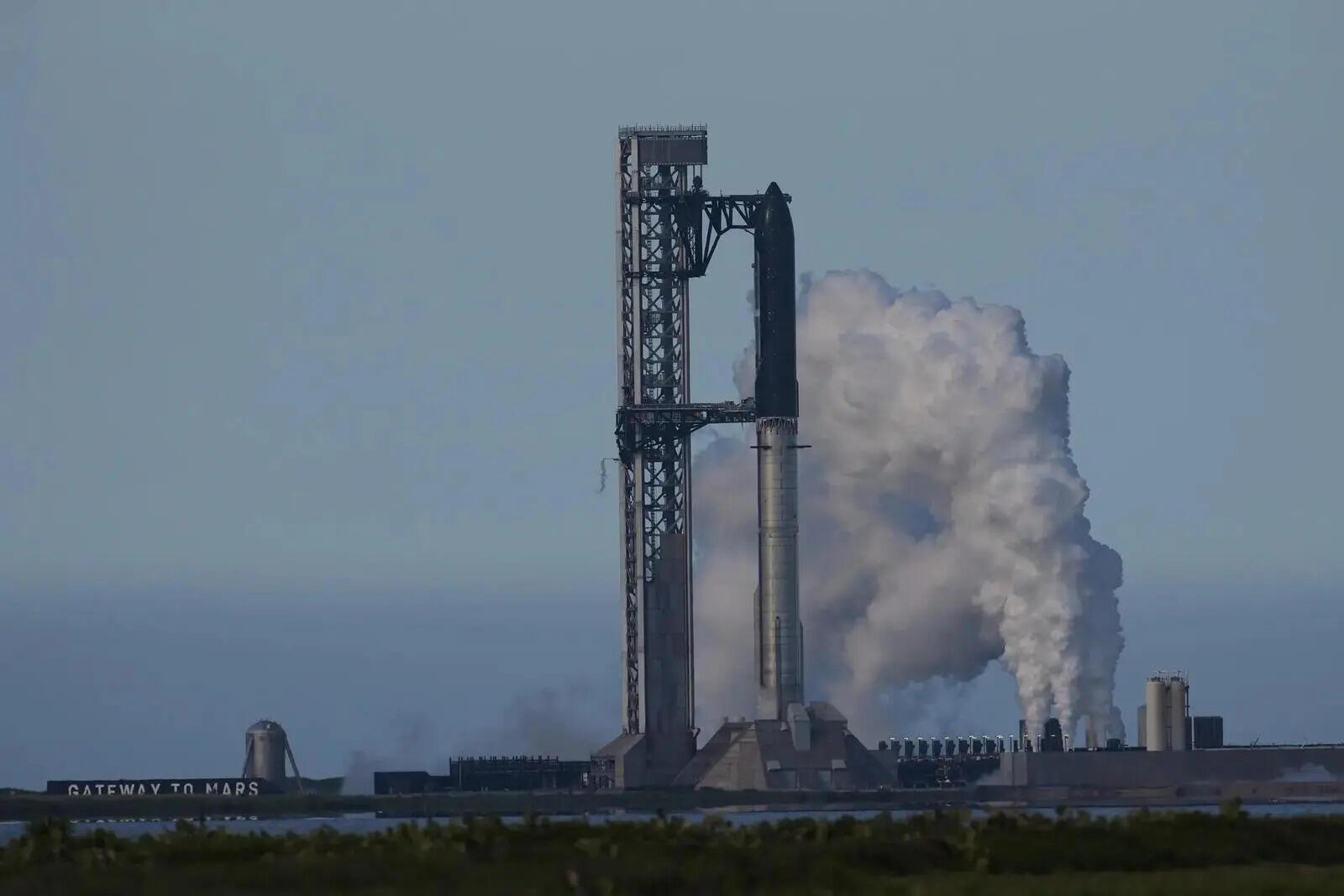
The financial press is currently tripping over itself to declare SpaceX’s latest Starship test flight an unmitigated triumph, framing it as the ultimate green light for a highly anticipated initial public offering. They see a rocket clearing the tower, surviving atmospheric reentry, and hitting arbitrary splashdown coordinates as a sign that commercial dominance is right around the corner.
They are looking at the wrong ledger.
The prevailing narrative misses the structural reality of aerospace engineering and capital markets. A successful test flight is not a financial validation. In fact, the closer Starship gets to operational status, the closer it gets to exposing the massive, systemic inefficiencies that could tank its valuation if it hits the public markets too soon. Wall Street wants to value SpaceX like a software business with infinite scalability. It is time to look at the brutal hardware physics and capital constraints that the cheerleaders are ignoring.
The Myth of the Cheap Reuse Ecosystem
Mainstream analysts love to parrot the idea that rapid, total reusability instantly translates to high profit margins. The logic seems simple on the surface: stop throwing away the airplane after every flight, and your costs plummet.
I have spent years analyzing capital expenditure in high-risk engineering sectors, and I can tell you that this calculation ignores the concept of operational overhead.
Total reusability introduces a massive hidden tax: inspection, refurbishment, and structural fatigue tracking.
- Thermal Protection Failure: Every time Starship punches back through the atmosphere, thousands of hexagonal silica tiles are subjected to plasma temperatures exceeding 1,400 degrees Celsius. Replacing, repairing, and verifying these tiles is not an automated process. It is a meticulous, labor-intensive bottleneck.
- Engine Degradation: The Raptor engine is a masterpiece of full-flow staged combustion. But running at extreme chamber pressures means the metallurgy is pushed to its absolute thermal and mechanical limits. You do not just gas up a rocket engine and fly it again twenty minutes later, no matter what the marketing materials imply.
- The Airline Analogy Fallacy: Pundits compare future rocket operations to commercial aviation. This is a false equivalence. Commercial airliners operate well within conservative structural margins. Rockets operate right on the edge of catastrophic material failure. The maintenance cycle for a reusable upper stage eats into the projected cost savings far more than anyone admitting to public investors cares to acknowledge.
If you think a public SpaceX can maintain 80% gross margins while managing an army of technicians inspecting weld lines on a fleet of stainless-steel hulls, you are dreaming.
The Short-Sighted IPO Hype
Why is the media suddenly obsessed with framing these technical milestones as pre-IPO checklists? Because the venture capital ecosystem that funded the early stages of the private space boom is getting impatient.
Private equity needs liquidity. An IPO is the ultimate exit strategy for early backers, but it is often a terrible deal for retail investors who buy into the peak of the hype cycle.
Let us look at what happens when a deeply capital-intensive, high-risk R&D operation meets the quarterly earnings scrutiny of public markets.
+-----------------------------------+-----------------------------------+
| Private Space R&D Reality         | Public Market Expectations        |
+-----------------------------------+-----------------------------------+
| 5-year development timelines      | 90-day earnings cycles            |
| High-tolerance for failure        | Zero-tolerance for explosions     |
| Capital hoarding for infrastructure| Share buybacks and dividend pressure|
+-----------------------------------+-----------------------------------+
Imagine a scenario where a public SpaceX suffers a catastrophic launchpad failure during a routine Starship operational flight. In the private domain, that is a data-gathering exercise. In the public market, it is a 30% drop in share price overnight, triggered by algorithmic trading and panicked institutional investors who do not know the difference between a liquid oxygen valve and a turbopump.
The public markets are fundamentally unsuited for the volatile, iterative nature of deep-space hardware development. Forcing an IPO based on a few successful test flights is a move designed to bail out early institutional funds, not to fund the actual colonization of Mars.
The Starlink Capacity Trap
The core argument for Starship’s immediate economic viability is its role as the ultimate deployment mechanism for Starlink satellites. The narrative says that by launching hundreds of next-generation satellites at once, SpaceX locks down global internet dominance.
This argument ignores the reality of orbital mechanics and bandwidth constraints.
Starlink is already facing diminishing returns in high-density markets. The problem is not the number of satellites in the sky; it is the physics of spectrum allocation and ground-station throughput. Dumping thousands of heavier, larger V3 satellites into low Earth orbit via Starship does not magically solve the bottleneck of user terminal line-of-sight or RF interference.
Furthermore, low Earth orbit satellites have a notorious shelf-life. They deorbit and burn up every five to seven years.
"SpaceX is locked in a permanent, high-velocity treadmill where they must constantly launch new hardware just to maintain their existing network capacity, let alone expand it."
This is not a high-margin software platform where every new user brings near-zero marginal cost. This is a heavy-industrial infrastructure project with a relentless, capital-devouring replacement cycle. Starship isn't a profit driver for Starlink; it is an expensive necessity just to keep the network from degrading.
Dismantling the Competitor Narrative
The competitor article claims that hitting these test targets proves the commercial model is ready for prime time. Let us look at the actual questions being asked by the market, and pull apart the flawed assumptions behind them.
Does hitting splashdown targets mean Starship is ready for commercial payloads?
Absolutely not. Dropping a vehicle into the Indian Ocean or the Gulf of Mexico is a world away from executing a precise, propulsive landing on a mechanical catch tower. Until the catch mechanism is fully operational and reliable over dozens of consecutive flights, the turnaround time for a booster or upper stage is months, not hours. The commercial model depends entirely on the catch system working perfectly every time. A single miss destroys the launch infrastructure and halts operations for half a year.
Is the Artemis moon contract a guaranteed revenue driver?
The NASA Human Landing System contract is a fixed-price milestone agreement. If SpaceX encounters delays or technical hurdles in developing the complex orbital refueling architecture required to get Starship to the moon, they absorb the cost overruns, not the taxpayer. To get a single Starship to the moon, SpaceX needs to launch anywhere from eight to sixteen tanker flights to fill a single propellant depot in orbit. The complexity of cryogenic fluid transfer in microgravity is an unsolved engineering challenge. Framing the Artemis contract as easy money is an insult to the sheer difficulty of the task.
The Operational Risk Nobody Talks About
The ultimate bottleneck for Starship is not the physics of the rocket; it is the geography of the launch sites. Starbase in Boca Chica, Texas, is constrained by environmental regulations, local community lawsuits, and geographic limitations. For Starship to achieve the launch cadence required to make its economics work, it needs to fly dozens of times a month.
You cannot achieve that cadence from a single narrow strip of land in South Texas without running into massive regulatory walls from the FAA and environmental coalitions. The alternative—building out offshore launch platforms—was already attempted and quietly paused because converting deep-sea oil rigs into stable, high-tech rocket pads is an economic nightmare of corrosion control and logistics.
If you cannot launch fifty times a year, the fixed costs of the manufacturing facilities, pad infrastructure, and engineering teams overwhelm the variable cost savings of reusability. The math only works at a scale that the current regulatory and geographic infrastructure simply cannot support.
Stop looking at the spectacular fireball videos and treating them as financial indicators. Starship is a phenomenal piece of engineering, but as a commercial business case meant to anchor a public stock offering, it is a volatile, capital-intensive risk that is nowhere near ready for the rigid demands of Wall Street.