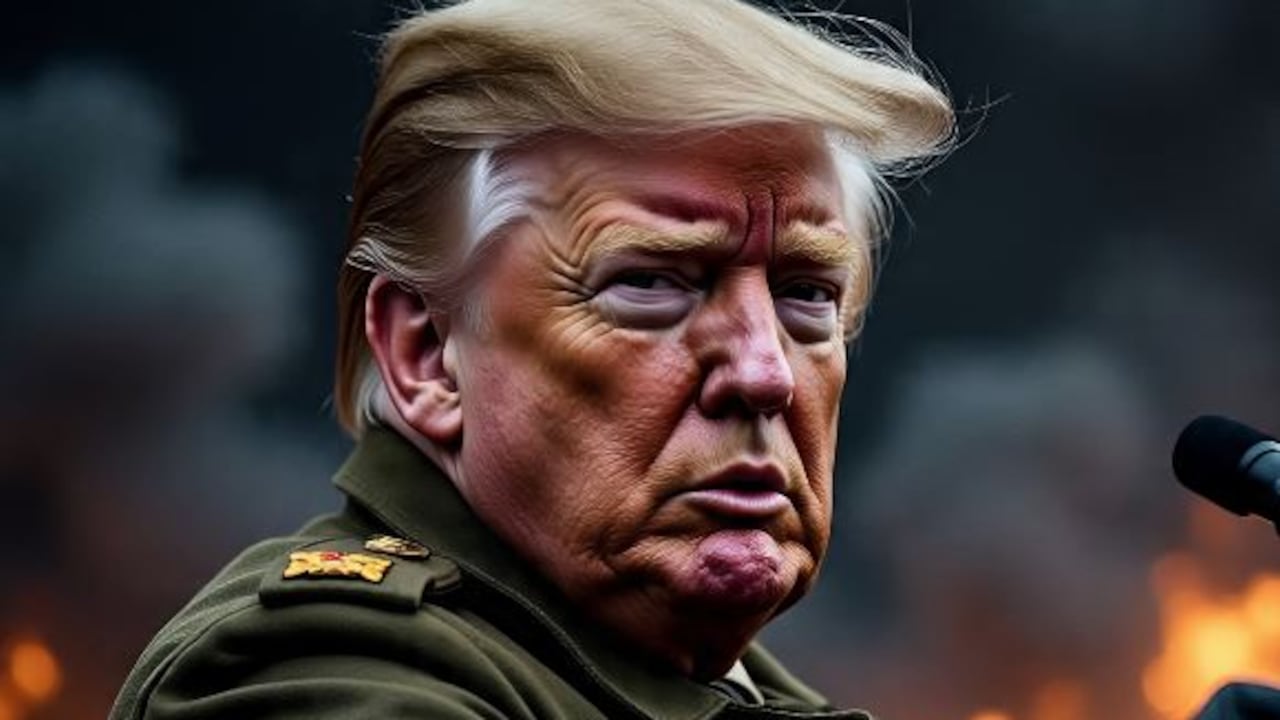
Political pundits are panicking over a phantom. The mainstream commentary class has looked at the White House feed—chock-full of AI-generated images featuring everything from extra-terrestrials in handcuffs to orbital missile command centers—and diagnosed it as a "strategic distraction." They claim these surreal images are a desperate attempt to hijack the attention economy and obscure the high stakes of the 2026 midterm elections.
They are fundamentally misreading the mechanics of modern political communication.
Treating synthetic memes as a highly calculated smoke screen attributes a level of traditional, backroom strategic planning that simply does not exist here. It applies a 20th-century media framework to a decentralized, algorithmic reality. This is not a distraction from policy; it is the policy. The content is not designed to shift focus away from the midterms. It is an entirely new method of base consolidation that treats the traditional news cycle as obsolete.
The Illusion of the Master Plan
Mainstream analysts argue that these hyper-real and cartoonish fabrications are deployed to keep the electorate confused, disoriented, and unable to focus on pressing legislative or economic realities. Academic experts regularly warn that this influx of synthetic media erodes institutional trust and blurs the lines of reality.
This argument misses the point. The assumption that voters are being tricked by an image of the president riding a lion or standing in a sci-fi command room is elite condescension masquerading as media literacy.
I have spent years analyzing how digital distribution networks operate. Audiences are not passive consumers waiting to be deceived. The people sharing, liking, and iterating on these AI memes are fully aware they are synthetic. They do not care. The value of the image does not lie in its factual accuracy; it lies in its utility as a cultural badge.
When the White House communications team doubles down on an AI-edited image of a political opponent, they are not executing a calculated Nixonian cover-up. They are participating in a decentralized feedback loop with their most online supporters. The system works through speed and participation, not top-down messaging. Calling it a strategic distraction assumes the administration is playing defense. In reality, they are playing a completely different sport.
The Attention Metric Flaw
The conventional wisdom insists that a political campaign must focus on a clean, message-disciplined narrative to win a midterm cycle. Consultants argue that bizarre AI imagery dilutes the core message on inflation, immigration, or foreign policy.
This is an expensive misunderstanding of how modern distribution works.
Traditional political advertising relies on a scarcity model: you buy a 30-second slot during the evening news and hope viewers do not change the channel. AI content operate on an abundance model. The marginal cost of producing an AI image is zero. The distribution is crowdsourced.
Traditional Campaigns: High Production Cost -> Controlled Message -> Limited Reach
AI-Driven Campaigns: Zero Production Cost -> Iterative Memes -> Algorithmic Amplification
By leaning heavily into synthetic imagery, the current administration has outsourced its advertising department to the internet. A supporter creates an image using an open-source model; the model has fewer guardrails than legacy platforms; the image goes viral; the executive branch reposts it. It is a self-sustaining ecosystem that requires no media buy, no focus grouping, and zero scriptwriters.
Attempting to counter this with fact-checking or solemn policy papers is like bringing a knife to a laser fight. The legacy media treats these images as a crisis of misinformation, which only increases their distribution value among the target demographic. Every time an anchor spends three minutes explaining why an image of the president as the pope is fake, the meme achieves its exact purpose: total saturation of the information channel.
The Real Risk Nobody Admits
If the lazy consensus is wrong about the intent behind these memes, it is also wrong about the danger. The threat of political AI is not that it creates a perfectly executed lie that fools the masses. The actual risk is far more mundane and destructive: the total degradation of the information environment through sheer volume.
When the market is flooded with high-quality, synthetic, and easily generated visuals, the value of actual photographic evidence drops to zero. This is the liar’s dividend. If any image can be fabricated in three seconds using a simple text prompt, then any real, damaging piece of evidence can be dismissed as a deepfake.
We saw early indicators of this when public figures began claiming authentic audio or video captures were simply the product of AI manipulation. By normalizing a daily torrent of surreal, AI-generated imagery from official channels, the administration is not trying to make you believe the fake things. They are making it impossible for you to believe the real things.
This approach carries a severe downside that even its practitioners ignore. When you destroy the baseline value of visual evidence to protect yourself from criticism, you also destroy your own ability to convince the public during a genuine crisis. If a national security emergency occurs and the official channels release photographic or video proof, a cynical, meme-weary public will simply assume it is another iteration of the daily digital circus.
Dismantling the Midterm Playbook
The standard advice given to opposition campaigns facing this onslaught is to demand federal regulation, push social media platforms for stricter labeling, or launch aggressive counter-narratives that expose the fabrications.
This advice is entirely useless.
The legislative framework is hopelessly behind. State laws are a patchwork of unenforced statutes, and federal agencies lack the jurisdiction or the political will to police political satire. Relying on platform moderation is a failed strategy; major networks have systematically dismantled their internal fact-checking teams in favor of crowd-sourced notes that lag hours behind the viral cycle.
If you are running a political operation or managing a brand in this environment, you have to abandon the idea that you can clean up the information space. You cannot. Stop trying to fix the narrative by pointing out that the other side is using AI. The audience already knows, and they do not care.
Instead, the only effective counter is to match the velocity of production. You cannot fight an automated content engine with a committee-approved press release. Political entities must build their own decentralized distribution networks that rely on rapid, authentic, and equally aggressive visual formats. The battle is no longer about who has the better argument; it is about who can fill the structural vacuum of the feed faster.
The 2026 midterms are proving that the old rules of political communication are dead. The politicians who understand that digital content is a high-volume, low-friction war of attrition will dominate the cycle. The ones sitting in legacy newsrooms analyzing the deep strategic meaning of an AI-generated cartoon will find themselves completely written out of the script.