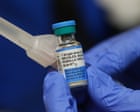
Everyone loves a villain. When a twice-yearly injection like lenacapavir shows 100% efficacy in clinical trials—virtually eliminating HIV transmission in trial populations—and then stalls in the very regions that need it most, the outrage machine spins up on cue.
Blame Big Pharma. Blame patent walls. Blame the $40,000-a-year Western price tag.
That is the lazy consensus dominating health journalism right now. It feels righteous. It reads well. And it completely misses why long-acting HIV pre-exposure prophylaxis (PrEP) is actually failing to reach people in high-burden areas.
If Gilead Sciences dropped the price of lenacapavir to zero tomorrow morning and handed the keys to every generic manufacturer in India and South Africa, millions of at-risk people still wouldn't get the shot.
Here is why. You cannot inject a supply chain miracle into a broken last-mile infrastructure.
The Myth of the Magic Bullet
Global health reporting suffers from a chronic addiction to molecule worship. Whenever a breakthrough like cabotegravir (Apretude) or lenacapavir (Sunlenca) clears Phase III trials, commentators treat regulatory approval as the finish line.
In reality, FDA or WHO approval is barely the starting gun.
Consider the history of oral PrEP. Tenofovir-emtricitabine (Truvada) went generic years ago. You can buy a month's supply for pennies in bulk through procurement agencies like the Global Fund or PEPFAR. The patent barrier is dead. The price barrier is gone. Yet global PrEP uptake remains millions of people short of UNAIDS targets.
Why? Because a pill sitting in a shipping container in Mombasa or Durban does not prevent a single infection.
I have watched donor-funded health initiatives burn tens of millions of dollars on drug procurement while starving the operational budgets required to actually put those drugs into human bodies. We buy the Ferraris and refuse to pay for the roads, the mechanics, or the fuel.
What Long-Acting Injectables Actually Demand
The pitch for six-month injectables is seductive: eliminate daily pill fatigue, eliminate stigma at home, and solve adherence forever.
That pitch ignores the clinical reality of administering subcutaneous or intramuscular depots in low-resource settings.
- Cold Chain and Storage Fragility: Unlike blister-packed oral tablets that tolerate heat and rough transport, biologics and complex injectables require strict temperature controls and inventory tracking. A single power grid failure in a rural clinic turns thousands of doses into expensive medical waste.
- The Diagnostic Bottleneck: You cannot simply hand out long-acting PrEP like condoms at a community center. Giving long-acting cabotegravir or lenacapavir to someone who already has an undiagnosed acute HIV infection is a recipe for breeding drug-resistant viral strains. Clinics must run sensitive HIV RNA testing—not just cheap rapid antibody finger-pricks—before every injection. Most under-resourced clinics do not have molecular diagnostics on-site.
- Trained Hands: Subcutaneous abdominal injections of thick, viscous depot formulations require trained nurses, sterile needles, sharps disposal systems, and dedicated clinic rooms. In clinics where one nurse manages 80 patients a day for malaria, tuberculosis, and maternal care, adding a 30-minute PrEP counseling and injection protocol breaks the workflow.
Why Generic Licensing Won't Save the Timeline
Critics point to Gilead's voluntary licensing agreements with generic manufacturers as either too slow or overly restrictive—notably excluding several middle-income countries in Latin America where HIV rates are climbing.
That exclusion is a legitimate policy fight. Middle-income countries get squeezed in the brutal gap between rich-nation pricing and low-income donor subsidies.
Even where generic licenses do apply across more than 100 low-income nations, however, expecting immediate access misunderstands pharmaceutical manufacturing.
Active pharmaceutical ingredient (API) synthesis for complex molecules like lenacapavir is not like pressing aspirin tablets. Tech transfer takes 18 to 36 months. Generic manufacturers must source specialized raw materials, validate sterile fill-finish lines, run bioequivalence studies, and clear WHO Prequalification before a single vial ships.
Attacking the timeline as artificial delay ignores basic chemical engineering. You cannot tweet a sterile manufacturing plant into existence.
The Stigma Nobody Wants to Budget For
Even if you fix the labs, build the cold chains, and flood clinics with cheap vials, you still run headfirst into the human element that epidemiologists rarely capture in spreadsheets.
Walk into a public clinic in sub-Saharan Africa, Eastern Europe, or the rural American South. In many of these facilities, HIV prevention is still siloed inside HIV treatment wards.
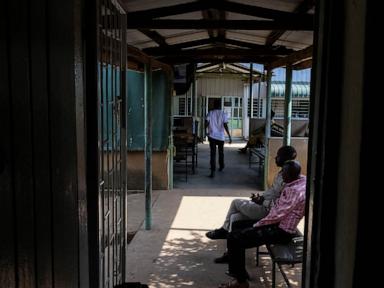
Think about what that means for a 22-year-old woman or a young man who has sex with men. To get a preventative shot, they have to sit in the exact same waiting room as neighbors receiving antiretroviral therapy. In tight-knit communities, walking through that door is a public declaration of sexual activity or presumed HIV status.
Oral PrEP failed to reach its potential largely because of this structural stigma. Switching the delivery mechanism from a daily pill to a biannual needle does not erase the social cost of walking into the clinic.
Imagine a scenario where a national health ministry launches a massive injectable PrEP rollout using existing infectious disease clinics. Uptake spikes among the small group already connected to care, then flatlines completely. Meanwhile, new infections continue unchecked among adolescent girls and key populations who avoid those clinics at all costs. That is not a hypothetical failure—that is the exact pattern we saw with early oral PrEP rollouts in Southern Africa and the US South.
The Domestic Blind Spot
Western media loves framing HIV access as a crisis happening exclusively in the Global South. That framing is convenient and dishonest.
Right now, in the United States, long-acting PrEP is wildly underutilized in the communities carrying the heaviest burden of new infections. Look at CDC surveillance data: Black and Hispanic Americans account for the vast majority of new HIV diagnoses, yet they represent a fraction of PrEP prescriptions.
Here, the drug is approved. The clinics exist. The diagnostic labs are down the hall.
Why is it still hard to find where it's most needed in Atlanta, Houston, or Miami?
Because of prior authorization traps, fragmented insurance coverage, clinics that cannot afford to buy-and-bill $20,000 vials upfront without guaranteed reimbursement, and a primary care workforce that still doesn't take routine sexual histories.
Blaming patent law in Geneva for a coverage failure in Georgia is pure distraction.
What Actually Works (And What It Costs)
If we want breakthrough HIV prevention to actually stop transmission rather than just generate glowing press releases, global health funders and national ministries have to stop obsessing over the drug and start funding the delivery architecture.
1. Decouple PrEP from HIV Clinics
Stop forcing healthy people into sick-care facilities. Integrate injectable PrEP into family planning clinics, retail pharmacies, mobile vans, and routine primary care. When South Africa and Kenya experimented with pharmacy-delivered PrEP and mobile youth-friendly hubs, initiation and continuation rates jumped dramatically. People want healthcare where they already shop and live—not behind a stigmatized clinic door.
2. Fund Point-of-Care Diagnostics at Scale
Every dollar spent procuring long-acting injectables needs a matched investment in rapid, point-of-care molecular testing. Until a nurse can confirm HIV-negative status accurately in 20 minutes without shipping blood samples to a regional capital, long-acting PrEP will remain bottlenecked in urban centers.
3. Shift to Task-Shifting Models
Doctor-led and nurse-bottlenecked models cannot scale to millions of preventative visits every six months. Regulatory frameworks must allow community health workers and pharmacists to administer injections after standardized training. We did it for COVID-19 vaccines across the globe in less than a year; pretending we cannot do it for HIV prevention is bureaucratic cowardice.
4. Reimburse the Service, Not Just the Molecule
In the US and middle-income healthcare systems, payers must cover the clinical labor, lab work, and administrative overhead of PrEP delivery at parity with chronic disease management. If a clinic loses money on staff time every time it administers a preventative injection, that clinic will quietly stop offering it.
The Trade-Off Nobody Admits
There is a hard truth buried beneath all of this: decentralizing complex medical care introduces real clinical risk.
When you move injectable PrEP out of specialized infectious disease clinics and into pharmacies or mobile vans, you will inevitably miss some acute infections. Some patients will show up late for their six-month window—at month eight or nine—when drug levels have dropped into the "pharmacokinetic tail."
In that tail, enough drug lingers in the bloodstream to pressure the virus, but not enough to block infection. If someone acquires HIV during that window, they risk developing integrase or capsid inhibitor resistance—potentially burning a first-line treatment option before they even start therapy.
Critics of rapid decentralization point to that resistance risk to justify keeping tight clinical guardrails in place. They aren't wrong about the biology.
They are wrong about the math. Perfectionism in public health is lethal. Protecting against theoretical resistance in a handful of cases by restricting access to millions guarantees thousands of preventable transmissions every single week.
The Real Bottleneck
Drug companies are easy targets. Their pricing strategies deserve relentless scrutiny, and their voluntary licenses should never carve out high-burden middle-income nations.
Letting the conversation stop at pharmaceutical greed, however, gives governments, donors, and healthcare systems a free pass for failing to build delivery networks that work for real human beings.
A 100% effective drug with 5% real-world reach is functionally a 5% effective intervention. Until we put as much money and urgency into pharmacies, mobile clinics, rapid diagnostics, and stigma-free access as we put into praising the molecule, the best HIV prevention on earth will keep gathering dust on warehouse shelves.