The media wants you to believe a bad antenna caused the recent airspace scare over Washington.
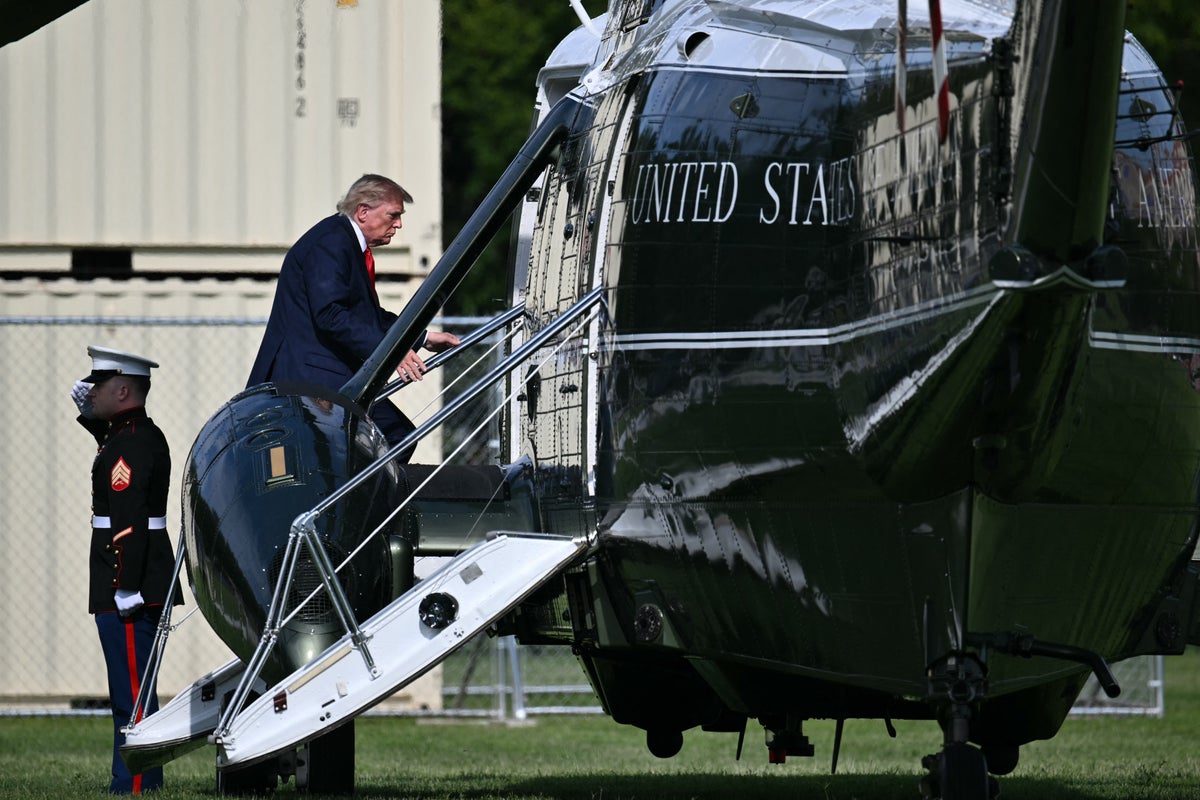
According to the preliminary National Transportation Safety Board report, Marine One lifted off from the Ellipse carrying President Donald Trump while an Envoy Air flight rolled down the runway at Ronald Reagan Washington National Airport. The two aircraft came within roughly 0.8 miles laterally and 700 feet vertically. The lazy consensus in every newsroom points the finger straight at a hardware failure. White House construction forced the presidential helicopter to temporarily depart from the Ellipse, creating a supposed line-of-sight blind spot that swallowed radio transmissions.
It is a neat, comforting narrative. It blames inanimate objects. It shields human operators from accountability. And it is completely wrong.
Radio signals do not just vanish into thin air because of a minor topographical shift. The Federal Aviation Administration and military flight crews knew communications were degraded days before the incident. They sat in a room a week prior, acknowledged that radio contact had been spotty, and devised an alternative backup protocol to relay mandatory three-minute departure warnings through Joint Base Anacostia-Bolling.
When crunch time arrived, both the primary radio transmission and the backup relay failed. That is not a simple technical glitch. That is an institutional failure of imagination and a systemic collapse of operational redundancy.
We have built an aviation ecosystem so heavily dependent on automated protocols that when a single link breaks, skilled professionals freeze like deer in headlights. Air traffic control tower logs show that the controller on duty was completely blindsided when Marine One lifted off without the traditional three-minute notice. Yet, aviation experts rush to defend the tower, noting that the controller did nothing wrong under standard operating rules because no transmission was heard.
That defense is precisely where the logic falls apart.
The Fallacy of Passive Compliance
In high-stakes environments, defining "correct" behavior as merely following rules when inputs fail is a recipe for disaster. The standard operating procedure for a massive, congested airspace like Washington National requires active verification, not passive waiting.
Imagine a scenario where a high-speed train operator loses signal with a switch tower. Does the engineer accelerate blindly into a shared junction simply because the radio went silent? Of course not. They slow down, establish visual confirmation, or halt movement until certainty is restored.
Yet, in the skies above the nation's capital, an aircraft was cleared for takeoff into a corridor designated for presidential transport simply because a radio transmission did not bounce correctly off a city block. The proximity of 0.8 miles and 700 feet is routinely dismissed by officials as a momentary loss of separation rather than a dangerous close call.
That semantic gymnastics insults common sense. At commercial jet speeds, 0.8 miles closes in a matter of seconds. Relying on collision avoidance systems to save the day at the last microsecond is not safety management; it is playing Russian roulette with statistical probabilities.
The Hidden Cost of Bureaucratic Silos
The root cause of this incident extends far beyond a misplaced antenna or construction debris on the South Lawn. It exposes a profound cultural disconnect between military transport operations and civilian air traffic management.
Military helicopter squadrons operate under an elite, insular mindset. They fly the commander-in-chief, meaning their schedules are compressed, security protocols are classified, and internal communications are tightly compartmentalized. Civilian air traffic controllers manage a relentless, high-volume stream of commercial traffic where predictability is everything.
When these two worlds collide—literally or figuratively—they rely on brittle agreements written years prior. The 2013 pact requiring a three-minute warning is a band-aid on a structural wound. It assumes that a verbal radio call is an infallible mechanism in an era of electronic tracking.
Fixing the hardware by moving an antenna to the top of the airport tower, as the FAA hurriedly did after the incident, addresses only the symptom. It treats the communication breakdown as an engineering puzzle rather than a human governance failure.
Real Operational Redundancy
If the military and the FAA actually want to prevent a replay of last year's fatal midair collisions in the region, they need to scrap the reliance on voice radio check-ins for high-priority state aircraft.
True operational redundancy looks entirely different from what was deployed on August 4.
- Automated Digital Handshakes: Presidential and military transport helicopters should utilize continuous, encrypted GPS transponder links that directly lock civilian tower automation systems. If the three-minute digital handshake is not confirmed by the tower computer, the departure sequence should lock automatically at the flight-control level.
- Cross-Domain Telemetry Sharing: Air traffic controllers should have real-time, visual situational displays tracking VIP rotorcraft independent of whether the pilot's voice radio is readable over local urban interference.
- Zero-Assumptions Protocols: Any missing departure window must default to a mandatory hold, treating silence as a stop signal rather than a green light for commercial clearance.
The NTSB report will eventually file its final paperwork, recommendations will be quietly implemented behind closed doors, and official statements will continue to insist that the president was never truly in harm's way.
Do not buy the sanitized explanation. The close call over Washington was not caused by a bad line of sight or an unfortunate patch of drywall at the White House. It happened because a system built to manage the skies expects perfection from fragile human channels, leaving zero room for reality when the signal inevitably drops.