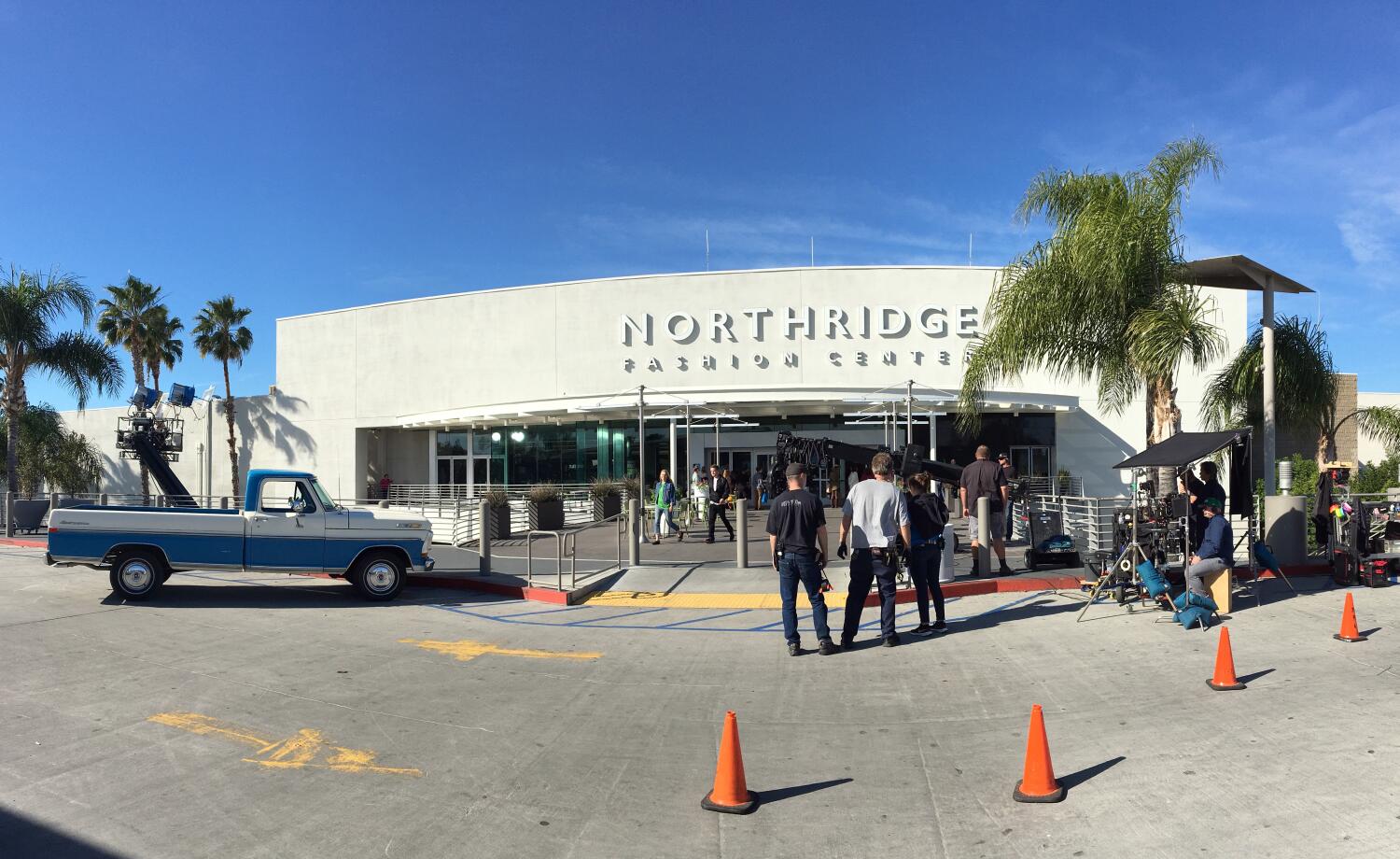
Hollywood Isn't Leaving Los Angeles—It Was Evicted by Bad Economics
The entertainment press loves a comfortable narrative. Whenever local production numbers dip in Southern California, trade publications roll out the standard, lazy autopsy: state tax incentives aren't competitive enough, Georgia and Vancouver are stealing jobs, and local politicians need to throw another half-billion dollars at Hollywood executives to save the local economy.
It is a completely upside-down view of reality. Meanwhile, you can find other events here: The Great Imax Illusion That Hollywood Is Blindly Buying Into.
The tax credit debate is a total distraction. Filming in Los Angeles isn't struggling because California’s film incentives are slightly smaller than Georgia’s or the UK’s. It’s struggling because the legacy studio model built around physical production in mid-city soundstages is fundamentally broken, inefficient, and culturally obsolete. Writing larger public checks to multi-billion-dollar conglomerates won’t fix a structural failure. It just subsidizes bad management.
I have sat in greenlight meetings where line producers spent three hours calculating the exact point at which flying a 120-person crew across North America turns a profit. The math almost never comes down to a 5% margin difference in a state tax incentive rebate. It comes down to the staggering, unaddressed operational overhead of doing business in Los Angeles, combined with a studio system that refuses to modernize its production infrastructure. To explore the full picture, we recommend the detailed report by Entertainment Weekly.
If you want to understand why local soundstages sit dark while trucks roll out to Atlanta, stop looking at Sacramento. Look at the balance sheets of the legacy media giants.
The Big Myth of the Tax Credit Race to the Bottom
Every few months, industry lobbyists trot out the same panic-inducing argument: Match Canada's tax rebates or watch the industry die.
This logic assumes that film production is purely price-elastic—that if California simply raised its tax credit cap to match Georgia's uncapped program, every production would instantly flood back to the 30-mile zone.
That is a complete fantasy.
+---------------------+-------------------------------+---------------------------------+
| Metric              | The Standard Industry Myth    | The Economic Reality            |
+---------------------+-------------------------------+---------------------------------+
| Tax Incentives      | Primary driver of location    | Minor tie-breaker for budgets   |
| Production Cost     | Fixed by local union rates    | Inflated by real estate & ops   |
| Tech Adoption       | "Nice to have" side tech      | Core driver of margin survival  |
| Infrastructure      | Traditional stages work fine  | Legacy stages are cost-sinks    |
+---------------------+-------------------------------+---------------------------------+
Tax incentives do not create long-term economic value; they create nomadic production hubs that pack up the second another jurisdiction offers a cheaper tax shelter. Louisiana proved this a decade ago. New Mexico saw it happen. The moment a state scales back its subsidies, the "booming" local industry vanishes overnight because no real, permanent infrastructure was ever built—just a temporary tent city for runaway productions.
California shouldn't play that game. Chasing runaway productions with public money is a race to the bottom that taxpayers always lose.
What the Industry Gets Wrong About Production Costs
When an executive complains about the cost of filming in Los Angeles, they aren't just talking about crew rates or tax offsets. They are talking about:
- Real Estate Bloat: LA land values make building or modernizing production facilities astronomically expensive compared to the Sun Belt.
- Permitting Bureaucracy: Securing permissions across a patchwork of municipal jurisdictions, county boards, and neighborhood councils adds weeks of soft-cost overhead before a single camera rolls.
- Logistical Friction: Moving a unit company 12 miles through Los Angeles traffic destroys up to two hours of active shooting time every single day.
A 20% tax credit does not fix a three-hour traffic gridlock that kills your golden-hour shoot. It’s a band-aid on a broken leg.
People Also Ask: The Flawed Premise Behind Production Questions
Industry observers and laid-off crew members are asking the wrong questions about the state of LA film production.
"Why doesn't California just offer uncapped tax credits like Georgia?"
Because uncapped tax credits are bad fiscal policy that disproportionately benefit massive media conglomerates at the expense of local public services. When Georgia hands out hundreds of millions in transferable tax credits, it is effectively subsidizing wall-street-backed media companies while taking cash directly out of state coffers. California’s budget mechanics make matching those terms financially irresponsible. More importantly, it doesn’t address why shooting in LA costs so much in the first place.
"Will production return to Los Angeles once the strikes and economic headwinds settle?"
No. The pre-2020 volume of physical production in Los Angeles is never coming back. What we experienced during the peak of the streaming wars was an unsustainable, debt-fueled production bubble. Studios were greenlighting content blindly to chase subscriber growth without care for margin efficiency. Now that Wall Street demands actual profitability, production volume is permanently resetting to a lower baseline.
"Can independent filmmakers still make movies in LA?"
Yes, but only if they throw out the traditional production playbook entirely. Independent filmmakers who try to replicate the studio line-item budget structure in Los Angeles will go broke before finishing post-production. The ones who survive are leveraging lean crews, virtual production environments, and non-traditional distribution pipelines that don't rely on historical studio infrastructure.
The Unspoken Crisis: Virtual Production vs. Real Estate Legacy
Here is the truth nobody in the traditional Hollywood labor leadership wants to admit out loud: Physical locations are becoming optional.
While trades debate tax incentive percentages, the technology behind production has shifted permanently. Extended Reality (XR) stages and volume screens are no longer experimental gimmicks; they are margin-preservation tools.
Imagine a production that requires thirty distinct locations across four countries.
Under the old model:
- You fly a primary crew and key talent across three continents.
- You pay international per diems, lodging, transport, and local fixers.
- You bleed money every time weather delays a exterior shoot.
Under the modern model:
- A small plates team captures high-resolution 3D environments globally.
- The entire film is shot inside a soundstage where lighting, weather, and time of day are controlled by digital artists.
- Key talent never leaves the stage radius.
Where do you think those XR stages should be located? Logically, right in Los Angeles, close to the talent, directors, and post-production talent pool. But legacy LA stages aren't built for this. Most soundstages in the 30-mile zone are historical relics—glorified tin sheds built in the mid-20th century that lack the power grid, ceiling heights, and data infrastructure required to run high-density LED volumes.
Instead of modernizing these facilities, stage operators spent a decade raising rents on legacy spaces because demand was artificially inflated by streaming wars cash. Now, state-of-the-art virtual stages are being built in London, Toronto, and Seoul—not because those cities have better weather, but because their infrastructure was built for this century, not the last one.
The Bitter Pill: How LA Actually Fixes Its Film Industry
If Los Angeles wants to retain its status as the entertainment capital of the world, it needs to stop crying for tax handouts and start executing structural reform.
1. Kill the Permitting Patchwork
Filming in Los Angeles County requires dealing with dozens of separate permit offices, each with different fees, rules, and fire marshal requirements. City Hall needs to strip away the red tape and establish a single, streamlined digital portal with unified regional authority. If a production can get a permit in London in 48 hours, LA shouldn't take three weeks of bureaucratic back-and-forth.
2. Retrofit or Demolish Legacy Stages
The state shouldn't give tax breaks to studios just for showing up. Reallocate incentive structures to reward heavy capital expenditure in digital infrastructure. If a studio builds an advanced virtual production hub or installs local green-energy grids that lower day-to-day operational costs for indie films, tax them less. If they keep renting out an un-air-conditioned 1950s barn for $10,000 a day, offer them nothing.
3. De-escalate the Cost of Local Crew Line Items
Labor unions must face a hard economic truth. High local day rates combined with rigid, outdated staffing requirements (like requiring dedicated positions for jobs that software automated five years ago) make low-budget and mid-budget filming in LA completely unviable. Preserving high rates for non-existent jobs results in a 100% discount on zero work. Unions need to create flexible, modern framework agreements for low-to-mid-tier productions, or their members will continue sitting at home waiting for a phone call that isn't coming.
Adapt or Go Extinct
The narrative that Los Angeles film production is an innocent victim of aggressive out-of-state tax credits is a comfortable lie designed to protect executives who failed to innovate.
Hollywood did not lose its production monopoly because Georgia got lucky with a tax bill. It lost it because it got lazy, relied on legacy real estate, ignored technological shifts, and allowed operational costs to skyrocket past the point of rational return on investment.
Tax credits are a short-term fix for a long-term terminal illness. Until the industry in Southern California tears down its outdated infrastructure, slashes its bloated administrative costs, and embraces next-generation production technology at scale, those soundstages will stay dark.
Stop asking Sacramento to save Hollywood. Start rebuilding it.