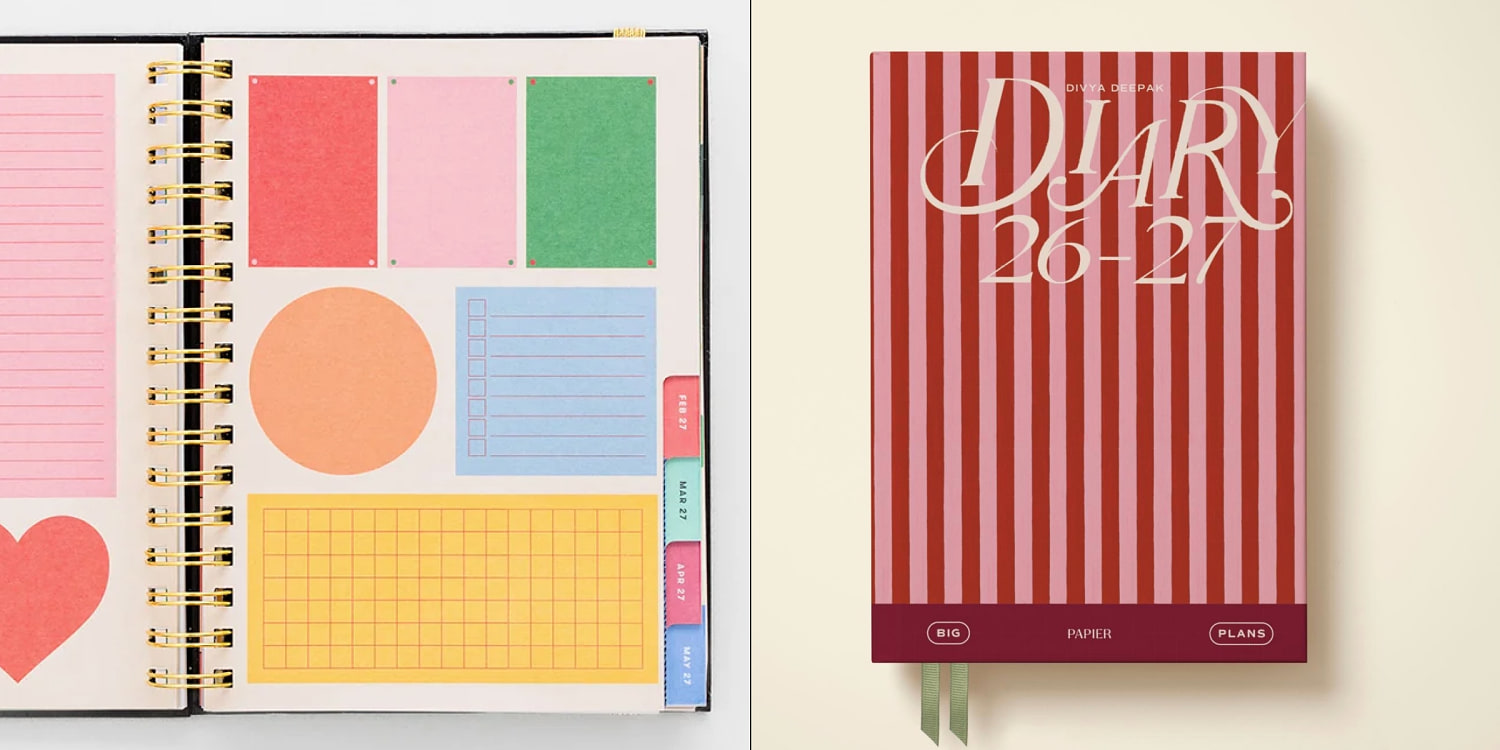
Every January, office supply aisles fill with victims of the stationery industrial complex. They stroke vegan leather covers, admire minimalist grid layouts, and convince themselves that this time, spending forty dollars on a bound stack of Tomoe River paper will finally fix their broken attention span.
It is an expensive delusion.
The mainstream advice on productivity and time management focuses entirely on the vessel instead of the cargo. Retailers and lifestyle influencers push editor-approved agendas and aesthetic daily planners as if organization is a design problem. They pitch these tools with promises of serenity and high output, masking the reality that buying a planner is often just high-functioning procrastination. You are not organizing your life. You are decorating your anxiety.
Look at the top-selling agendas on the market. They feature color-coded habit trackers, gratitude prompts, and hourly slots from five in the morning to midnight. They treat the human brain like a server rack waiting for optimized packet routing.
This approach fails because it assumes output is a linear function of scheduling. It is not. Real work is messy, non-linear, and deeply uncomfortable. A pristine grid does not make a hard decision any easier to make. In fact, spending twenty minutes every Sunday meticulously shading in water intake boxes and color-coding meetings is a brilliant defense mechanism against actually doing the work you are avoiding.
I have watched ambitious professionals blow thousands of hours and millions of dollars in opportunity cost migrating tasks from one productivity app to another or breaking in a new leather-bound notebook, mistaking the administrative overhead of organization for actual productivity. They treat time management as an aesthetic hobby.
Let us dismantle the core myth of the agenda: the illusion of control.
The Myth of Infinite Capacity
The standard pitch for a high-end planner relies on the scheduling fallacy. The layout implies that if a box exists on the page, you have the moral and physical obligation to fill it.
This creates a psychological trap known as planning fallacy inflation. When you look at a blank weekly spread, your brain optimistically packs every hour with ambitious projects, deep work blocks, and administrative hygiene. You plan as your absolute best self on your most caffeinated day. Then reality hits. A client calls with a crisis, your code breaks, or your toddler gets sick. By Tuesday afternoon, your color-coded masterpiece is covered in frantic scratch-outs, stray arrows, and guilt.
That guilt is the product. The planner industry relies on your failure. If you successfully managed your time with a single notebook for three years, their quarterly collection model would collapse. They need you to feel inadequate so you buy the next edition with the updated font and the slightly thicker paper.
Real operational mastery does not come from fitting more things into your day. It comes from ruthlessly cutting things out until only what matters is left.
Why Analog Grid Systems Fail Fast Knowledge Workers
There is a romantic counter-movement toward analog paper planners. Proponents argue that writing things down by hand creates deeper cognitive retention. That part is true. Motor memory is real.
The mistake is assuming that a paper agenda scales with modern knowledge work. Modern work is asynchronous, collaborative, and volatile. Your priorities change at noon because a server crashed or a market shifted. If your entire life is locked into a paper layout that requires correction fluid or messy strikethroughs, your system becomes a bottleneck.
Furthermore, most aesthetic planners ignore the distinction between administrative busywork and high-leverage execution. They give equal visual weight to "Schedule dentist appointment" and "Architect core database migration." When everything sits inside the same uniform grid, the trivial tasks masquerade as equal partners to the strategic imperatives. You end up with a very neat list of completely irrelevant accomplishments.
The Counter-Intuitive Alternative to the Agenda
If you want to actually control your time, throw out the pre-formatted planner. Stop buying books that tell you how to structure your hours.
Adopt an execution-first framework instead.
First, kill the daily task list. A list of twenty items is not a plan; it is a storage bin for guilt. Instead, pick a maximum of three non-negotiable targets per day. If those three things get done, the day is a victory, regardless of what else catches fire. If they do not get done, no amount of color-coding your morning routine will save you.
Second, separate capture from planning. Keep a raw, unstructured running scratchpad for incoming noise during the day. Do not try to make it pretty. Do not use custom symbols or color codes. Just dump the inputs. Then, at the end of the day, process that noise against your actual leverage points.
Third, embrace friction. The harder a system is to maintain, the more likely it is to become a distraction. If your organization system requires stickers, stencils, and fifteen different fountain pen inks, you are running a hobby, not a business.
The Cost of Organizational Theater
We must admit the glaring downside to this contrarian approach: it lacks aesthetic charm.
A raw text file, a blank terminal, or a dog-eared legal pad does not look good on Instagram. It will not earn you praise from lifestyle influencers. It requires you to sit in the discomfort of unstructured thought rather than hiding behind the cozy certainty of a pre-printed grid.
That friction is the point. When organization is boring, you stop playing with the tools and start doing the work.
Stop shopping for your next breakthrough. Close the tab with the artisanal leather notebooks. Open a blank document, write down three things that actually move the needle, and ignore the empty boxes waiting for you to fail.