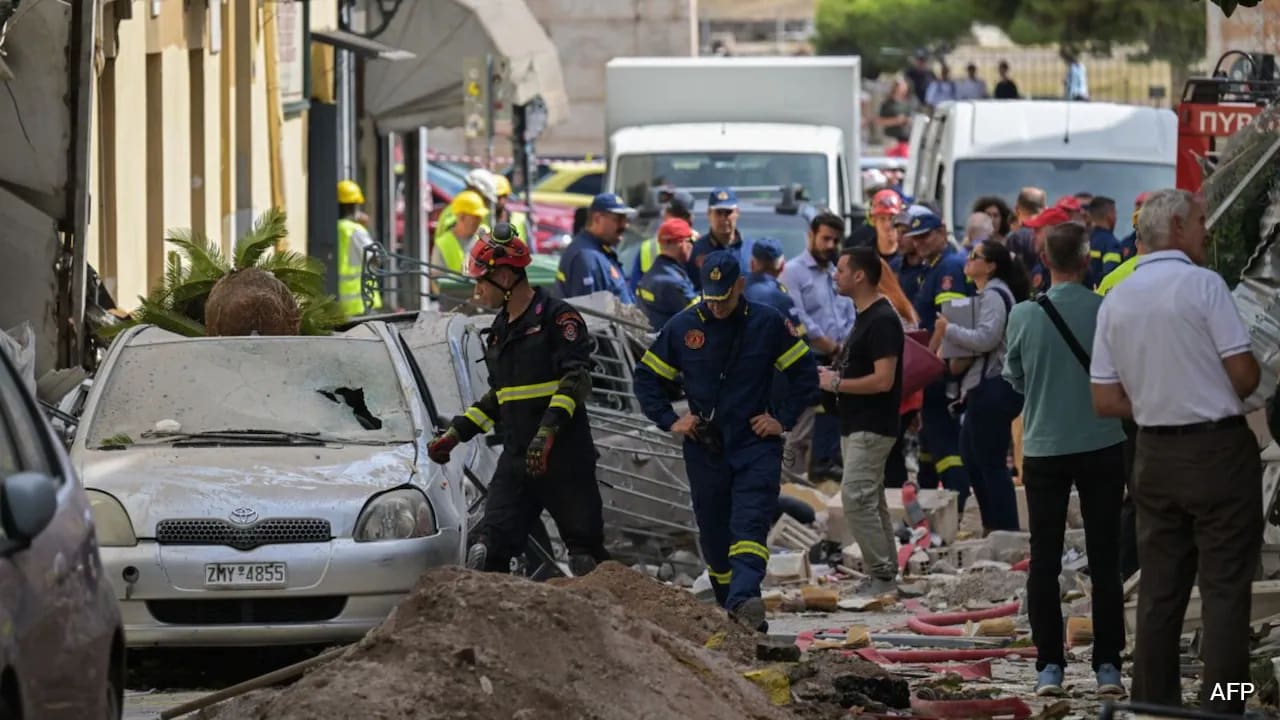
Every time a historic building in Athens or a Greek island town implodes into a pile of rubble, taking tourists and locals down with it, the media reaches for the exact same script. They call it a tragic mystery. They whisper about suspected gas leaks, aged wiring, or sudden structural fatigue as if concrete and steel possess a malicious expiration date. It is a convenient narrative. It frames the disaster as an act of God or a cruel quirk of urban aging, absolving everyone involved of active guilt.
It is also complete nonsense.
Buildings do not simply decide to collapse. They are murdered by years of deferred maintenance, illegal internal alterations, and a tourist economy that values maximum short-term rental yield over basic human survival. When six people go missing and two end up hospitalized after an explosion in a historic district, the public is spoon-fed a story about an unfortunate anomaly. Behind the headlines lies a predictable economic engine that turns residential blocks into ticking time bombs.
Let us strip away the diplomatic varnish and look at how urban real estate actually operates in high-demand tourist corridors. I have spent years tracking property conversions across Southern Europe. I have watched historic stone structures carved up overnight to squeeze three separate Airbnb units out of a space originally engineered for a single family. When you remove load-bearing partition walls to create an open-plan kitchen for tourists who want an Instagrammable view, you do not just renovate. You compromise the structural physics of the entire building.
The standard news report treats the explosion as the primary villain. The explosion is merely the match that found a room already flooded with gas. The real culprit is the culture of zero enforcement, unchecked speculation, and DIY contracting that treats safety codes as optional suggestions.
The Myth of the Accidental Gas Leak
Whenever an urban blast occurs, gas is the immediate suspect. It provides a clean, technical explanation that avoids pointing fingers at real estate speculators or local municipal inspectors. But an accidental gas leak in a multi-story building requires a chain of failures. It requires old, deteriorating infrastructure combined with unmonitored installations, blocked ventilation shafts, and a complete absence of safety valves.
More importantly, it ignores what happens behind closed doors during unauthorized renovations. In many historic districts, property owners bypass the cumbersome, expensive process of securing municipal permits for structural and utility overhauls. They hire cheap, unlicensed crews to snake new gas lines through old brickwork, tap into corroded mains, and bypass safety inspection protocols.
When a contractor working on a makeshift ground-floor studio apartment cuts corners to save a few thousand euros, the entire stack above them becomes vulnerable. The resulting blast is not a random malfunction of modernity. It is the direct mathematical outcome of accumulated shortcuts.
Imagine a scenario where municipal authorities actually audited every short-term rental property with the same aggression they apply to tax collection on local coffee shops. The collapse rate would plummet overnight. Instead, local governments choose blissful ignorance because the tourist economy keeps property values artificially inflated. The municipalities collect their tourist taxes, property owners rake in daily rates that dwarf long-term rental income, and nobody asks uncomfortable questions about whether the 19th-century foundation can handle modern plumbing and gas installations.
The Architecture of Neglect
To understand why buildings fail in places like Greece, you have to look at the structural typology of the urban fabric. Much of the housing stock in historic centers consists of unreinforced masonry or mid-century reinforced concrete structures that have long exceeded their initial design assumptions for maintenance cycles.
Concrete spalls. Steel rebar oxidizes and expands, cracking the surrounding matrix from the inside out. Stone walls settle and lose their mortar integrity when subjected to chronic humidity and erratic vibration from heavy traffic. Left alone, these buildings require meticulous, expensive upkeep.
Now, introduce the modern short-term rental boom. A foreign investor or a local speculator buys a decaying shell with the express intention of turning it into high-turnover lodging. Do they invest in proper structural remediation, underpinning, and certified electrical and gas retrofitting? Rarely. That cuts into the profit margin. Instead, they execute a cosmetic polish. They slap up drywall, paint over damp patches, install cheap split-unit air conditioners that punch holes through exterior walls, and reconfigure interior spaces with zero regard for structural load distribution.
I have walked through properties where entire columns were shaved down because they blocked the flow of a trendy minimalist living room. The engineers who signed off on these modifications often exist only on paper, trading signatures for cash without ever setting foot on the job site. When you load a structure with heavy ceramic tiles, new partition walls, constant rotation of luggage-hauling tourists, and improvised utility hookups, you are straining a system that was already operating on borrowed time.
When the inevitable failure happens, the authorities express deep shock. They promise independent investigations. They declare three days of mourning. Then the zoning laws remain unchanged, the fines remain negligible, and the cycle repeats down the street.
The Regulatory Illusion
The most persistent myth in urban governance is that we lack the rules to prevent these disasters. The opposite is true. Most Mediterranean countries possess dense, comprehensive building codes, heritage preservation laws, and safety regulations that fill entire libraries.
The crisis is not a lack of legislation. The crisis is total enforcement failure.
Local building inspection departments are chronically underfunded, understaffed, and structurally incentivized to look the other way. In many municipalities, the inspectorate is treated as a bureaucratic parking lot rather than an active safety agency. When property owners realize that code violations carry virtually zero risk of meaningful penalty—and that even if a fine is eventually levied, the profits from renting the space out for a single summer will pay it off tenfold—the rational economic choice is to ignore the rules.
Furthermore, tourism has become the ultimate untouchable sacred cow. Any policy proposal that threatens to slow down the real estate conversion machine by demanding rigorous structural audits, mandatory fire and gas safety certifications, or limits on internal alterations is instantly attacked as anti-growth or hostile to tourism. Politicians calculate that the political cost of cracking down on illegal renovations is far higher than the occasional building collapse. After all, the victims are often tourists or transient renters who lack local voting power, meaning the electoral fallout is minimal.
This is the grim calculus of modern urban tourism. Human safety is weighed against room night revenues, and room night revenues win every single time.
Dismantling the Bleak Reality
If we want to stop reading headlines about missing tourists and collapsed structures, we have to stop treating these events as unpredictable tragedies. They are structural symptoms of a broken economic model.
First, we must dismantle the anonymity of real estate ownership. When foreign shell companies or anonymous local entities buy historic properties, accountability evaporates. Every short-term rental platform should be legally required to verify not just identity and tax compliance, but a certified structural and utility safety clearance issued by an independent, state-certified engineer within the past two years. If a property lacks that clearance, the listing disappears within twenty-four hours.
Second, the fines for illegal structural modifications must shift from the realm of the manageable business expense to the catastrophic. If a property owner alters load-bearing elements without verified permits, the asset should be seized by the municipality and converted into public housing. Nothing focuses the mind of a speculative investor quite like the permanent loss of their capital asset.
Finally, we need to abandon the sentimental notion that preserving historic facades gives license to gut and compromise the structural core behind them. A city is not a movie set where only the front wall matters while the interior is a lawless zone of DIY plumbing and amateur electrical wiring.
The next time a building goes down in a cloud of dust and gas in Athens or any other tourist-heavy historic hub, do not look for a mysterious spark. Look at the balance sheet. Look at the investment fund that bought the building two years ago. Look at the municipal inspector who signed off on paperwork from a beach chair fifty miles away.
The tragedy is not that the building collapsed. The tragedy is that everyone knew it was going to happen, and nobody had the spine to stop it.