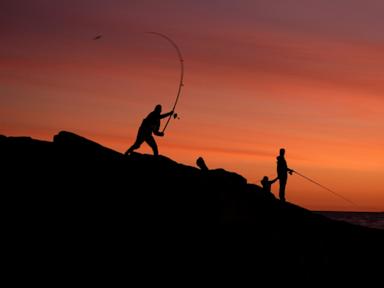
Romanticism ruins good fishing. Every autumn, thousands of surfcasters pack their vans, burn hundreds of dollars in fuel, and drive to the easternmost tip of Long Island because a magazine told them to. They stand shoulder-to-shoulder on jagged, slimy boulders beneath the Montauk Point Lighthouse, casting heavy plugs into a washing machine of tangled braid and frayed tempers. They call it a pilgrimage. I call it an expensive exercise in crowd psychology.
The mainstream outdoor press loves the Montauk myth. They sell you the nostalgia of Frank Mundus, the grit of the rocky shoreline, and the magic of the "fall run." What they conveniently leave out is the reality of modern fisheries pressure, shifting forage patterns, and the simple biological truth that striped bass do not care about human tradition. If you want to catch the fish of a lifetime, following a century-old roadmap is the fastest way to guarantee an empty cooler and a bruised ego.
The Fallacy of the "Mecca"
Tradition is just peer pressure from dead anglers. In the 1950s and 1960s, Montauk earned its reputation because the infrastructure to reach other premier staging areas simply did not exist, and the sheer biomass of Atlantic striped bass was staggering. Today, we are operating in a completely different ecological and social reality.
According to the Atlantic States Marine Fisheries Commission (ASMFC), striped bass spawning stock biomass has faced severe pressure over the last decade, prompting strict slot limits (currently 28 to 31 inches across most coastal jurisdictions) to protect the vital breeding stock. Yet, the human effort concentrated on the South Side of Montauk has only intensified. Social media has turned secret boulder fields into public parking lots. When fifty anglers are throwing two-ounce needlefish plugs into the same forty-yard rip, you are not hunting apex predators. You are participating in a lottery where the grand prize is avoiding a treble hook in your waders.
Worse, the obsession with "The End" blinds anglers to basic oceanography. Montauk is a funnel, yes. Baitfish—primarily sand eels, bay anchovies, and peanut bunker—get swept around the point by ripping tidal currents where Block Island Sound meets the Atlantic Ocean. That funnel works brilliantly when the wind blows out of the northwest and pins bait against the structure. When the wind shifts east or south, however, that famous surf turns into an unfishable, weed-choked mess. Anglers who booked their annual October trip six months in advance are stuck fishing terrible conditions simply because their calendar—and their nostalgia—dictated the location.
Why You Are Asking the Wrong Question
Most visiting anglers spend all year asking, "What lure works best in the Montauk surf?"
That is the wrong question. Lure selection is the last five percent of the equation. The real question you should be asking is: "Where are the baitfish staging without thirty guys throwing lead at their heads?"
Striped bass are opportunistic, lazy predators. They are not heroic warriors seeking out the heaviest current at Montauk Point just to give you a good fight. They are calculating calorie-counters. A forty-inch bass wants to expend the minimum amount of energy required to inhale the maximum amount of protein.
Think about what happens when massive schools of adult menhaden (bunker) push into the back bays of New Jersey, the quiet estuaries of Rhode Island, or the shallow sandbars of Cape Cod's outer beaches. There are no jagged rocks. There are no twenty-foot standing waves. There is just warm, oxygen-rich water packed with oily, foot-long baitfish. A cow bass can sit in four feet of calm water and gorge itself with a flick of its tail. Meanwhile, three hundred miles away at Montauk, legions of die-hards are risking their ankles on wet granite for a shot at a twenty-four-inch schoolie chasing sand eels.
| The Montauk Myth | The Reality on the Water |
|---|---|
| Unmatched trophy potential | Heavy angling pressure pushes larger, older fish offshore beyond casting range. |
| Classic, rugged camaraderie | Combat fishing, crossed lines, and territorial arguments over rock perches. |
| Predictable autumn blitzes | Highly dependent on narrow wind windows; often ruined by heavy weed and swell. |
| The ultimate surfcasting test | Often a test of gear endurance rather than actual fish-finding skill. |
The Boat Bias Nobody Mentions
If you look closely at the trophy photos coming out of Montauk every fall, pay attention to the background. You will rarely see the lighthouse rocks behind a fifty-pound bass anymore. You will see the gunwale of a center console or the deck of a charter boat.
The geography of Montauk favors the boat angler overwhelmingly. The rips off Shagwong, the deep water around Great Eastern, and the boulders off North Bar hold massive fish because those structures sit in twenty to fifty feet of moving water. A surfcaster, even with a twelve-foot rod and aerodynamic plugs, is only covering the top and bottom of the first hundred yards off the beach.
I have spent twenty years working the Northeast coast, and I have watched countless surf anglers burn through thousands of dollars on custom-built carbon rods, sealed spinning reels, and boutique wooden plugs, thinking they could buy their way into the Montauk magic. They arrive at Turtle Cove at 2:00 AM, hike in the dark, and cast until their shoulders scream. At dawn, they watch a fleet of twenty-five-foot boats idle up to the edge of the surf zone, drop live eels right over the drop-off, and hook up within three minutes. The fish are there, sure. They are just sitting fifty yards past the maximum range of human physics.
Dismantling the "Gear Equals Success" Lie
The tackle industry relies heavily on the Montauk pilgrimage to move high-end inventory. You are told you need a $1,000 sealed reel because a wave might splash your spool. You are told you need a $600 rod to punch a bucktail into a thirty-knot gale.
Here is the uncomfortable truth: expensive gear does not find fish. Mobility finds fish.
The most lethal striped bass anglers I know do not have a favorite spot. They have a full tank of gas, a tide chart, and zero emotional attachment to famous zip codes. If the wind is blowing hard out of the southwest, they do not force a trip to Montauk; they pivot to the sheltered coves of Narragansett Bay or the leeward side of Buzzards Bay. If the bait is running small, they downsize to light spinning gear and walk quiet, featureless sand beaches where nobody else bothers to look because there is no famous landmark to take a selfie in front of.
The Counter-Intuitive Blueprint for Real Trophy Bass
If you want to actually catch big striped bass—the kind that strip drag and leave your hands shaking—you need to abandon the pilgrimage mindset entirely. Stop treating fishing like a religious ritual and start treating it like reconnaissance.
1. Hunt the Wind, Not the Calendar
Never lock yourself into a specific destination months ahead of time if you are fishing from shore. Wind direction dictates bait movement, water clarity, and fish comfort. A strong onshore wind stirs up the bottom, dislodges crabs and worms, and creates a muddy transition line where bass feel safe hunting in shallow water. If the wind is wrong for the famous point, drive two hours to a beach where the wind is blowing directly into your face. Yes, casting into the wind is miserable. That is precisely why you will have the beach to yourself.
2. Embrace the "Boring" Beaches
Rocky points look dramatic, which is why they end up on magazine covers. Featureless sand beaches look boring, which is why serious sharpies love them. Sand beaches are dynamic. Every major storm carves new troughs, cuts, and sandbars. A subtle three-foot depression running parallel to the shore—a classic slough—acts as an underwater highway for migrating bass. Learn to read the wave breaks during the day at low tide. Where the waves stop breaking in a line, there is deep water. Come back at night on an incoming tide and fish that exact seam. You will catch more fish in two hours on a deserted sand bar than you will in a week of fighting crowds on the rocks.
3. Fish the Edges of the Chaos
When you do find yourself near a known hotspot or a massive blitz, resist the urge to cast into the middle of the splashing water. The frantic commotion on the surface is usually smaller, aggressive schoolies slashing at bait. The true trophy fish—the heavy, broad-shouldered females—are rarely burning calories in the mosh pit. They sit fifteen feet beneath the school, or fifty yards down-current, waiting for stunned, injured baitfish to drift down to them. Throw a heavy, slow-sinking lure—like a rigged eel, a heavy soft plastic shad, or a metal-lipped swimmer—and let it sink beneath the chaos.
4. Prioritize Stealth Over Distance
The modern surfcaster is obsessed with casting a country mile. Yet, some of the biggest striped bass ever landed from shore were caught within twenty feet of the dry sand. At night, bass move into water barely deep enough to cover their dorsal fins. If you march down to the water's edge with a blinding white headlamp strapped to your forehead and immediately start bombing heavy plugs toward the horizon, you are casting right over the heads of the biggest fish in the surf—after scaring them into the next county. Keep your lights off. Walk quietly. Make your first ten casts parallel to the shoreline, working the whitewater wash right at your feet, before you ever step into the water.
The Downside of Abandoning the Herd
There is a real cost to walking away from places like Montauk, and you need to be honest with yourself about whether you are willing to pay it.
When you fish famous spots, your failures are validated by the crowd. If you get skunked at Montauk Point alongside forty other guys, you can shrug it off, grab a coffee at the local deli, and blame the tide or the moon phase. You still get to feel like part of the tribe.
When you strike out on your own—when you read the charts, pick an obscure stretch of coastline, hike three miles down an empty beach at 3:00 AM, and catch nothing—there is nobody else to blame. The failure is entirely yours. You have to trust your own eyes, your own logs, and your own understanding of the water without the comfort of seeing twenty other headlamps confirming you are in the "right" place. It is lonely, frustrating, and mentally exhausting.
The Verdict on the Lighthouse
Montauk is a stunning piece of coastline. By all means, go there. Walk the trails, look at the historic lighthouse, eat some fresh seafood, and soak in the maritime history. Just leave your surf rods in the truck.
The golden age of the Montauk surf is preserved in old photographs and fading memories, not in the reality of today's crowded waters. Striped bass are wild, unpredictable creatures that follow food, temperature, and cover—not legacy. Stop paying tribute to where the fish used to be fifty years ago, and start putting in the work to find where they are hiding tonight.