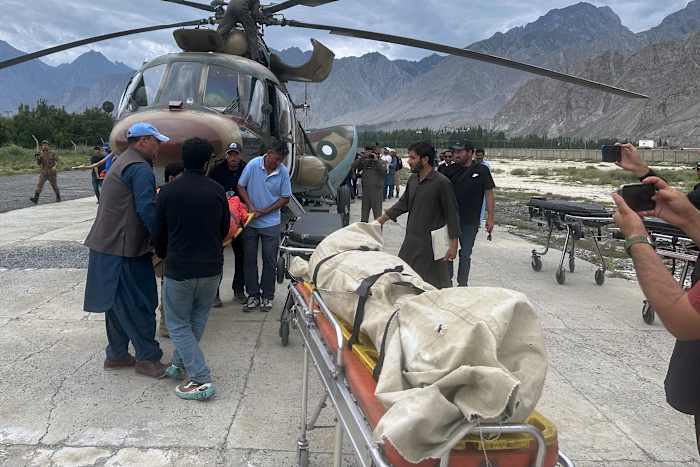
The headlines hit the wire with predictable, manufactured grief. The Pakistan army helicopters scramble. Bodies are airlifted. The climbing world collectively clutches its pearls, weeping over another tragic avalanche in the Karakoram. The media paints a picture of brave souls tragically claimed by the unforgiving mountain, painting elite mountaineers as tragic heroes battling nature's fury.
It is a comfortable narrative. It is also a complete fabrication designed to protect a multi-million-dollar commercial death machine from scrutiny.
Let us strip away the romanticized garbage. When a commercial expedition goes sideways on K2 or Nanga Parbat, we are told to bow our heads in solemn respect. I refuse. I have watched the commercialization of the death zone from the inside, and I have seen sponsors and ego-driven operators blow millions turning the world's most dangerous peaks into vertical tourist traps. Nirmal Purja and his contemporaries built empires on selling a dangerous illusion: that with enough oxygen, fixed ropes laid by underpaid local porters, and a hefty bank account, anyone can buy a spot on a lethal summit.
The mountain did not betray them. The romantic myth betrayed them.
The Myth of the Unforgiving Mountain
Every time an avalanche sweeps a slope, commentators blame the weather, the snowpack, the sheer randomness of high-altitude alpinism. This is a cop-out. Avalanches on steep Karakoram and Himalayan faces are not anomalies; they are environmental certainties. They are gravity doing what gravity does.
When you crowd base camps with hundreds of climbers who lack the technical autonomy of true alpinists, you change the math of survival. Modern commercial mountaineering relies on infrastructure. It relies on Sherpas and Pakistani high-altitude workers dragging gear, kicking steps, and shouldering the lethal risk so that wealthy clients and social media influencers can pose for their summit photos.
We need to redefine what courage actually means. True expertise in the high mountains is knowing when to turn around. It is refusing to push past objective hazard windows because a film crew is waiting or a sponsorship contract demands content. When the incentives reward summit at all costs, death ceases to be a tragedy. It becomes a predictable line item in a high-risk business model.
"The mountain does not care about your follower count, your sponsorship deal, or how much money you wired to a logistics agency in Skardu."
Who Actually Pays the Price
Let us talk about the casualty statistics that mainstream reports conveniently gloss over. When a commercial star or high-profile climber makes the news, the global audience mourns. But who is hauling the heavy loads through the Khumbu Icefall or the Bottleneck on K2? Who is clipping into unstable fixed lines first to make it safe for the paying clients?
Local high-altitude workers—the Balti porters and elite Pakistani guides—take on exponential risk for fractions of the payout. They are the structural foundation of the commercial mountaineering industry. Yet, their lives are treated as expendable labor inputs. When an avalanche wipes out a camp, the industry mobilizes rescue helicopters for the big names while local families quietly absorb the devastating economic and personal fallout of losing their primary breadwinners.
If you want to understand the rot in modern mountaineering, look at the risk-transfer mechanism. Wealthy adventurers outsource their decision-making to guides and local workers, pushing past red flags because they paid fifty grand for a summit certificate. Then, when the inevitable slide occurs, the PR machine swings into gear, praising the victims' passion while ignoring the systemic exploitation that put them in harm's way during dangerous snow conditions.
The Economics of Manufactured Tragedy
Climbing used to be about self-reliance, quiet exploration, and respecting the hard boundaries of human physiological limits. Today, it is an attention economy.
Let us look at the mechanics. You need a narrative to sell gear, secure brand partnerships, and feed the algorithm. Safety margins shrink because caution does not generate engagement. A successful, quiet retreat from a mountain because the avalanche danger is high yields zero viral content. Pushing through marginal conditions, however, creates high drama. And drama sells.
I have seen operators ignore clear meteorological warnings because pulling the plug early ruins the season's profit margins. They gamble with human lives, betting that the odds will hold just long enough to notch another summit. When the house wins, they cash in. When the mountain wins, they rely on the military to airlift the bodies while the media writes eulogies that sanitize reckless decision-making.
We must stop treating commercial high-altitude tourism as an heroic endeavor. It is extreme leisure tourism subsidized by local labor and excused by sentimental journalism.
What Actually Needs to Change
If the climbing community wants to stop writing these tragic obituaries, it needs to dismantle the incentives that reward recklessness.
First, scale back the commercialization. If an expedition requires a small army of support workers to drag a client up a mountain, that client has no business being there. Period.
Second, hold operators legally and financially accountable for putting clients and staff into avoidable objective hazards. Insurance companies and local governments need to enforce strict permitting caps that reduce the human congestion choking these peaks.
Third, stop glorifying the death-defying gamble. Every time we romanticize a climber who died pushing through obvious danger, we encourage the next wave of amateurs to ignore their instincts and roll the dice.
The rescue helicopters will keep flying. The military will keep pulling bodies off the ice. But until we stop buying the lie that high-altitude commercial tourism is about anything other than ego and economics, the body count will continue to rise.
Stop calling it a tragedy when it is a business model.