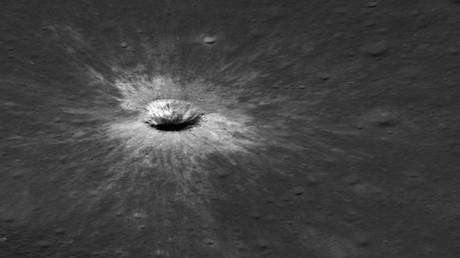
Every few years, telescope imagery drops and the headlines hyperventilate. Another once-in-a-century crater spotted on the Moon. Photos attached, dramatic music implied, public awe manufactured out of thin air.
It is scientific illiteracy dressed up as breaking news. Read more on a related subject: this related article.
The Moon is not a pristine museum exhibit that occasionally gets bumped. It is a cosmic punching bag taking permanent, unrelenting abuse. Calling any specific crater a once-in-a-century event reveals a profound misunderstanding of orbital mechanics, impact frequency, and basic statistics.
Let us dismantle the fantasy. Additional journalism by Ars Technica highlights related views on the subject.
The Statistical Illusion of the Lunar Flash
When astronomers spot a bright flash on the unilluminated side of the Moon, they calculate magnitude, estimate mass, and immediately run to press offices to declare a historical anomaly. They point to the resulting scar in subsequent Lunar Reconnaissance Orbiter frames and stamp it with an exclusive label.
This is pure confirmation bias.
The Earth-Moon system sits in a debris field populated by millions of untracked meter-class and centimeter-class rocks left over from planetary accretion. If you stand in a hurricane and get hit by a brick, you do not call it a once-in-a-lifetime weather event. You admit you are standing in a hurricane.
Planetary flux models show that impactors in the ten-kilogram to one-hundred-kilogram range hit the lunar surface with predictable regularity. They do not wait for a century to tick over on our Gregorian calendar. They arrive daily, hourly, and continuously. The only reason we call one specific impact rare is because our observation capability is historically pathetic. We missed ninety-nine percent of them yesterday, so the one we happened to catch today gets crowned a monarch.
The History of Telescopic Blind Spots
To understand why we keep falling for the once-in-a-century marketing trick, look at the timeline of lunar observation. For centuries, astronomers relied on optical telescopes squinting through Earth’s atmospheric distortion. They saw massive maria and ancient highlands, but fleeting flashes of light—known formally as transient lunar phenomena or impact flashes—were dismissed as optical ghosts, atmospheric tricks, or instrument errors.
It is only in the past two decades that dedicated automated telescope networks began staring at the dark side of the Moon with high-speed video sensors.
What did they find? They found that impacts happen all the time.
The technological upgrade did not change the universe; it changed our eyes. Before these networks came online, we recorded a tiny fraction of impacts because nobody was watching consistently. When the detection rate jumped from zero to dozens per year, sensationalist media outlets immediately dubbed each newly visible scar a rare cosmic visitor.
It is the equivalent of installing security cameras in a notoriously rough neighborhood for the first time and screaming in terror every time someone drops a bottle, claiming a historic riot has broken out.
The math was always there. The rocks were always falling. Our ignorance was simply being cured by better hardware, and PR departments decided to monetize that ignorance by rebranding normal physics as an extraordinary anomaly.
Why Journalists Love a Good Dent
Science journalism suffers from a chronic addiction to singularity. Readers do not click on articles titled "The Moon Got Hit By Another Rock Today, Exactly As Projected By Standard Physics." That does not go viral on social media.
Instead, media outlets rely on anthropomorphizing the cosmos. They treat the Moon as a sleeping giant that suddenly twitched. They frame every crater as an attack, a violation, or a miraculous survival story.
I have spent years analyzing telemetry and orbital sensor data, watching institutional PR teams manufacture panic and wonder in equal measure. When you work inside aerospace tracking and impact dynamics, the daily reality looks entirely different from the press releases. The space around Earth and the Moon is noisy, chaotic, and densely packed with high-velocity shrapnel.
To call an impact rare because we finally pointed an expensive sensor at the right place at the right time is peak human arrogance. We confuse our own technological blindness with the rarity of the event.
The Physics of Orbital Violence
Let us look at the actual numbers without the theatrical fluff.
A standard impactor hitting the lunar surface travels at velocities averaging twenty kilometers per second. There is no atmospheric blanket to slow it down. At that speed, kinetic energy swamps chemical explosives. A rock weighing fifty kilograms carries an energy release equivalent to tons of TNT. It vaporizes instantly upon contact, excavating a crater ten to twenty times its own diameter, throwing out ejecta blankets that stretch across kilometers of desolate basalt.
This happens constantly.
Imagine a scenario where you monitor a single square kilometer of desert sand with a high-definition macro lens during a severe sandstorm. Every grain of sand that strikes the ground alters the topography. On the Moon, the sandstorm is invisible, moving at orbital speeds, and composed of asteroidal fragments.
The rate of crater formation across the entire lunar surface is steady. It follows a power-law distribution. Small impacts happen by the thousands every single day. Medium impacts happen weekly. Large impacts happen annually or decadently. There is no anomalous spike. There is no historical anomaly. There is only the steady grind of gravitational collection.
Dissecting the Sensor Bias
Let us examine how these discoveries actually make it to your news feed.
A university research team sets up a couple of automated telescopes equipped with intensified CCD cameras. They filter for optical flashes caused by kinetic impact. Over a year of observation, they catch a dozen bright spikes. They correlate one particularly bright flash with a new pixel anomaly in archival orbital imagery.
They write a paper for an academic journal. The paper is careful, hedged with standard scientific caveats, uncertainty bounds, and statistical error bars.
Then the university press office gets hold of it.
Words like "stunning," "rare," and "unprecedented" get injected into the press release. The phrase "once-in-a-century" gets thrown around because journalists need a hook that competes with celebrity gossip and geopolitical crises. Other outlets copy-paste the press release verbatim without reading the underlying methodology section.
By the time the story hits the front page of major news aggregators, the careful academic observation has mutated into a sci-fi thriller about the Moon getting battered by a rogue asteroid.
This is how public discourse gets poisoned by clickbait translation layers.
The Real Threat Nobody Talks About
While the media salivates over big, photogenic craters that make for good social media thumbnails, actual engineers designing lunar infrastructure face an entirely different nightmare.
They do not care about the hundred-meter crater forming fifty miles away from a planned base camp. They care about the microscopic dust and millimeter-sized flecks that bombard the surface hourly.
These small particles do not leave dramatic craters you can photograph from orbit. Instead, they sandblast optical sensors, pit solar panels, degrade thermal radiators, and charge electrostatically, clinging to spacesuits and sealing mechanisms.
By hyperventilating over rare macroscopic craters, science communicators distract the public from the actual engineering challenges of living on another celestial body. The big crater is a spectator sport. The micrometeoroid flux is an operational executioner.
If you want to understand why lunar colonization is brutally difficult, stop looking at the dramatic blast marks and start looking at the microscopic abrasion rates.
The Downside of Being This Blunt
Adopting this hardline stance has its costs. It makes parties at aerospace conferences less than thrilling. When colleagues want to gush over the latest spectacular impact photo released by a space agency, pointing out that it is just statistical background noise tends to drain the enthusiasm from the room.
Public wonder matters. Inspiring kids to look up at the night sky through a telescope because they saw a cool article about a lunar explosion has value. I understand the utility of a good hook.
However, manufacturing false scarcity in the cosmos trades long-term scientific literacy for short-term engagement metrics. When every standard occurrence is labeled once-in-a-century, the public loses its ability to measure actual existential threats or genuine scientific breakthroughs.
When a true cosmic anomaly occurs, nobody will believe the headlines because they cried wolf over routine impacts for the twentieth time this decade.
Stop Counting Scars
The Moon is a graveyard of impacts, and it is actively adding to its collection every single second.
Stop treating lunar craters like miraculous visitors from an alien dimension. Stop pretending that our sudden ability to point a decent camera at the Moon means the universe has changed its behavior.
The cosmos is violent, indifferent, and relentlessly active. The sooner we stop romanticizing every dent in the lunar crust, the sooner we can focus on the real engineering hurdles waiting for us in the dust.
Pick up a physics textbook, look at the impact flux curves, and stop falling for the press release.