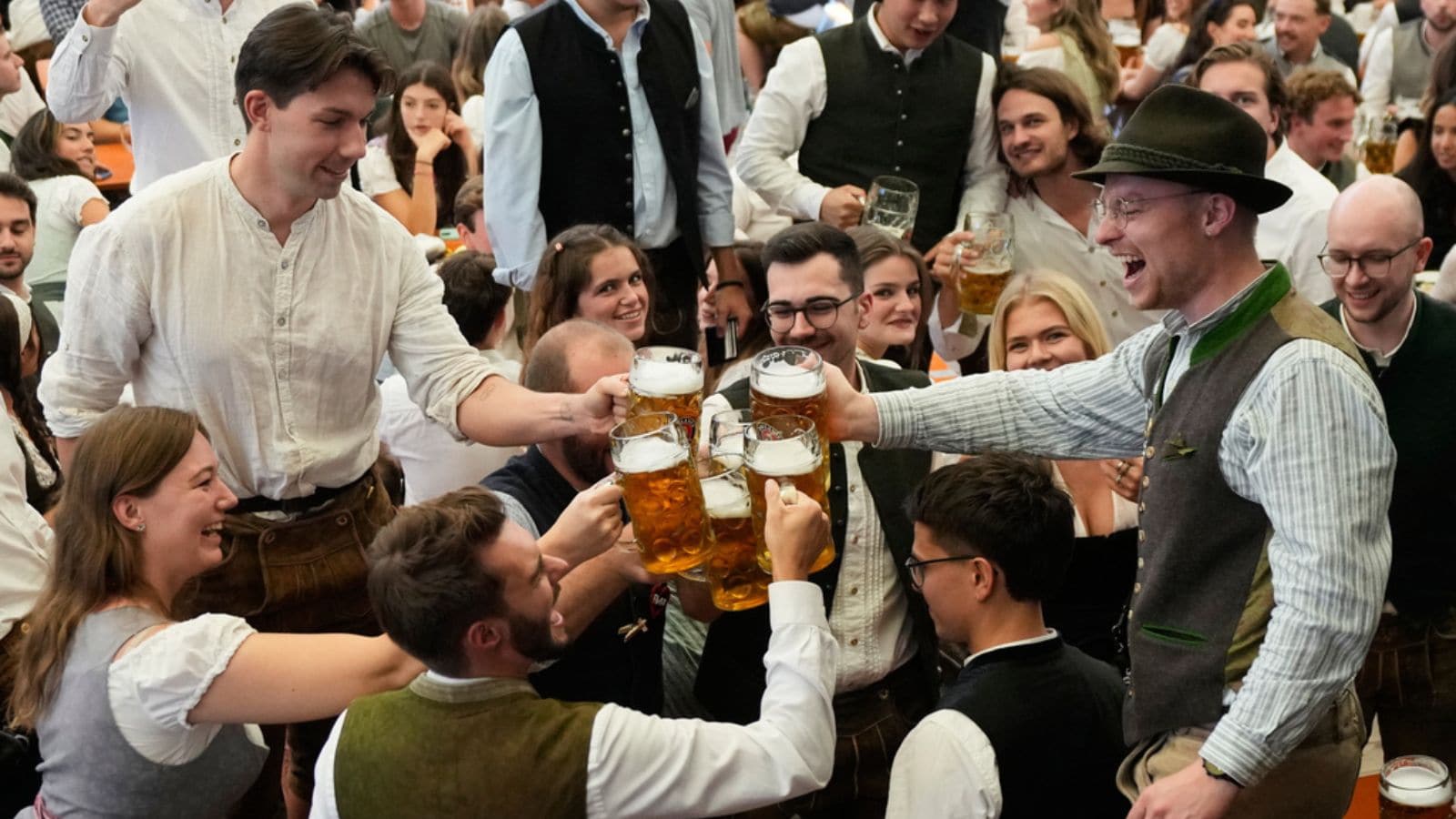
Every autumn, travel media outlets regurgitate the exact same fairy tale. They polish up the tired narrative about Crown Prince Ludwig marrying Princess Therese in October 1810, painting a picture of a wholesome royal wedding where the benevolent monarchs invited the entire city of Munich to share a pint of beer in a meadow. It is a comforting, picturesque myth designed to sell overpriced hotel rooms, branded Tyrolean hats, and mass-market lager to millions of gullible tourists.
It is also entirely detached from historical and economic reality.
I have spent years navigating the corporate machinery of European tourism, watching how regional tourist boards sanitize ugly political maneuvers into charming cultural heritage. Oktoberfest was never a sweet community gathering born out of romantic goodwill. It was a calculated state-sponsored public relations campaign, an agricultural trade exhibition, and an exercise in political consolidation.
If you are planning a trip to Munich expecting an authentic window into historic Bavarian culture, you are walking directly into a trap built over two centuries ago. Let us dismantle the myth and look at what is actually happening behind the imported wooden benches.
The 1810 Origin Story Was State Control Disguised As A Party
To understand why Oktoberfest exists, you have to look at the geopolitical wreckage of early nineteenth-century Europe. Bavaria had just been elevated to a kingdom by Napoleon Bonaparte, absorbing a patchwork of foreign territories with entirely different legal systems, loyalties, and economic structures. King Maximilian I Joseph was sitting on a volatile throne. He needed to forge a unified national identity out of disparate populations who viewed Munich with deep suspicion.
The marriage of Crown Prince Ludwig to Princess Therese of Saxe-Hildburghausen was a diplomatic maneuver, plain and simple. The wedding festivities included a massive horse race on the outskirts of the city, organized by a cavalry major named Andreas Michael Dall’Armi.
Notice what was missing from the initial blueprint: beer was not the main event. Agriculture was. The event functioned primarily as an agricultural exhibition meant to showcase the prowess of Bavarian farming, livestock breeding, and industrial capability. The state was flexing its economic muscle. The beer was merely a lubricant introduced to keep the restless working classes docile and distracted while the aristocracy paraded their political dominance.
Calling Oktoberfest a festival born from a royal wedding is like calling a state-of-the-union address a romantic anniversary dinner. It is a historical laundering of political theater.
The Modern Corporate Cartel Hiding Behind Lederhosen
Fast forward to the present day, and the distortion field has only intensified. The modern iteration of the festival is not a folk tradition. It is a hyper-regulated, highly corporate oligopoly controlled by six historic Munich breweries and a tight network of tent operators who guard their concessions with the aggression of cartel bosses.
When you sit inside the Schottenhamel or the Hofbräu-Festzelt, you are not participating in local culture. You are participating in an industrial-scale consumption engine. Each tent holds thousands of people, packed shoulder-to-shoulder, consuming millions of liters of beer brewed to a specific, high-gravity specification designed explicitly for maximum intoxication and rapid table turnover.
Let us address the economic mechanics that the glossy brochures ignore. The beer served at the festival is not some rare, ancient elixir brewed by monks in a hidden forest. It is mass-produced industrial lager, standardized for export and festival volume. The price of a Mass (one liter) climbs higher every single year, squeezing out local residents who remember when the festival was actually accessible to working-class Münchner.
Meanwhile, the secondary market for table reservations operates like a high-stakes commodities exchange. If you want a guaranteed seat in a prime tent during peak weekends, you are expected to buy thousands of euros worth of mandatory chicken and beer vouchers through opaque channels, or pay extortionate rates to concierge agencies. It is a VIP playground dressed up in rustic costume.
The Costume Industry And The Death Of Regional Dress
Nothing highlights the superficiality of modern tourism quite like the global uniform worn by attendees. Walk through the festival grounds, and you will see a sea of polyester dirndls and plastic-buttoned lederhosen manufactured in low-cost overseas factories.
Historically, traditional Bavarian clothing (Tracht) was an indicator of precise geographic origin, social status, and marital status. The embroidery, the fabric, the buttons, and the cut told a detailed story about who you were and where you came from. A tailor from the Tegernsee valley would look at modern festival fashion the way a Michelin-starred chef looks at a microwave burrito.
Tourists spend small fortunes buying cheap, historically inaccurate costumes from pop-up shops around Munich central station, entirely oblivious to the fact that they are wearing cultural appropriation kitsch designed specifically for export. The authentic regional associations that spent generations preserving genuine textile traditions look on in despair as their heritage gets flattened into a generic Oktoberfest Halloween costume.
Why You Are Asking The Wrong Questions About The Festival
People planning their first trip to Munich consistently ask the wrong questions. They want to know which weekend has the best atmosphere, where to buy the most authentic dirndl online, or how to sneak a camera into the tents.
These are tactical questions for a strategy that is fundamentally flawed. The right question is whether you should participate in a manufactured tourist trap at all when the rest of Bavaria is bursting with genuine, living cultural traditions that do not require paying sixteen euros a liter for beer served by harried staff under fluorescent lighting disguised as lanterns.
If you want to experience how Bavarians actually celebrate, you skip Munich in September and October entirely. You go to a local Kirchweih or Dult in a small Franconian or Lower Bavarian village. There, the beer is poured by local clubs, the food is prepared by community volunteers, the music is played by people who learned it from their grandparents, and nobody is wearing a neon-pink polyester bodice.
The Uncomfortable Truth About Bucket List Tourism
Travel writing has spent decades training people to chase institutionalized spectacles. We are told that if we do not check off certain global landmarks, our lives or our cultural education are somehow incomplete. This conditioning turns complex, localized events into homogenized theme parks.
Oktoberfest has survived because it feeds into this psychological trap. It offers the illusion of a wild, uninhibited cultural immersion while providing the safety wheels of massive security presence, English-speaking staff, and standardized international party zones. It is a completely sanitized, risk-free version of debauchery packaged for Instagram feeds.
I have watched otherwise intelligent travelers stand in freezing rain for three hours outside a packed tent just so they could sit on a hard wooden bench, listen to deafening brass band covers of American pop songs, and pay extortionate prices for half a roasted chicken. When you ask them why, they do not talk about the beer or the history. They talk about the status of having been there.
The festival is no longer about Bavaria. It is about a globalized branding exercise.
If you choose to go, drop the romantic illusions. Stop pretending you are honoring a two-hundred-year-old royal romance or participating in deep-rooted folk traditions. Acknowledge what it is: a giant, corporate-managed beer hall operating on a massive scale, fueled by marketing myths and tourist dollars. Once you strip away the propaganda, you can either enjoy the chaotic spectacle for what it actually is, or you can save your money, rent a car, and find a real tavern in the Alps where the locals still speak in a dialect you cannot understand, pouring beer that was never designed to be exported.


