Calgary is obsessed with a number: 450 million litres.
City officials treat this threshold like a holy commandment, and the moment residents dare to nudge the needle to 468 million, the alarm bells ring. The narrative is always the same. Residents are "losing focus." People are getting "complacent." The implication is clear: if you brushed your teeth with the water running this morning, you are the reason the city’s infrastructure is teetering on the brink of collapse.
This is a convenient lie.
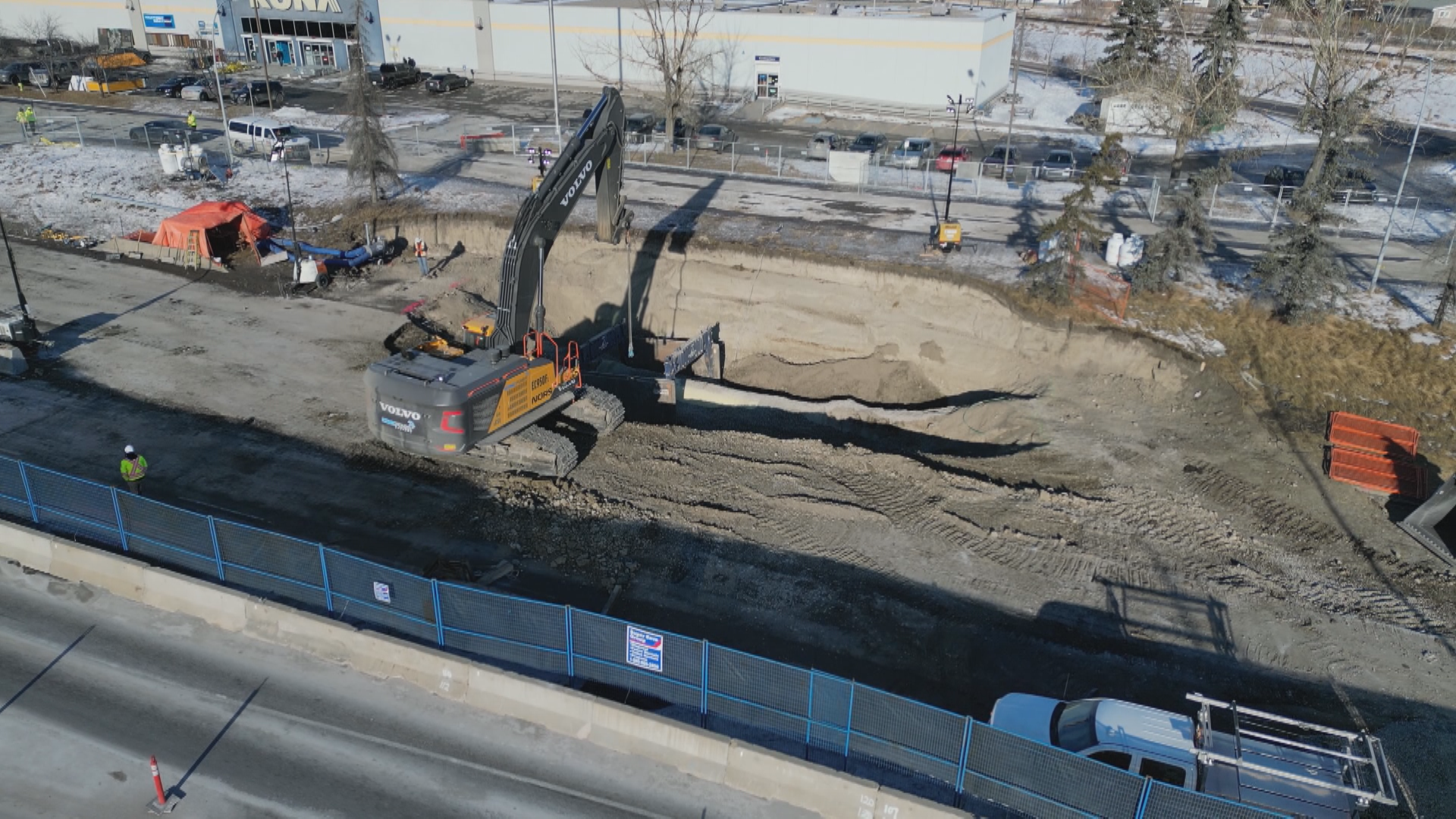
The current water crisis isn't a failure of individual morality. It is a failure of industrial foresight and a masterclass in how municipalities use "personal responsibility" to mask systemic fragility. When the Bearspaw South Feedermain snapped, it didn't just leak water; it exposed a decade of deferred maintenance and a refusal to build true redundancy into the network.
We need to stop talking about "thresholds" and start talking about the engineering negligence that turned a major Canadian city into a place where a five-minute shower is framed as a civic betrayal.
The Myth of the Conscious Consumer
The "threshold" is a psychological tool, not just a technical one. By setting a daily limit and publicizing the "climb," the city shifts the burden of proof from the utility provider to the taxpayer.
I have spent years looking at resource management across North American municipalities. There is a recurring pattern: when a system is broken, the leaders stop talking about repair schedules and start talking about "community spirit." It’s gaslighting on a municipal scale.
Calgarians are told that 450 million litres is the "safe" zone. Why? Because the Glenmore Water Treatment Plant and the remaining skeletal remains of the Bearspaw line can't handle a drop more without risking another catastrophic burst. This isn't a sustainable management plan; it's a hostage situation.
- The Flaw: Treating the symptoms (high usage) instead of the disease (single-point-of-failure infrastructure).
- The Reality: Calgary’s population has surged, yet the backbone of its water distribution relies on aging concrete pressure pipes that were known industry-wide to have a limited shelf life.
If a business told its customers they could only use its product 80% of the time because the factory was held together by duct tape, that business would be bankrupt. In Calgary, they just call it a "Stage 4 restriction" and ask you to stop washing your car.
The Math of Fragility
Let’s look at the actual physics. The Bearspaw South Feedermain is a 1.2-meter diameter pipe. When it functions, it moves massive volumes of water from the Bearspaw Water Treatment Plant to the rest of the city. When it fails, the city loses 60% of its capacity.
City officials want you to focus on the $18$ million litres that pushed us over the "threshold" yesterday. They don't want you to focus on the sheer mathematical insanity of a system that has zero "hot-swappable" redundancy for its primary artery.
In high-stakes technology environments—think data centers or power grids—we use a principle called $N+1$ redundancy. This means that for any critical component ($N$), there is at least one backup (+1) ready to take the full load immediately. Calgary is running on $N-1$. We are operating at a deficit, and the city is asking residents to solve a multi-billion dollar engineering gap by skipping a load of laundry.
Imagine a scenario where a hospital lost its primary power and asked the surgeons to just "operate faster" so they didn't use too much backup battery. You wouldn't praise the surgeons for their conservation; you would fire the facility manager who forgot to buy a second generator.
Why "Restrictions" are a Policy Trap
The moment a city imposes long-term water restrictions, it enters a "Degradation Loop."
- Revenue Drops: People use less water. The utility department makes less money from water bills.
- Budget Cuts: With less revenue, the budget for proactive maintenance is slashed.
- Infrastructure Declines: Small leaks aren't fixed. Pipes weaken.
- Failure Occurs: A pipe bursts. The city imposes more restrictions to manage the crisis.
By forcing Calgarians into a permanent state of "conservation mode," the city is actually starving the very coffers needed to fix the pipes. This is the paradox of thrift applied to municipal utilities. We are saving ourselves into a collapse.
Furthermore, the "threshold" of 450 million litres is arbitrary. It is based on what the current, crippled system can handle—not what a modern, thriving city should require. By making 450 million the "goal," we have lowered our expectations to match our failures.
Stop Asking "How Can I Save Water?"
The "People Also Ask" section of any search engine regarding this crisis is filled with queries like "How to save water in Calgary" or "When will restrictions end?"
These are the wrong questions.
The right question is: "Why is Calgary's Water Utility Tiered Like a Third-World Grid?"
If you want to actually move the needle, stop worrying about your rain barrel. Start demanding an audit of the "Prestressed Concrete Cylinder Pipe" (PCCP) inventory. This specific type of piping has been a known risk factor across North America for decades. Cities like San Diego and Phoenix have been aggressively replacing or monitoring these pipes with electromagnetic sensors for years. Calgary, meanwhile, seemed surprised when ours disintegrated.
The Industrial Blind Spot
We hear a lot about residential use. We hear very little about the massive industrial and commercial footprints that continue to operate with far more leeway than the average person in a semi-detached home.
The city focuses on the "climb" in residential use because residents are easy to shame. It's much harder to tell a construction conglomerate or a massive manufacturing plant to halt operations. By focusing on the "average citizen," the city avoids the difficult economic conversations about what it actually costs to run a city in 2026.
I’ve seen this in the tech sector: when a server crashes, the "junior" move is to blame the users for "sending too many requests." The "senior" move is to admit the load balancer was misconfigured and the hardware was ancient. Calgary is currently being run by the municipal equivalent of a junior dev who accidentally deleted the production database and is now blaming the customers for trying to log in.
The Cost of the "Threshold" Mentality
Every day we stay under the "threshold," we congratulate ourselves. We feel like we've done our part. But this "success" is actually a mask. Every day we successfully "conserve" is another day the city can delay the massive, painful, and expensive overhaul required to make Calgary's water system actually robust.
The threshold isn't a safety net; it’s a blindfold.
We are being conditioned to accept a lower standard of living—shorter showers, brown lawns, dirty cars—to compensate for decades of administrative sloth. We are told this is the "new normal." It shouldn't be. In a province that prides itself on being an energy and resource powerhouse, the inability to move water from point A to point B is an embarrassment that no amount of "community spirit" can fix.
The Counter-Intuitive Truth
Conservation is not the solution to an infrastructure crisis. It is a temporary emergency measure that has been rebranded as a long-term lifestyle.
If we want the water to stay on, we need to stop being "good citizens" who quietly obey the threshold. We need to be "angry taxpayers" who demand to know why the city’s capital expenditure on water infrastructure hasn't kept pace with its "world-class" branding.
The next time the city announced we've "exceeded the threshold," don't look at your neighbor's sprinkler with contempt. Look at City Hall. They are the ones who let the pipes rot while they were busy counting the revenue from your ever-increasing property taxes.
Stop trying to save the system by using less. Start demanding a system that can actually handle the volume of a modern city. Anything else is just rearranging deck chairs on the Titanic and telling the passengers to stop splashing in the pool.
Demand a secondary feedermain that isn't a "future project" but a current emergency. Demand the immediate deployment of real-time acoustic monitoring across the entire PCCP network. Demand that the "450 million litre threshold" be retired as a metric of success and recognized for what it is: a confession of systemic inadequacy.
The "climb" in water use isn't the problem. The "fall" of Calgary’s infrastructure standards is.
Turn the tap back on and ask where your tax dollars went.