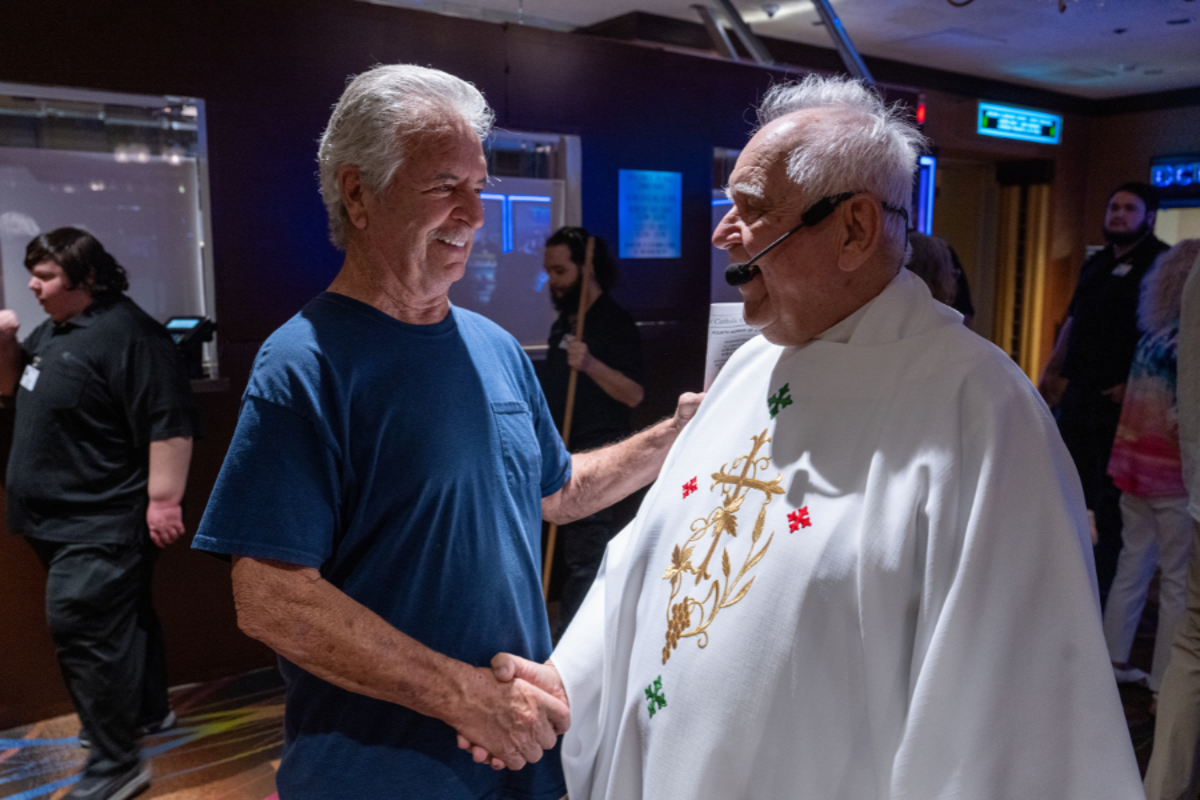
The media loves a freak show. When a journalist hears there is a congregation meeting in a Nevada casino, they sharpen their pencils to write the same tired narrative: the irony of "grace meets greed." They lean on the lazy contrast of neon lights and stained glass. They treat it like a glitch in the simulation or a desperate attempt to find God in a den of iniquity.
They are missing the entire point.
Church in a casino isn’t a gimmick. It isn’t a desperate outreach program. It is a masterclass in urban utility and a brutal indictment of how traditional religious architecture has become a bloated, tax-exempt liability. While mainline denominations are drowning under the maintenance costs of 19th-century gothic stone piles that sit empty six days a week, these "gambling hall" ministries are operating with the lean efficiency of a tech startup.
The Myth of Sacred Space
We have been sold a lie that "sacred space" requires a specific aesthetic. High ceilings. Pews. Silence. This is a design preference masquerading as theology.
In reality, the early church met in homes, marketplaces, and catacombs. They were mobile. They were integrated. They didn't have a mortgage on a building that required $50,000 in annual roof repairs. The moment a religious organization prioritizes the preservation of a building over the utility of its mission, it ceases to be a movement and becomes a museum.
Casinos are the modern town squares. They are where the people are. In Nevada, the casino is the primary employer, the primary entertainment hub, and the primary social radiator. Moving a church into a casino isn't "meeting people where they are" in a metaphorical sense—it is a literal occupancy of the local infrastructure.
Efficiency is the Highest Form of Stewardship
Let’s talk numbers. I’ve consulted with non-profits that spend 60% of their annual budget on "facilities." That is money that could go to food programs, education, or crisis intervention. Instead, it goes to heating a sanctuary that holds 400 people but only hosts 40 on a Tuesday night.
A casino-based church flips the script.
- Zero Infrastructure Bloat: They rent a ballroom or a conference center.
- Built-in Accessibility: Casinos have massive parking structures, ADA compliance, and security teams already on the payroll.
- Climate Control: You aren't paying for the AC; the house is.
If you view the church as a service provider rather than a real estate holding company, the casino model is the only one that makes financial sense in 2026. Traditionalists call it "sacrilege." Accountants call it "survival."
The "Sin City" Hypocrisy
The most common critique of these ministries is that they are "compromised" by their surroundings. This is a profound misunderstanding of both ethics and human behavior.
The assumption is that the casino is "bad" and the church is "good," and that the bad will somehow rub off on the good. It's a binary view that ignores the complexity of modern life. Most people attending these services are workers—dealers, cocktail servers, and janitors—who are coming off a shift. For them, the casino isn't a "den of sin"; it's their office.
By placing the pulpit ten feet from the slot machines, you remove the barrier of "pretend holiness." In a traditional cathedral, people put on a mask. In a casino, the mask is already off. You see the desperation, the hope, and the reality of human struggle in high definition. If a church can't handle the proximity of a roulette table, it isn't strong enough to exist in the real world anyway.
Why Your Local Church is Dying (and the Casino is Winning)
Traditional churches are failing because they are inaccessible fortresses of nostalgia. They require you to travel to a specific zone, park in a cramped lot, and enter a space that feels like a tomb.
Casinos are designed to be magnetic. They are designed for flow. They are designed to make people feel comfortable (so they stay and spend money, sure, but the architectural principle remains the same).
When a church borrows that "third space" energy, it taps into a level of social friction that is impossible to replicate in a standalone chapel. People stumble into these services. They hear the music while walking to the buffet. That isn't a distraction; it's the ultimate organic growth strategy.
The Logistics of the Unconventional
There are downsides. I’ll be the first to admit that trying to have a moment of silent reflection while a nearby "Wheel of Fortune" machine screams at a jackpot winner is a challenge. But life is loud. Life is distracting.
The "peace" of a quiet church is an artificial construct. It doesn't prepare anyone for the chaos of a Monday morning. These casino congregations are training their members to find focus in the middle of the storm. They are building a resilient, gritty faith that doesn't need a scented candle to feel "connected."
The Death of the Monopoly
For centuries, the church held a monopoly on the local social gathering. That is over. Between digital connectivity and the rise of secular "tribes," the church is just one option on a very long menu of how to spend your Sunday morning.
If the church wants to remain relevant, it has to stop acting like a destination and start acting like an ingredient. It needs to be mixed into the world. It needs to be in the malls, the gyms, and yes, the casinos.
The Nevada model is the blueprint for the de-institutionalization of faith. It proves that you don't need a steeple to have a soul. It proves that the "sacred" isn't a location; it's an action.
If your "sacred space" depends on the absence of a slot machine, your sacredness is remarkably fragile.
Stop mourning the death of the traditional church building. It was a weight around our necks. The casino isn't the problem; it's the classroom. And class is in session.
Go where the people are. Everything else is just real estate.