The global energy market is addicted to a specific brand of geopolitical melodrama. Every few months, a familiar script plays out in the daily news cycle. An oil tanker is harassed, a drone is downed, or speculative missiles are exchanged in the Persian Gulf. Instantly, the punditry class panics. They scream about a global economic collapse, a permanent blockade of the Strait of Hormuz, and a $150 barrel of crude.
It is a compelling narrative. It is also entirely wrong.
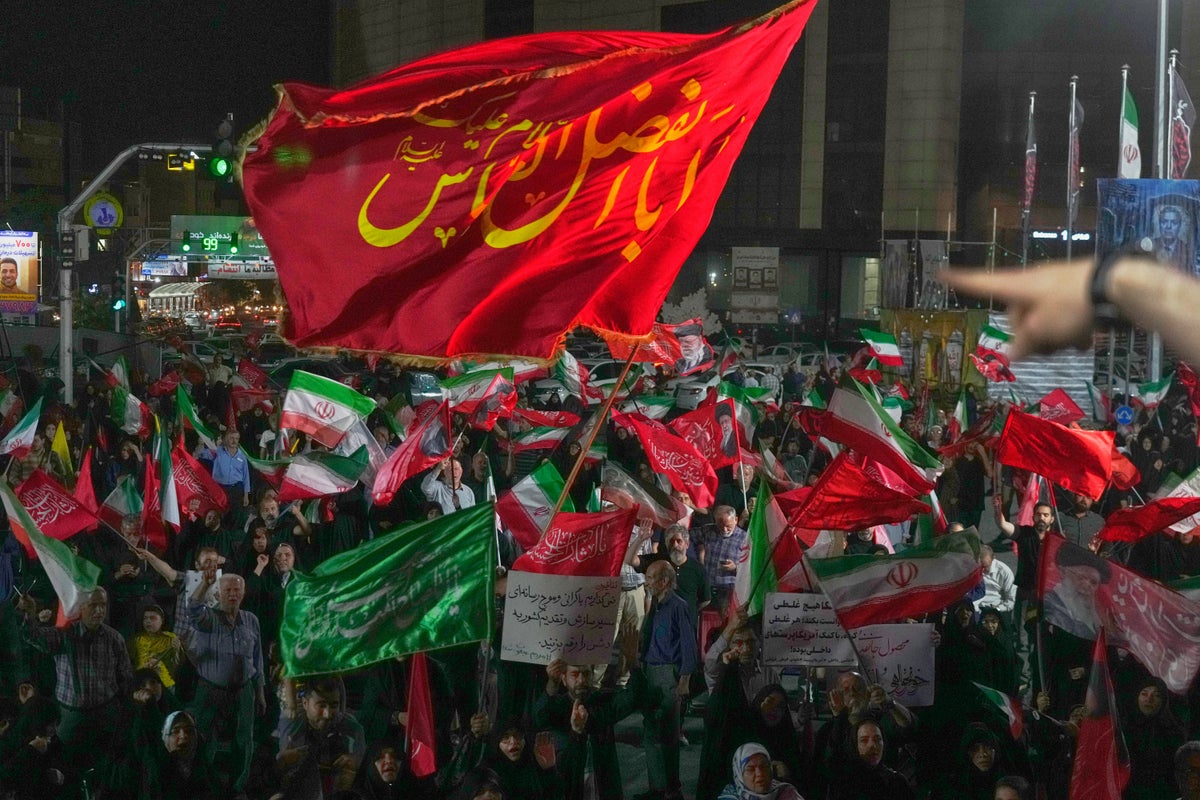
The conventional analysis treats the friction between the United States and Iran as a volatile powder keg on the verge of exploding into a global shipping catastrophe. This view misinterprets the fundamental mechanics of modern geopolitics. What looks like a chaotic prelude to war is actually a highly calculated, mutually beneficial theater production. Neither Washington nor Tehran has any intention of shutting down the world's most critical choke point. In fact, both regimes depend on the tension itself to survive.
The Myth of the Total Blockade
Let us look at the foundational lie of this entire discourse: the idea that Iran could—or would—permanently seal the Strait of Hormuz.
Geographically, the strait is a narrow corridor. At its narrowest point, the shipping lanes are only two miles wide in either direction. On paper, it looks vulnerable. Mainstream analysts look at this geometry and assume a few anti-ship cruise missiles or naval mines could freeze 20% of the world’s petroleum liquid consumption overnight.
They miss the economic reality of the Iranian state.
Iran is not an isolated, nihilistic entity operating outside the global market. It is a nation state deeply dependent on maritime trade for its own survival. While Western sanctions aim to choke off Iranian exports, the reality on the water is vastly different. Through a massive, sophisticated ghost fleet, Iran continues to move millions of barrels of crude daily to buyers in Asia, primarily China.
[Iran's Economic Lifeline] ---> [Strait of Hormuz] ---> [Asian Markets / China]
                                        ^
                            If Iran closes this choke point,
                            it commits economic suicide.
If Tehran seals the strait, they do not just block Saudi or Emirati oil. They block their own economic oxygen. They instantly alienate China, their sole remaining economic superpower patron. Beijing imports roughly 10% of its oil through that region and has zero tolerance for a self-inflicted energy crisis engineered by an ally.
I have tracked energy flows and regional posturing for over a decade. The calculus never changes. A total blockade by Iran is not a strategic option; it is an act of economic suicide. Tehran’s leadership may be ideological, but they are not suicidal.
Washington's Hidden Incentive for Friction
Now let us look at the other side of the ledger. The standard narrative claims the United States is desperately trying to stabilize the region, protect free trade, and ensure the unhindered flow of commerce.
This ignores the structural shifts in global energy over the past fifteen years.
The United States is no longer the energy-dependent nation it was during the 1979 oil crisis or the 1980s Tanker War. Thanks to the shale revolution, the US is the world's largest producer of crude oil and a massive net exporter of petroleum products.
When tension rises in the Middle East, what happens?
- Global oil prices spike temporarily.
- The risk premium increases the value of non-Middle Eastern crude.
- Domestic US energy producers reap massive profits.
Furthermore, a permanent state of managed instability in the Persian Gulf justifies the massive, multi-billion-dollar presence of the US Fifth Fleet in Bahrain. It keeps regional partners like Saudi Arabia, Kuwait, and the UAE structurally dependent on American defense hardware and security guarantees.
If the region suddenly became peaceful and secure, Washington would lose its primary leverage over the Gulf states. The tension is not a failure of American foreign policy; it is a feature.
The Rules of Managed Escalation
What we are witnessing is not a struggle for dominance, but a carefully choreographed dance known as managed escalation.
Think of it as a violent corporate negotiation. Both sides have a precise understanding of the boundaries. When the US strikes an Iranian-aligned militia asset in Iraq or Syria, it does so after giving enough operational lead time to minimize high-level casualties. When Iran retaliates, it chooses targets that allow for a dramatic state media broadcast at home, while ensuring the damage is low enough that the US executive branch is not forced by domestic politics to launch a full-scale invasion.
Look at the historical data. During the heightened friction of recent years, including the highly publicized drone strikes and tanker seizures, how many days was the Strait of Hormuz actually closed to commercial traffic?
Zero.
The insurance rates for tankers go up, maritime security firms make a fortune providing armed guards, and oil traders make wild bets on the futures market. But the physical oil keeps moving. The ships keep sailing.
The Choke Point Illusion
| Country | Public Rhetoric | Material Action | Actual Objective |
|---|---|---|---|
| United States | "Defending global free trade and democracy." | Proportional strikes on empty warehouses and proxy outposts. | Maintaining regional hegemony and boosting domestic energy value. |
| Iran | "Expelling the American empire from the region." | Seizing rogue tankers for brief periods; highly visible drone theatrics. | Leveraging sanctions relief and maintaining domestic regime survival. |
Dismantling the Consensus Assumptions
Let us address the flawed questions that dominate the media whenever a new skirmish occurs.
Does a strike in the Gulf mean oil will skyrocket to $200?
💡 You might also like: The Shoreline Doctrine and the Real Cost of Trump’s Iran Strategy
No. The global energy market is far more resilient than it was forty years ago. Strategic Petroleum Reserves (SPR), increased production capacity in the Americas, and shifting supply chains mean that a localized disruption in the Gulf can be absorbed quickly. The initial price jump is always driven by fear and algorithmic trading, not actual supply deficits. The price inevitably corrects within weeks.
Can the US military permanently eliminate the Iranian threat in the Strait?
Not without a catastrophic ground war that no one in Washington has the political appetite to launch. Iran’s asymmetric warfare capabilities—thousands of smart mines, fast-attack craft, and hidden missile batteries along its rugged coastline—make a clean kinetic victory impossible. The US military knows this. They prefer the status quo of containment over the unpredictability of total victory.
The True Cost of the Charade
The danger of this ongoing theater is not an intentional World War III. The danger is a mechanical error.
When you play a high-stakes game of chicken for decades, the risk is never that one driver decides to crash head-on. The risk is that a steering column snaps. A missile guidance system malfunctions and hits a civilian cruise ship instead of an empty cargo vessel. A naval commander misinterprets a training exercise and opens fire on an American destroyer.
If you are managing capital, trading commodities, or trying to understand global risk, stop reading the frantic headlines about imminent war. The regional actors are reading from a script that has kept them in power for a generation.
Stop buying into the panic. The volatility is profitable for the people creating it, and they have no intention of destroying the machine that feeds them.
The next time you see breaking news about explosions in the Gulf, look past the smoke. Notice that the tankers are still moving, the oil is still flowing, and both regimes are using the exact same talking points they used thirty years ago. It is an expensive show, but it is just a show.