The collapse of the Islamabad peace talks on Sunday morning has pushed the world into the most volatile maritime confrontation since the end of the Cold War. After twenty-one hours of face-to-face negotiations failed to bridge the gap over Tehran’s nuclear program, President Donald Trump ordered a full naval blockade of the Strait of Hormuz. The directive is simple in its wording but staggering in its implications. By instructing the U.S. Navy to intercept any and all vessels entering or leaving the waterway, the administration is effectively attempting to seize control of a chokepoint that carries 20 percent of the world’s oil and liquefied natural gas.
This is no longer a matter of diplomatic posturing or limited strikes. It is an all-out effort to zero out Iranian oil revenue and forcibly demilitarize the world’s most sensitive shipping lane.
The Islamabad Breakdown
The negotiations in Pakistan were supposed to be the final exit ramp for a conflict that has simmered since February. Vice President JD Vance, leading the American delegation, made it clear that the "red line" remained unchanged: Iran must permanently and verifiably abandon its nuclear weapons ambitions. Tehran refused. While Iranian diplomats signaled a willingness to discuss regional security and even trade, the core demand of nuclear surrender was a non-starter for the Supreme National Security Council.
As the delegates left Islamabad, the atmosphere shifted from tense diplomacy to immediate mobilization. Trump’s subsequent announcement via social media and Fox News wasn't just a reaction to the failed talks; it was a pre-planned pivot toward a "maximum campaign" intended to break the Iranian economy once and for all.
The Blockade Strategy
Unlike previous "Tanker Wars" or localized skirmishes, this blockade aims for total enclosure. The U.S. Navy has been ordered to interdict not just Iranian-flagged vessels, but any ship that has paid a "toll" to Tehran for passage. Iran had recently begun charging these illegal fees, a move Trump characterized as "extortion."
The logistics of this operation are daunting. The Navy is deploying advanced underwater mine-clearing assets alongside traditional minesweepers to neutralize the hundreds of sea mines Iran has reportedly sowed since early March. The Iranian Revolutionary Guard Corps (IRGC) has lost track of many of these mines, making the strait a lethal lottery for merchant shipping even without active combat.
- Mine Clearance: Highly sophisticated autonomous underwater vehicles are being paired with U.K. Royal Navy assets to sweep the deep channels.
- Interdiction: U.S. destroyers are now patrolling international waters with orders to board and divert ships suspected of bypassing the blockade.
- Infrastructure Threats: The administration has warned that if the blockade is challenged, the next targets will be Iran's civilian infrastructure, specifically water treatment plants and power grids.
A Global Economic Shockwave
The markets reacted with predictable violence. Brent crude has already surged past $120 per barrel, and QatarEnergy has been forced to declare force majeure on its LNG exports. This is not just a price spike. It is a systemic collapse of the energy distribution model that has fueled global growth for decades.
The Gulf Cooperation Council (GCC) states are facing an existential crisis. While Saudi Arabia and the UAE have limited alternative pipelines to the Red Sea, most of their exports—and nearly 80 percent of their food imports—rely on the Strait of Hormuz. A "grocery supply emergency" is already unfolding across the region. If the blockade holds, the world will see a 10 million barrel-per-day shortfall, dwarfing the 1973 and 1979 energy crises combined.
The Escalation Ladder
Tehran's response has been characteristically defiant. The IRGC declared that any U.S. naval presence in the strait would be treated as a breach of the standing ceasefire and an act of war. They are not fighting with a traditional fleet. Instead, they utilize a combination of "swarming" fast-attack boats, shore-based anti-ship missiles, and GPS jamming to make the waterway uninsurable.
Insurance providers have already pulled war-risk coverage for the Persian Gulf. When a ship cannot be insured, it does not sail. This "soft blockade" created by risk assessment is just as effective as a physical wall of warships. By formally adding U.S. naval interdiction to the mix, the administration is daring Iran to fire the first shot or face total internal collapse as medicine and fuel supplies dwindle.
The China Factor
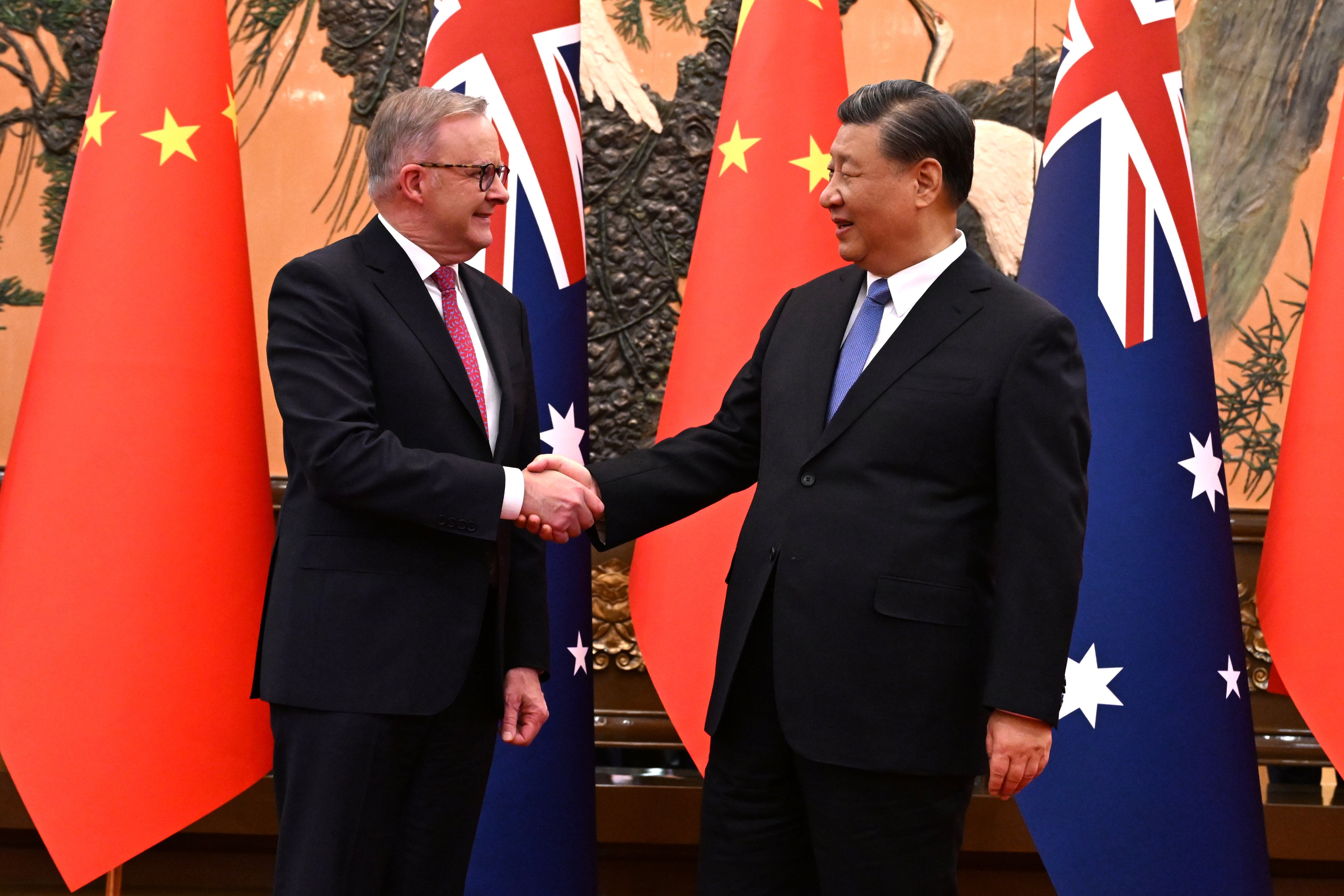
Beijing remains the wildcard. Trump has threatened a 50 percent tariff on any nation that sends weapons to Iran or assists them in bypassing the naval screen. At the same time, the U.S. is signaling that China can meet its energy needs by purchasing oil from Venezuela or the United States itself. It is a blunt-force attempt to decouple Chinese energy interests from the Iranian regime.
Whether China will accept this ultimatum or provide the "shadow fleet" with the protection needed to break the blockade remains the most dangerous unanswered question of 2026. The U.S. Navy has already proven it will enter the strait, as evidenced by destroyers crossing the waterway on Saturday. The tension is no longer about if a conflict will happen, but how long the current stalemate can last before a single mine or a stray missile triggers a full-scale regional war.
The U.S. has committed to "cleaning out" the straits. Iran has promised to turn them into a graveyard for the global economy. Neither side has left themselves any room for a graceful retreat.