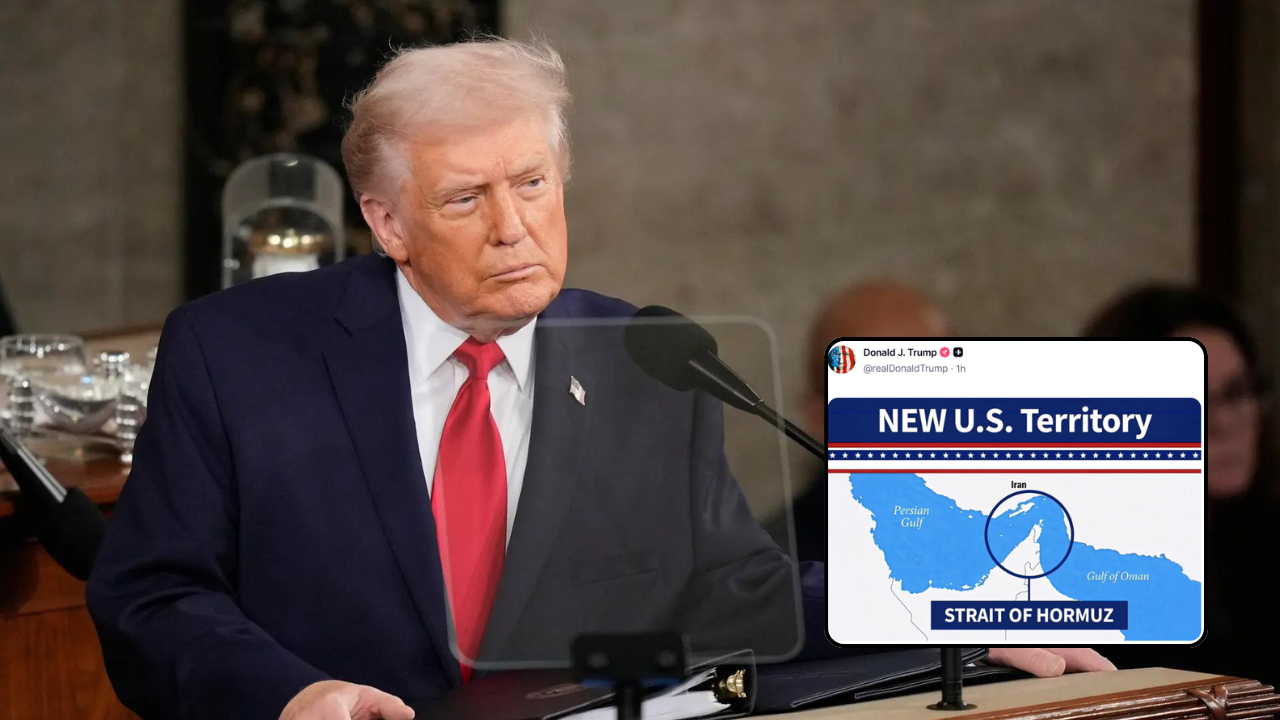
When a political figure posts a provocative image branding the Strait of Hormuz as new territory, the digital echo chamber reacts with immediate panic. Energy markets shudder. Defense analysts scramble. Tehran responds with aggressive counter-rhetoric claiming the vital shipping lane is effectively closed.
Beneath the superficial posturing lies a much more rigid reality. The Strait of Hormuz handles roughly a fifth of the world's petroleum consumption. It is not a digital asset that can be annexed via social media, nor is it a simple gate that Tehran can lock and walk away from without inviting immediate economic suicide. If you enjoyed this post, you might want to check out: this related article.
Understanding this crisis requires looking past the headlines and examining the physical, financial, and logistical constraints that keep both superpowers and regional actors pinned to a dangerous status quo. Posturing is cheap. Closing the strait permanently is catastrophically expensive for everyone involved.
The Geography Of A Chokepoint
Geography remains the ultimate constraint in military and economic strategy. The Strait of Hormuz is narrow. At its tightest point, the shipping lanes span just two miles wide for inbound and outbound traffic, separated by a two-mile buffer zone. This bottleneck sits entirely within the territorial waters of Oman and Iran, forcing commercial supertankers to thread a needle commanded by the Iranian coastline. For another perspective on this development, refer to the latest coverage from Al Jazeera.
This geography has fueled decades of anxiety. During the Iran-Iraq War in the 1980s, the tanker war saw attacks on commercial shipping that drove up insurance rates and terrified global markets. Modern commentators frequently cite that historical precedent to argue that a closure is imminent.
History rarely repeats without modification. The economic integration of the region has shifted dramatically since the 1980s. Iran depends on the very same maritime routes to export its own hydrocarbons, primarily to Asian buyers who maintain massive economic leverage over Tehran. Shutting the lane completely chokes off the Iranian state budget alongside Western supplies.
Economic Interdependence As A Deterrent
Financial survival dictates geopolitical restraint. When threats fly back and forth over territorial claims and maritime blockades, market watchers tend to focus exclusively on the threat of disruption. They ignore the commercial self-interest that binds regional actors to international trade.
Consider the primary destination for Gulf crude. Asian economies depend heavily on uninterrupted tanker traffic through the strait. If exports drop to zero, regional revenues evaporate almost instantly.
"A blockade is not a switch you flip; it is an economic siege that starves the issuer just as surely as the target."
Iran has mastered the art of gray-zone warfare. Harassing commercial vessels, seizing stray cargo ships, and conducting asymmetric naval drills allow Tehran to project power without crossing the threshold into a full-scale conventional war that it cannot win. The strategic goal is always leverage, not annihilation.
The Reality Of Naval Power Projection
Proclaiming a body of water closed is vastly different from enforcing that declaration. The United States Fifth Fleet, stationed nearby in Bahrain, maintains a permanent posture designed to keep these lanes open. Advanced minesweeping capabilities, carrier strike groups, and allied naval patrols form a formidable barrier against any sustained attempt at maritime strangulation.
Military planners know that mining the strait is relatively easy, but clearing those mines under fire is a calculated risk. Iran possesses thousands of anti-ship missiles, fast attack craft, and sea mines. Deploying them would trigger a devastating retaliatory campaign that would dismantle what remains of Iranian naval and military infrastructure.
The calculus of escalation deters both sides from moving past rhetoric into kinetic catastrophe. Washington knows that military engagement drives oil prices to historic highs, inflicting political damage at home. Tehran knows that crossing the line invites direct intervention that threatens regime survival.
Moving Beyond The Headlines
Every time a viral post or a fiery state television broadcast claims the strait is locked down, financial markets overreact. Traders algorithmically price in worst-case scenarios before verifying whether the physical movement of cargo has actually stopped.
Smart capital ignores the rhetoric and watches the transponders. Commercial tankers continue to move through the corridor under heavily negotiated security umbrellas, escorted by private security teams and monitored by international coalitions. The risk premium fluctuates, but the flow of energy persists.
The next time an inflammatory image or an absolute declaration dominates the news cycle, remember the structural anchors holding the global economy together. Fear sells clicks, but cold geopolitical arithmetic dictates what actually happens on the water.