The global energy market is currently obsessed with a security blanket that doesn't actually exist. For decades, the consensus among analysts, policy wonks, and the financial press has been that the Strategic Petroleum Reserve (SPR) is our ultimate insurance policy against a Strait of Hormuz closure. They argue that if Iran flips the switch and chokes off 20% of the world's oil supply, we can simply turn a few valves in Louisiana and Texas to keep the lights on.
They are dangerously wrong.
The belief that a strategic release can "calm" a market during a genuine maritime blockade is not just optimistic; it is a fundamental misunderstanding of how fluid dynamics, global logistics, and price discovery actually function. We are staring at a structural deficit that no amount of salty cavern storage can fix. If you think 700 million barrels—or whatever is left after the latest political raiding of the bins—can offset a systemic collapse of the Middle Eastern supply chain, you aren't paying attention to the math.
The Volume Illusion
Let’s dismantle the "volume" myth first. Analysts love to cite the total number of barrels in the SPR as if it represents immediate availability. It doesn't. The SPR has a physical drawdown limit. Even at peak operational capacity, the system can only push about 4.4 million barrels per day (mb/d) into the market.
Now, look at the Strait of Hormuz. We are talking about a daily flow of roughly 20 to 21 million barrels of crude and refined products.
If that artery is severed, the SPR provides a measly 20% offset. You are trying to put out a forest fire with a garden hose and telling the neighbors to stay calm because the hose is "strategic." The market isn't stupid. Traders see the 16 million barrel-per-day deficit remaining after the SPR is maxed out. They don't trade on what we have; they trade on what we lack. The price doesn't "stabilize" because of a 4 mb/d injection; it rockets toward $200 because of the 16 mb/d ghost limb.
The Quality Mismatch Nobody Talks About
Oil is not a monolithic commodity. You cannot just swap "barrels" like they are Lego bricks. The global refinery complex is a highly tuned machine designed for specific "slates" of crude.
The SPR is primarily composed of two types: Light Sweet and Medium Sour. Much of the world’s complex refinery capacity—especially on the U.S. Gulf Coast—is configured to process the heavy, high-sulfur crudes that typically come from the Middle East and Venezuela.
If the Strait closes, we lose the heavy stuff. If we pump the SPR, we get light or medium stuff.
I have watched refinery managers scramble during minor disruptions because their chemical catalysts were "poisoned" by the wrong sulfur content or their distillation towers were running at 60% efficiency because the API gravity was off by five points. You cannot simply dump light sweet crude into a heavy sour refinery and expect the same yield of diesel and jet fuel. A release from the SPR during a Hormuz crisis creates a secondary crisis: a refined product shortage. We will have plenty of the wrong oil and not enough of the right fuel.
The SPR Is Not A Price Tool It Is A Weapon Of Last Resort
The most offensive "lazy consensus" is the idea that the SPR should be used to "lower prices at the pump."
Whenever a politician sees a poll number dropping alongside a rising gas price, they suggest a "strategic release." This is financial malpractice. The SPR was designed for physical supply disruptions, not price sensitivity.
When you use the reserve to shave ten cents off a gallon of gas during a standard bull market, you are cannibalizing your insurance policy to pay for a temporary PR win. It’s like selling your fire extinguisher to pay the electric bill.
In a real Hormuz blockade, the physical availability of oil becomes a matter of national defense and basic survival. Using the reserve early to "calm" a nervous market actually invites more volatility because it signals to adversaries that our "energy shield" is being depleted for trivial reasons.
The Paper Market Paradox
Here is the counter-intuitive truth: Releasing oil from the SPR can actually drive prices higher in the long run.
Commodity markets function on the principle of "scarcity signaling." When the government announces a massive release, it provides a brief, artificial dip in the spot price. Smart money—the hedge funds and institutional desks—sees this as a gift. They know the government must eventually refill those caverns.
By depleting the SPR, the government creates a guaranteed "bid" under the market for the next three years. Every barrel released today is a barrel that must be bought back tomorrow. This creates a floor for long-dated futures contracts.
Imagine a scenario where the Strait of Hormuz is closed for sixty days. The U.S. empties half the SPR to keep things moving. The day the Strait reopens, the market realizes the U.S. now needs to buy back 300 million barrels. The "buy" pressure from the Department of Energy will keep prices inflated long after the geopolitical tension has faded. The SPR release doesn't fix the problem; it just moves the pain from today's spot market to tomorrow's curve.
The Logistics of Despair
Even if the oil is there, and even if the quality is right, you still have to move it.
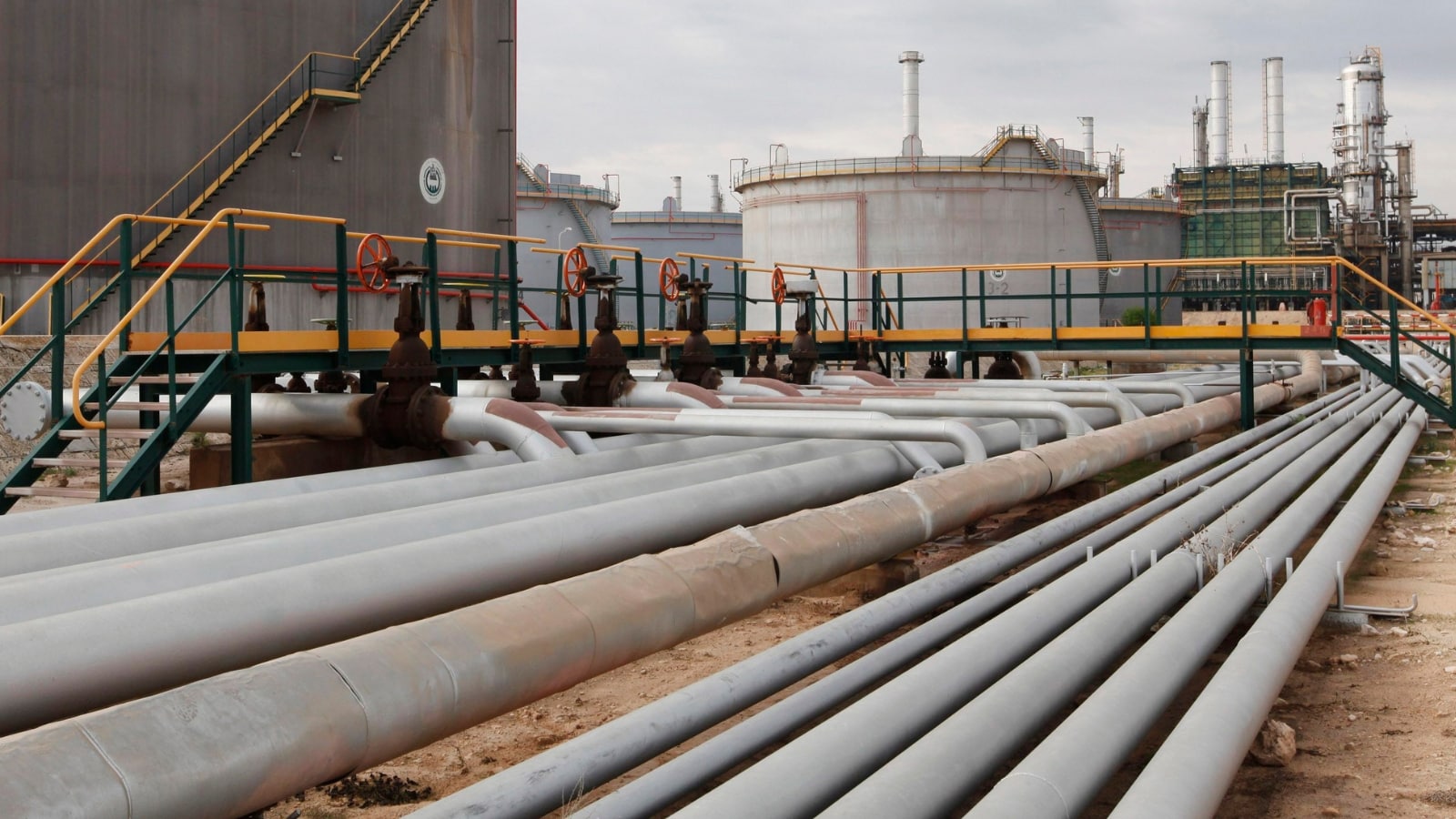
The SPR relies on a network of pipelines and marine terminals that are often shared with commercial interests. In a total Hormuz shutdown, the global shipping industry goes into cardiac arrest. Insurance premiums for tankers skyrocket. Ship owners refuse to enter certain zones.
The SPR's ability to move oil depends on the Jones Act—a piece of legislation that requires goods shipped between U.S. ports to be carried on U.S.-flagged ships. There are not enough Jones Act-compliant tankers to handle a mass-scale SPR distribution if the traditional global tanker fleet is sidelined by war or high insurance costs.
We have the oil in the ground, but we lack the "midstream" infrastructure to replace the global maritime logistics chain. The bottleneck isn't the cavern; it's the pier.
Stop Asking If The SPR Works And Start Asking If It Matters
The "People Also Ask" sections of the internet are filled with variations of: "How long can the US survive on the SPR?"
This is the wrong question.
The right question is: "In a world where the Strait of Hormuz is closed, does a 90-day supply of crude oil prevent a global economic depression?"
The answer is no. A Hormuz closure isn't just an oil event; it's a global trade event. It’s the end of "Just-In-Time" manufacturing. It’s the freezing of credit markets because the collateral—energy—is no longer predictable.
If you want to actually "fix" the Hormuz disruption, you don't look at the SPR. You look at:
- Redundancy: Why do we still rely on a single 21-mile-wide choke point?
- Refinery Flexibility: Why haven't we incentivized refineries to be "crude agnostic"?
- Demand Destruction: How quickly can we shift the heavy-transport sector (trucking and shipping) away from a total reliance on Middle Eastern distillates?
The SPR is a psychological placebo. It makes the public feel like someone is in control. It allows politicians to say they are "taking action." But in the cold light of a real blockade, it is a rounding error.
The Brutal Reality of Energy Independence
We are told that because the U.S. is a "net exporter," we are insulated from Hormuz. This is a lie. Oil is a global pool. If the price goes to $200 in London, it goes to $200 in Houston. The "net exporter" status doesn't mean your gas stays at $3.00. It means your oil companies make record profits while you pay $7.00 for a gallon of milk because the delivery truck’s diesel costs have tripled.
The SPR cannot decouple the U.S. from global price shocks. It can only provide a temporary, physical buffer for essential services—the military, hospitals, and emergency response.
Treating it as a market-stabilization tool is a fantasy. If the Strait closes, the SPR won't save the market. It might barely save the state.
Stop looking at the SPR as a solution. It is a bunker. And you don't win a war by sitting in a bunker; you just delay the inevitable.
The only way to win the Hormuz game is to make the Strait irrelevant. That requires a level of long-term infrastructure investment that a 30-day "strategic release" can't touch. We need to stop pretending that the Department of Energy is a central bank for oil. It’s a warehouse. And the warehouse is already half-empty.
Refining the SPR into a political tool has stripped it of its actual utility. We have traded long-term security for short-term price suppression, and when the real crisis hits, the cupboard will be bare and the pipes will be the wrong size.
Get comfortable with the volatility. The shield is made of paper.
#