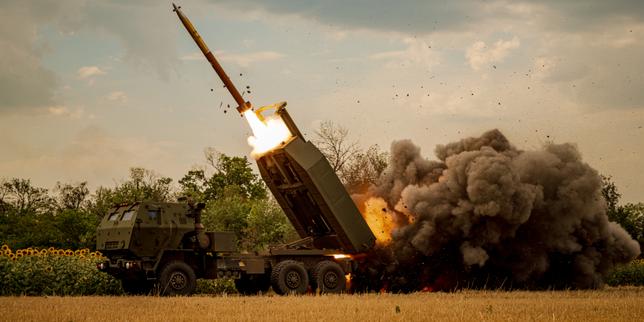
The warning from the Russian defense ministry was direct and calculated. Moscow intended to freeze Ukraine into submission, leveraging infrastructure degradation as an operational tool to break national resolve. Kyiv responded with an immediate pledge to deliver a warm winter of its own to Russian territory. This rhetorical escalation marks a dangerous shift in the trajectory of the ongoing conflict, moving beyond frontline clashes into a bitter contest of endurance, retaliation, and systemic infrastructure targeting.
Decades of reporting on geopolitical conflicts reveal a recurring pattern. When traditional military momentum slows on the battlefield, the theater of war expands into civilian comforts and vital utilities. Energy grids transform into frontline assets. Power plants become high-priority targets. The objective shifts from territory acquisition to psychological exhaustion.
The Mechanics of Infrastructure Warfare
Energy warfare is not a recent invention. Modern military doctrine recognizes that rendering a population center uninhabitable achieves strategic paralysis just as effectively as an occupying force.
When temperatures plummet across Eastern Europe, electricity is not merely a convenience for turning on lights or charging devices. It is the life support of modern urban existence. Heating systems rely entirely on continuous power distribution. Without it, municipal water pipes freeze and burst, hospitals struggle to maintain sterile environments, and populations face displacement.
Moscow understands this equation intimately. Previous campaigns demonstrated a methodical approach to systematically striking electrical substations, gas distribution hubs, and generation facilities. The strategy relies on overwhelming air defense networks through saturation strikes, combining cruise missiles and loitering munitions to erode generation capacity faster than repair crews can patch the damage.
Yet, defensive resilience has evolved. Municipal authorities across Ukraine have spent years hardening substations, burying critical components, and staging decentralized generators. Spare parts are stockpiled in undisclosed locations. Repair teams move with military precision the moment an all-clear is sounded.
The Asymmetric Response from Kyiv
When officials in Kyiv promise a hot winter for Russia, they are not merely engaging in diplomatic posturing. The nature of the response involves asymmetric capability. Ukraine has steadily expanded its domestic production of long-range uncrewed aerial vehicles. These platforms bypass traditional radar horizons, striking deep into Russian border regions and industrial centers that support the war effort.
Oil refineries, fuel depots, and military logistics hubs inside Russian territory are primary targets for these retaliatory strikes. By disrupting fuel distribution and refining capacity, Kyiv aims to create domestic pressure within Russia, forcing Moscow to divert air defense assets away from the frontlines and occupied territories to protect internal infrastructure.
This creates a severe logistical dilemma for the Kremlin. Defending every square kilometer of an expansive nation is an impossibility. Prioritizing protection around major population centers like Moscow and Saint Petersburg leaves industrial hubs in regions such as Belgorod, Voronezh, and Rostov vulnerable to persistent drone incursions.
The Economic and Psychological Calculus
Wars are sustained by industrial output and public morale. When a government promises a difficult season to its adversary, it signals a calculated gamble on psychological endurance.
The psychological impact on the civilian population is profound. In Russian border towns, the normalization of air raid sirens and burning fuel depots shatters the illusion of safety far from the frontline. Conversely, Ukrainian citizens face yet another season under the threat of blackouts, relying on community heating points and wood-burning stoves if central systems fail.
Economic fallout extends far beyond the immediate combatants. Global energy markets react violently to every strike on refining capacity or export terminals. Spikes in fuel prices ripple outward, impacting supply chains and inflation worldwide. Energy security remains a fragile construct, easily shattered by a single successful drone strike or ballistic missile impact.
The Logistics of Resilience
Surviving a targeted infrastructure campaign requires more than rhetoric. It demands an immense logistical effort that tests the limits of civil defense.
Decentralization of Power
Centralized power grids are inherently vulnerable. Both sides have learned that relying on massive, monolithic generation plants invites catastrophic failure. The shift toward smaller, distributed energy sources—including mobile gas turbine generators and localized solar arrays—has become a vital survival mechanism for urban centers.
Supply Chain Fortification
Repairing a high-voltage transformer takes months under normal peacetime conditions. During active hostilities, engineering crews accomplish the same feat in hours through modular replacements and improvised engineering. Warehouses across Eastern Europe function as hidden staging grounds for heavy electrical equipment, creating a shadow logistics network designed specifically to outpace destruction.
The Escalation Spiral
Every retaliatory action invites a counter-retaliation. As Kyiv demonstrates an increasing capacity to strike strategic targets within Russian borders, the pressure on Moscow's leadership mounts to respond with overwhelming force.
This dynamic creates a dangerous feedback loop. The threshold for what constitutes an acceptable target continues to drop. Infrastructure that was once considered off-limits becomes fair game under the justification of reciprocity. International law prohibits the intentional targeting of objects indispensable to the survival of the civilian population, yet enforcement mechanisms remain weak when sovereign nations engage in existential conflict.
Diplomatic off-ramps are increasingly difficult to find when both sides are convinced that the next military escalation will force the adversary to the negotiating table. History suggests the opposite outcome. Punishing civilian populations through deprivation rarely induces capitulation; instead, it hardens resolve, fostering a deep-seated animosity that persists long after the guns fall silent.
The coming months will test the physical and psychological limits of millions of people. As the rhetoric sharpens and the launch orders are executed, the promise of a harsh season remains the only certainty in a landscape defined by perpetual escalation.