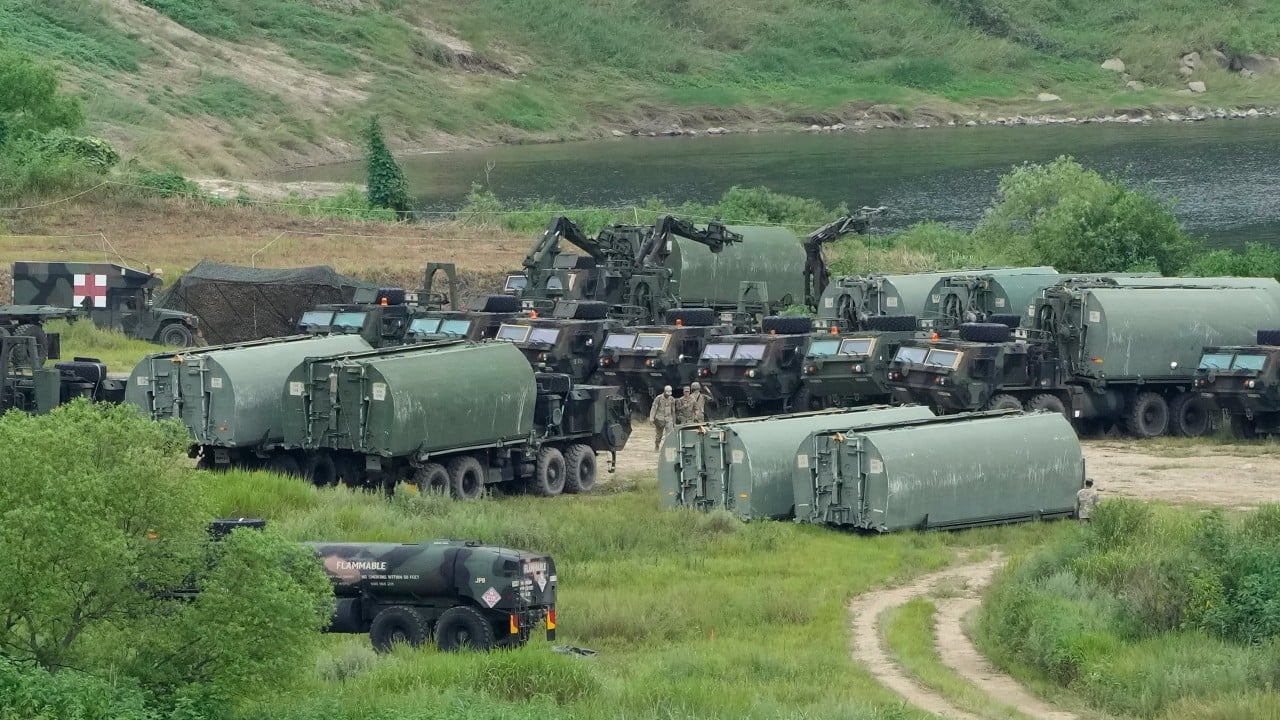
Geopolitical volatility creates operational entry points for secondary powers willing to decouple security policy from traditional diplomatic inertia. When external leadership changes introduce unpredictability into established security architecture, alliance partners face a binary optimization problem: absorb the variance through passive compliance or monetize the variance through proactive structural concessions. Seoul currently occupies this exact strategic inflection point regarding its bilateral security arrangement with Washington.
The traditional discourse treats executive rhetoric from American political figures as an external shock to be mitigated through standard diplomatic reassurance. This perspective misdiagnoses the mechanism. Strategic unpredictability functions as a market signal. It exposes the hidden cost functions of long-standing defense subsidies and forces a rationalization of burden-sharing metrics. For South Korea, the divergence between conventional diplomatic expectations and transactional pressure offers a rare window to alter the bilateral equilibrium on favorable terms.
The Cost Function of the Status Quo
To evaluate the strategic opening available to Seoul, one must first audit the inefficiencies embedded within the legacy security framework. The prevailing architecture relies on two structural subsidies: asymmetric force projection by the United States and fixed-cost host-nation support arrangements negotiated under legacy threat environments.
This model generates distinct vulnerabilities for both parties:
- Fiscal Misalignment: Washington faces domestic political constraints that penalize uncompensated overseas commitments, creating chronic friction over cost-sharing ratios.
- Capability Bottlenecks: Seoul experiences strategic dependency, which restricts indigenous defense industrial scaling and export velocity due to localized doctrinal constraints.
- Deterrence Discounting: Ambiguity regarding the automaticity of extended deterrence erodes the credibility of the security umbrella under shifting political administrations.
When an administration in Washington signals transactional skepticism toward multilateral security commitments, the implicit cost of the status quo spikes. For South Korea, absorbing this shock passively invites degradation of the deterrent posture. The alternative requires treating the defense relationship not as a fixed political pact, but as an adjustable bilateral ledger.
The Localization Imperative
Monetizing this strategic opening requires pivoting from a consumer mindset to a producer mindset within the defense ecosystem. South Korea possesses a distinct comparative advantage that alters the standard dynamic of bilateral negotiations: advanced manufacturing density, rapid delivery timelines, and cost-competitive conventional hardware production.
Legacy Model:      Static Subsidy -> Political Friction -> Concession under Duress
Structural Arbitrage: Industrial Integration -> Capability Export -> Bilateral Leverage
Rather than treating demands for increased defense contributions as a pure fiscal drain, Seoul can restructure these outlays into joint industrial investments and technology-sharing frameworks. This approach addresses Washington's primary industrial constraints, particularly the overstretched capacity of domestic shipyards and munitions manufacturing bases. By positioning domestic shipyards and defense contractors as structural solutions to American supply chain vulnerabilities, South Korea transforms a fiscal liability into an indispensable strategic asset.
Strategic Execution Matrix
Executing this realignment demands a sequenced operational approach designed to maximize leverage before external political cycles shift the negotiating environment.
- Industrial Co-Production: Transition host-nation financial contributions directly into joint maintenance, repair, and overhaul agreements for naval and aerospace assets operating in the Indo-Pacific theater.
- Doctrinal Autonomy: Expand conventional deterrence capabilities through indigenous high-technology development, thereby raising the baseline value proposition brought to combined operational planning.
- Bilateral Trade Linkages: Anchor security discussions to broader economic frameworks, connecting defense expenditure directly to supply chain resilience in critical sectors like semiconductors and energy infrastructure.
The opportunity for South Korea lies entirely in abandoning reactive diplomacy. By treating external pressure as a structural parameter rather than a temporary anomaly, Seoul can permanently re-index the bilateral alliance toward reciprocal industrial integration and strategic autonomy.